Vanished At A Texas Theme Park—found 6 Years Later In An LA MILLIONAIRE’S MANSION
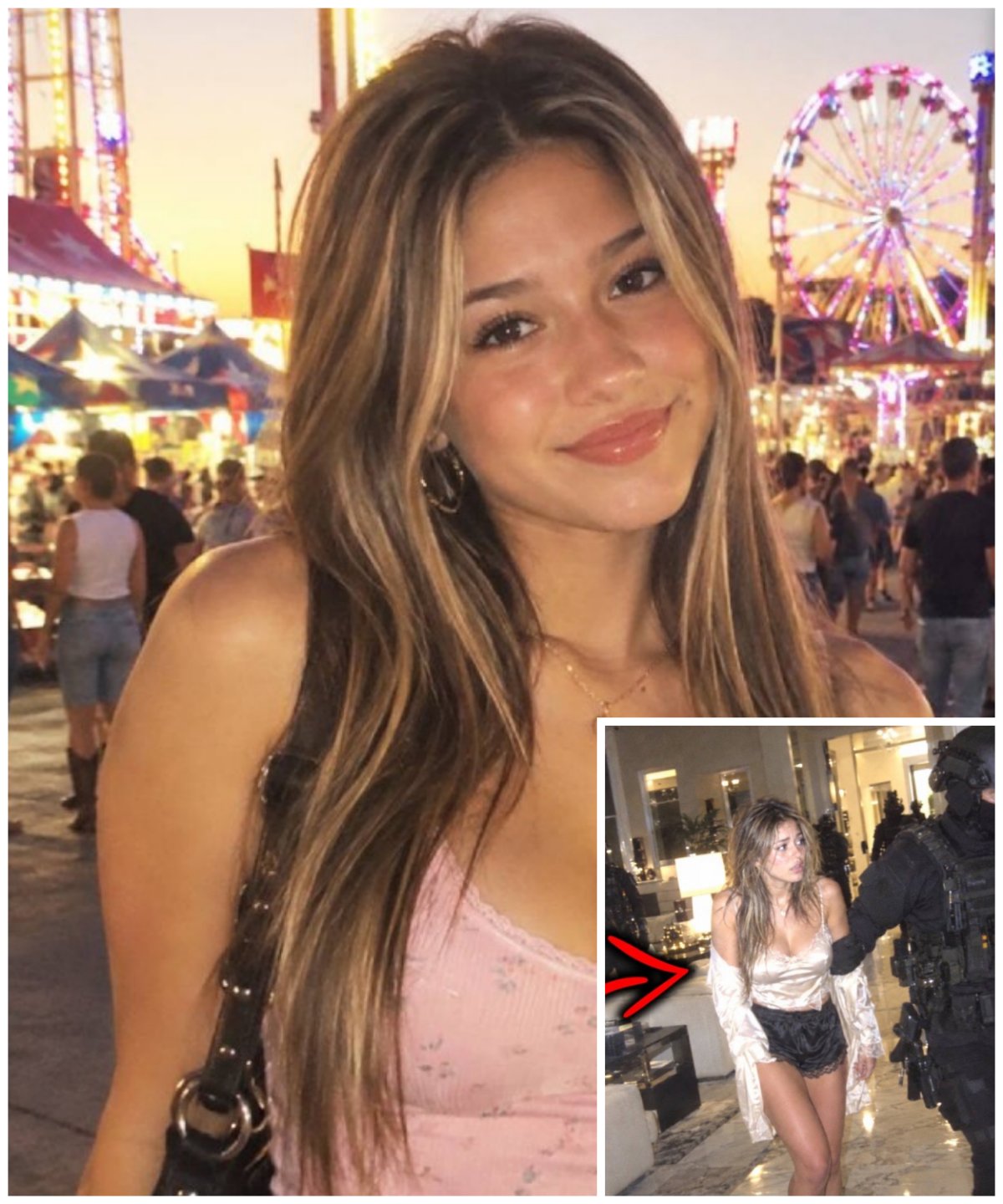
Texas 2015. 18-year-old Rose Lee spends the day at a local amusement park with her friend.
In the evening, she agrees with her parents that she will return home on the last bus.
But that night, Rose never comes home.
During interrogation, her friend gets confused in her testimony.
An annoying suitor gets tangled in explanations regarding his car near the park, and her mother receives a strange letter.
Tired of being controlled, don’t look for me.
The police are ready to close the case as a voluntary runaway, but the mother is convinced it is a fake.
Did Rose really decide to run away on her own, or did someone force her to write those lines?
And what if the mysterious letter was just the first move in someone’s eerie game while the real threat had been hiding among lies and halftruths all along?
We will figure all of this out in today’s video.
Enjoy watching.
To protect privacy, some names and details in the story have been changed.
Not all photos were taken at the actual location.
The dry air of a southern state in July usually envelops the town in a thick, motionless mass that makes it difficult to breathe even after the sun hides behind the horizon.
For two young residents of Texas, this weekend was supposed to become a typical bright memory of summer filled with the noise of rides, the sweet smell of popcorn, and children’s laughter. 18-year-old Rose Lee, along with her best friend, Catherine Valley, planned their trip to the local amusement park in advance.
The girls strove to escape their daily routine and relax for at least a few hours.
Being under constant guardianship control of her family, Rose clearly knew the boundaries of what was allowed.
Her parents approved every step she took.
So before leaving the house, the girl gave a firm promise to return home on the last public transport, which departed from the stop near the entertainment complex at 10:00 in the evening.
However, that evening unfolded completely contrary to the planned scenario.
When darkness completely enveloped the streets and the wall clock in the Lee family living room crossed midnight, the mother’s anxiety grew into real panic.
Her daughter was missing and her phone was not answering.
For Rose’s mother, such behavior seemed absolutely unthinkable, as the girl was always distinguished by particular responsibility, punctuality, and deep respect for family rules.
Without waiting for dawn, the anxious woman turned to the local police department, insisting on the immediate commencement of search measures.
Initial investigative actions began with interviewing the missing girl’s inner circle.
Rose’s friend Catherine turned out to be the main and only witness to the last hours of her stay at the park.
During the official interrogation, the girl recreated the events of that day in detail, as was later recorded in the law enforcement materials.
According to Catherine, they indeed arrived at the entertainment complex together and planned to spend the entire evening there.
However, even before dusk fell, Rose suddenly complained of severe fatigue, a headache, and general malaise.
The friend claimed that Rose decided not to wait until late and left for home much earlier while it was still light outside.
The girls parted ways near one of the central rides, after which Catherine remained in the park alone and did not see her companion again.
These testimonies proved to be the first official version of events relied upon by law enforcement.
Local detectives analyzing the gathered initial data leaned toward the opinion that the case had no criminal basis.
In their view, the 18-year-old girl simply decided to assert her character, break free from strict parental supervision, and leave her hometown voluntarily.
The version of youth rebellion and voluntary escape was the simplest and most familiar in police practice for similar towns.
However, the missing girl’s mother categorically refused to accept such conclusions of the investigation.
In her numerous appeals to the police and conversations with journalists, she persistently emphasized that her daughter would never do such a thing.
Rose had no conflicts in the family, showed no inclination toward rash actions, and left no notes or belongings indicating preparation for an escape.
The mother insisted that her child was in trouble and needed immediate help as disappearing voluntarily without warning was completely out of her character.
Despite the emotional appeals of the family, the investigative process moved extremely slowly.
Police conducted a standard inspection of the area around the amusement park, but found no direct evidence of a crime or traces of a struggle.
The bus stop from which Rose was supposed to return home was empty, and the few passers by and employees of nearby establishments could not recall anything suspicious.
Images from the few security cameras that functioned in the area of the entertainment complex at that time turned out to be too blurry to clearly identify passengers boarding transport in the evening hours.
With each passing day, hope for a quick resolution of the case faded.
The girl’s family personally posted flyers with Rose’s photos throughout the city, appealed to local residents through social networks, and tried to involve volunteers in searches in adjacent forest areas.
However, none of the checked leads yielded a real result.
The empty stop opposite the park remained the sole silent witness to that fatal evening, leaving the family in complete uncertainty regarding Rose’s further fate.
Police reports were gradually filled with standard wording about the absence of new information and the case itself slowly moved into the category of long-term investigations where the main version for official personnel remained a voluntary departure from the place of residence.
Dear viewers, please like this video and subscribe to our channel by clicking the bell icon.
Meanwhile, we continue.
Realizing that the initial search measures directly on the territory of the entertainment complex yielded no tangible result, the investigative team decided to change tactics.
The detectives resolved to time every step of the missing girl in detail and check all her routes of movement.
That evening, law enforcement focused special attention on municipal transport as this exact method of returning home had been agreed upon with her parents in advance.
Investigators reviewed detailed schedules of local transport enterprises, established the side numbers of all vehicles servicing the suburban route during the specified time period, and compiled a list of drivers who were on the evening shift.
Personal communication with each driver became a critically important stage in attempting to recreate the true events of that anxious July evening.
A key breakthrough in the investigation occurred during a conversation with the driver of the last scheduled bus that ran between the entertainment complex and the city’s residential quarters.
At first, the man did not remember anything unusual among the daily passenger flow.
However, after the detectives showed him a fresh photograph of the missing girl, his testimony radically altered the direction of the entire investigation.
The driver confidently recognized the girl.
According to the interrogation materials preserved in the case, the driver reported that he saw her directly near the transport stop.
However, this occurred under circumstances that completely contradicted the official statements received by law enforcement from the girl’s circle at the very beginning of the search measures.
As the witness noted in his official testimony, the girl appeared at the transport stop after his bus had fully completed its last scheduled run.
The vehicle had turned off its interior lighting and was slowly traveling without passengers toward the bus depot.
Stopping at a traffic light near the entertainment grounds, the driver noticed a solitary figure in the darkness.
She was standing near the schedule board holding a bag in her hands.
According to the driver, the girl looked confused.
Her face expressed despair and tears glistened in her eyes.
Realizing that the transport slowly driving past was no longer taking passengers and that the next run would only be in the morning, she made a helpless attempt to attract attention with her hand.
However, the driver, strictly following the internal regulations of the transport company, had no right to board passengers while on route to the depot.
The driver clearly emphasized during his conversation with investigators that there was no other person near the girl.
She was at the stop in complete solitude against the background of an empty and unlit suburban highway.
This detailed description of her emotional state and the time of her stay at the location became a real turning point for the entire investigative team.
The new testimony completely destroyed the initial version of her best friend, who had previously convinced law enforcement during an official interrogation that the girl said goodbye while it was still daylight and the missing girl left the amusement park long before dark due to sudden fatigue.
The discrepancy between the witness testimonies proved too significant to be simple forgetfulness.
Detectives clearly realized that the only witness they had trusted from the first hours of the investigation had deliberately provided false information during the initial interaction.
The direction of the investigation changed immediately.
From then on, law enforcement faced an extremely sharp question of why her closest friend decided to conceal the fact that she left an 18-year-old girl completely alone late at night on a dark stretch of road.
The exposed lie forced the police to completely review all previous protocols and switch to much stricter methods of verifying facts.
Reddetailing the chronology showed that after the friend left, the young girl remained face tof face with the knight in an almost isolated location.
Detectives conducted an analysis of the area surrounding the bus stop.
It turned out that the stretch of road where she found herself was situated at a considerable distance from residential areas, and with the onset of the late hour, pedestrian traffic there ceased completely.
The absence of operating establishments, 24-hour stores, or illuminated storefronts made this location extremely vulnerable.
Any person who found themselves there at such a time without their own vehicle or the ability to call for help fell into a trap of complete isolation.
In parallel, investigators retrieved technical data from telephone connections and cell towers serving this sector around the amusement park.
The received materials fully confirmed that the missing girl’s mobile device continued to be in the area of the transport stop precisely at the moment when the empty bus was passing by.
This finally proved to law enforcement that the story about a daytime departure was completely fabricated from beginning to end.
With these indisputable proofs in hand, detectives made the decision to immediately summon Catherine for a repeated official interrogation.
The investigators needed to meet the girl directly in the office to ask her clear and uncompromising questions regarding the exposed lie.
They sought to understand the true motives behind her false testimony and find out what actually happened between the friends before 18-year-old Rose ended up alone near the dark roadside.
Law enforcement realized that a repeated conversational contact with the main witness could become the decisive step in revealing the complete picture of that July night.
The repeated interrogation in the investigator’s office took place in a completely different atmosphere.
Having lost the ability to rely on previous statements, Catherine was forced to provide new explanations.
According to the case materials, the girl ultimately confessed that she had invented her friend’s daytime departure out of concern for her own safety and fear of family punishment.
The reason for concealing the real circumstances turned out to be her secret romance with an older young man.
Fearing that her parents would learn about this hidden infatuation and her presence in the company of an unfamiliar adult man, Catherine decided to completely erase the evening stage from the initial protocols.
As follows from the witness’s testimony, her chosen one arrived in his own automobile directly at the grounds of the entertainment area that evening.
Catherine persistently offered her friend to join their company and get home together in the private car.
However, Rose categorically refused this offer.
They knew little about this boy, and the girl preferred to use tested public transport that was supposed to arrive strictly according to schedule.
Unwilling to break the rules established by her parents, she decided to stay near the schedule board and wait for the last run.
It seemed that this confession fully explained the motives behind the exposed lie and removed suspicion of deliberate concealment of a crime on Catherine’s part.
However, in the process of further clarifying details, the girl remembered another important person from the missing girl’s circle.
The name of Matteo Patel, a 22-year-old local resident appeared in the protocol.
According to the witness, this young man had persistently attempted to establish a closer relationship with Rose for several months.
He constantly sought excuses to meet, sent messages, and appeared in places where she spent her leisure time.
However, Rose repeatedly made it clear to him that she felt no affection for him and wished to stop any intrusive communication.
The young man’s intrusive attention reached such a limit that the girl’s mother was forced to intervene in the situation, having a rather strict conversation with him and demanding that he leave her daughter alone.
Operatives immediately located Mateo to obtain explanations.
During the first conversation with law enforcement, the young man firmly denied any fact of contact with the missing girl that July evening.
He claimed that he was far from the entertainment complex and knew nothing about the girl’s further fate.
However, after investigators pointed out contradictions in his testimony and the presence of technical data, Matteo radically changed his statements.
According to his new version recorded in the interrogation protocol, Rose contacted him herself via mobile phone after she found herself at the empty bus stop and realized that the last bus had passed by.
The young man persuaded investigators that the girl was extremely frightened by the darkness and solitude.
So, she asked him to come urgently and take her to the city.
However, Mateo, in his own words, refused to help her.
He explained his refusal by deep offense over previous rejected advances and a reluctance to face a conflict with her mother again.
This version raised serious doubts among law enforcement.
During an interview with residents of houses adjacent to the highway and employees of a gas station, investigators received testimony from several individuals who claimed to have seen a vehicle with external parameters similar to Matteo’s car.
The vehicle was moving slowly along the roadside near the park precisely during the time interval when the girl remained at the bus stop.
Mateo himself categorically denied appearing near the park, insisting that he had remained at home.
The investigative team faced the complex task of comparing the obtained testimonies and finding an evidentiary base that would allow determining which witness was telling the truth.
However, while detectives were working through Matteo’s connections and checking his alibi, a new completely unexpected turn occurred in this case.
A regular paper envelope without any postal stamps, markings, or return address arrived in the mailbox of Rose’s mother.
Inside was a small scrap of paper on which a few short sentences were written by hand.
In the text of the letter, Rose allegedly addressed her mother, saying that she was tired of constant family control, overp protection, and the desire to manage her own life independently.
She noted that she consciously made the decision to leave the city in order to start everything from a clean slate and persuasively asked her not to look for her or involve law enforcement agencies in the search.
Graphological analysis and initial visual comparison of the handwriting conducted using the girl’s school notebooks and diaries available in the house indicated a high probability that the text was indeed written by the missing girl’s hand.
For the investigative team, the appearance of this document became a weighty argument in favor of returning to the initial version of a voluntary departure from home.
The presence of a personal letter explaining the reasons for the disappearance significantly weakened the criminal vector of the investigation.
However, Rose’s mother categorically refused to believe in the authenticity of the intentions set forth in this note.
The woman insisted that the style of expression and the thesis themselves were completely uncharacteristic of her daughter.
She persuaded detectives that the girl could have been forced to write these lines under coercion or the threat of force in order to steer the investigation down a false path and buy time.
The situation reached a deadlock.
On one hand, the investigation received written confirmation of a voluntary escape executed in the girl’s own handwriting.
On the other hand, the circumstances surrounding the appearance of the letter without a postal stamp directly in the yard of the house indicated that an outside person had personally delivered it to the residents.
Detectives needed to determine whether the girl had truly written this message voluntarily on her way to a new life or if this scrap of paper was merely a carefully planned manipulation designed to conceal the true events of that July night.
Only after 6 years of anxious uncertainty.
And in the year 2021, the investigation suddenly received a new direction of development on the other side of the country, thousands of kilometers from the Texas town.
Events shifted to the state of California to a cozy and private area of Los Angeles, where luxurious residences with high fences and 24-hour security were located.
An ordinary workday for a private delivery service turned into a turning point in this multi-year story.
One of the courier company’s employees was fulfilling his standard daily route, delivering orders throughout wealthy neighborhoods.
Arriving at the massive closed gates of one of the largest estates, which belonged to an influential local businessman and millionaire, the young man began the procedure of transferring the goods.
During the unloading of another batch of orders near the service entrance of the estate, the courier noticed a young girl.
She was located deep within the yard, trying not to attract the attention of the few security guards.
Taking advantage of a brief moment when the staff was distracted by checking invoices, the girl unnoticedly approached a plastic box intended for returning empty containers and packaging materials and with a quick movement through a tiny, tightly folded scrap of paper into it.
The girl immediately stepped back without uttering a single word and carefully avoiding direct eye contact.
Having driven outside the private territory, the courier decided to check the contents of the return container and discovered an unfolded piece of paper.
On it, a short but astonishing message was written in small but clear handwritten text.
The unknown girl indicated her name, Rose Lee, and reported that she had been kidnapped in Texas in the year 2015.
In several sentences, she also begged for urgent help, indicated that her mother was in potential danger and persistently asked to immediately pass this note to law enforcement agencies.
Realizing the full seriousness of the situation, the young man headed to the nearest police station without hesitation.
The received document was immediately transferred to a forensic laboratory to conduct an in-depth handwriting examination.
Investigators compared the entry with available handwriting samples of the missing girl contained in the archive case materials, particularly her school notebooks and the previous note. specialists came to the conclusion that the graphic characteristics, letter slant, and specific writing elements belong to Rose Lee, who disappeared 6 years ago with a high degree of probability.
These new circumstances gave law enforcement officially grounded basis for obtaining a court warrant to conduct a search and inspection of the private territory.
Within a tight time frame, an operational group was formed which included federal agents and local quick response units.
Law enforcement immediately set out for the address of the luxurious estate.
Encircling the perimeter of the high fence, the entry team and investigators presented the judicial authorization to enter.
The owner of the house, well-known businessman Travis Norman, met the representatives of security forces completely calmly and without any outward sign of concern or aggression.
He offered no resistance, listened calmly to the court order, and invited the operatives inside the premises without hesitation.
At the request of the investigators, the master of the house personally led a 24year-old girl into the living room.
Standing beside her in front of the representatives of federal services, Travis Norman confidently and calmly declared that the girl was in his possession completely voluntarily.
According to him, they had been living together for a long time as cohabitants by mutual consent, and all allegations of forced detention or kidnapping were a complete misunderstanding.
The man himself behaved as if the sudden visit of armed security forces and agents was merely an unfortunate formality that would easily be resolved after a brief conversation.
However, the external appearance of the young mistress and master of the estate raised numerous questions among investigators.
Despite the luxurious setting of the house, the girl appeared depressed, avoided open answers in Norman’s presence, and remained under his constant vigilant gaze.
Every movement and brief answer she made were recorded by operatives for further analysis.
Representatives of law enforcement agencies needed to separate the official statements of the estate owner from the real state of affairs and find out what had actually been happening behind the high fences of the closed territory over the past 6 years.
Detectives immediately began procedural processing of the premises and interviewing all individuals present on the property.
The investigative team recorded the location of video surveillance systems, inspected the rooms, and seized digital storage media for further study.
All actions of the security forces occurred in strict accordance with the protocol, as the presence of the note requesting help directly contradicted Norman’s assertions about the voluntary nature of their cohabitation.
Furthermore, during the initial inspection of the territory, operatives paid attention to the extraordinarily high level of technical security of the estate, which resembled a restricted facility more than a regular private home.
Massive fences around the entire perimeter were equipped with motion sensors and security cameras covered every possible exit zone.
For a girl who found herself inside such a complex without her own documents, means of communication, or financial independence, any attempt to leave the territory independently was practically impossible.
The interview of the service personnel and security guards of the estate provided additional procedural data.
Most employees noted that the young woman practically never left the boundaries of the residence without the accompaniment of personal security or the owner himself.
She was forbidden to maintain contacts with the outside world and any visits by outsiders were carefully controlled.
These details fully confirmed the investigators assumption that a strict system of isolation was hidden behind the facade of luxury and wealthy living.
The primary materials and inspection protocols gathered at the scene confirmed that the girl located in the house was indeed the missing citizen who had been searched for over 6 years.
Law enforcement resolved to immediately isolate her from the influence of the estate owner to conduct a separate interview without outside pressure in order to establish the complete chain of events that began at the empty Texas bus stop and concluded in the closed California residence.
After removing the girl from the direct supervision of the estate owner, federal agents ensured her transfer to neutral territory.
To conduct initial procedural actions, an isolated office in the local station was chosen where outside influence or the presence of the businessman’s lawyers were completely excluded.
It was critically important for investigators to give her the opportunity to feel safe and speak out without fear of immediate consequences.
However, during the first official conversation, the girl’s behavior proved completely unexpected for the representatives of special services.
According to the interview protocol, Rose categorically denied the fact of her kidnapping or any forced detention.
She persistently convinced investigators that she arrived in Los Angeles by her own choice and her stay in the closed house was the result of a voluntary decision to live together with the millionaire.
Regarding the folded scrap of paper found by the courier in the return container, the girl claimed that she wrote those words under the influence of a sudden emotional breakdown, severe fatigue, and personal offense and begged law enforcement not to attach any criminal significance to this incident.
Despite such official statements, one of the experienced detectives who had studied the materials of the initial investigation in detail from the moment of the girl’s disappearance in Texas refused to close the case on the basis of this testimony.
The girl’s behavior during the conversation evidenced deep internal fear.
She constantly clenched her fingers, avoided direct eye contact, trembled at the slightest rustle, and constantly glanced at the office door.
Instead of natural relief from the appearance of law enforcement, her condition expressed an extreme degree of panic.
The detective realized that the girl continued to be under severe psychological pressure and her words about voluntariness were merely a carefully rehearsed script for her own protection.
For the second stage of communication, the investigative team decided to change its approach and apply visual evidence that would break through the wall of intimidation.
The detective prepared a video recording made several hours earlier in which the missing girl’s mother addressed her daughter directly.
In this short video message, the woman, holding back tears, reported that she was under reliable police protection, fully aware of the progress of the operation and was currently traveling to meet her.
When the tablet screen was opened in front of the girl and the recording was turned on, her reaction was instantaneous.
Upon hearing the familiar voice and seeing her mother safe, surrounded by law enforcement, Rose could no longer maintain emotional control.
The rigid system of defensive denial collapsed in a single moment.
The girl covered her face with her hands and cried heavily for a long time, trying to restore her breathing, and realized that the threat was no longer inevitable.
As soon as the girl calmed down a little, she agreed to give real testimony under protocol, revealing the hidden details of her disappearance.
According to her, on that July evening near the empty transport stop, an unknown person approached her.
Before the girl could orient herself or call for help, she received a quick injection of a sedative drug in the shoulder.
The mixture acted in a few seconds. consciousness faded and she woke up already inside a locked vehicle, deprived of any opportunity to move or call for help.
However, the most shocking part of her testimony concerned not the moment of kidnapping itself, but the mechanism of psychological breakdown that was applied to her throughout all six years.
The girl agreed to lead the investigative team back to her room in the estate to provide physical evidence of systematic blackmail.
With the permission of the operatives, she approached a massive wooden wardrobe and pointed to a secret hiding place arranged in the double back wall of the furniture.
From there, agents retrieved a large paper envelope containing hundreds of color photographs.
All the pictures depicted her mother leaving her own home, shopping at a local store, at work, or walking around the city.
Red markers and dates were clearly visible on many frames.
Rose explained to investigators that every Sunday, the owner of the estate personally placed one or several new pictures of her loved one on her working desk.
This weekly ritual served as a silent but absolute reminder.
Her birth mother was under 24-hour surveillance.
Any attempt to escape, disobedience, attempt to pass information through service staff, or simply improper behavior would immediately lead to physical violence against the woman in Texas.
It was this carefully constructed system of psychological terror that forced the girl to submit completely unconditionally fulfill all demands of the owner and pretend before the few witnesses for many years that she was living in the luxurious residence of her own free will.
The obtained photographs and the girl’s testimony were immediately attached to the case materials as evidence of systematic torture, deprivation of liberty, and extortion under the threat of violence.
The interview protocols completely changed the status of the estate owner.
From a potential witness, he turned into the primary suspect in a grave crime committed by prior conspiracy using psychological coercion.
The investigative team received procedural grounds to transition to open tactical and investigative actions regarding the owner of the residence.
Having received direct and detailed testimony from the victim, the investigative team faced powerful procedural resistance.
Travis Norman’s legal defense immediately launched an active campaign, insisting on the version of civil cohabitation by mutual consent.
The businessman’s lawyers publicly claimed that the girl was in the estate completely freely, had access to luxury, and her new statements were merely the result of emotional manipulation by law enforcement agencies.
In the legal plane, the words of the victim herself were insufficient to pass a severe sentence, as the defense could easily reduce everything to a personal conflict.
To form an indisputable indictment, federal agents required tangible documented evidence of systematic coercion, surveillance, and intimidation.
Law enforcement initiated a comprehensive investigation into the businessman’s private, commercial, and financial activities.
Investigators scrutinized all his business connections, bank accounts, and transactions over the last 6-year period.
A special financial intelligence group analyzed every monetary transfer in detail, trying to find hidden payments that would explain exactly how surveillance over the victim’s mother in Texas was carried out.
In parallel, federal agents obtained a repeated expanded warrant to conduct an indepth search of all premises, technical structures, and underground levels of the luxurious residence in Los Angeles.
During this repeated inspection of the millionaire’s office, forensic experts paid special attention to a massive panel hidden behind the oak wall paneling.
Behind it was a built-in fireproof safe with a high degree of protection.
After the procedural opening of the safe in the presence of witnesses and lawyers, detectives retrieved its contents.
Inside were systematized folders with materials.
Hundreds of additional photographic prints of Rose’s mother were stored there, taken during the period from the year 2015 to the year 2021.
Detailed frames captured her daily roots, leaving the house, trips to work, meetings with acquaintances, and even purchases in local stores.
Each folder contained clear dating, labeling, and short text comments regarding the woman’s daily routine.
Reviewing these materials, investigators received tangible confirmation that the surveillance of the girl’s family was not accidental, but had a systematic, professionally organized character.
The presence of this archive directly in Norman’s private vault completely refuted his lawyer’s assertions regarding the absence of leverage over the girl.
Unraveling this documentary trail, federal agents analyzed the markings on the photographs and studied the accompanying encrypted notes.
Work with financial records revealed regular monthly transfers of significant sums of money to the accounts of an anonymous commercial structure.
Step by step, investigators traced the trail to a private detective agency located in the state of Texas.
It was to this private structure that the millionaire secretly paid for years for 24-hour physical and technical surveillance over the missing girl’s mother.
Having obtained a warrant to search the offices of the Texas Detective Agency, agents seized their internal server, receipts, primary accounting records, and encrypted electronic correspondence.
According to the seized digital reports, the AY’s employees sent detailed weekly reports to Norman regarding every step of the woman, attaching fresh photographs and a detailed description of her movements.
Protected communication channels contained direct instructions from the millionaire where he demanded maintaining continuous control and immediately informing him of any changes in the family’s life.
Furthermore, during a thorough study of the seized electronic media, forensic experts discovered numerous internal operational notes of the Texas detectives.
These documents recorded even the smallest details of the woman’s daily life.
Changes in her daily schedule, visits to the doctor, repair work in the house, and purchases of new items.
The AY’s employees used specialized video equipment with long focus lenses, installed hidden tracking sensors near her home, and constantly maintained shifts in unmarked automobiles.
All these photo and video reports were immediately coded and sent to Norman’s private server in California.
Analysis of financial transactions showed that over the years of this criminal activity, the millionaire transferred hundreds of thousands of dollars to the detective agency, disguising these payments as consulting and legal services of third party shell companies.
Documentary materials fully exposed the scale and ruthlessness of the constructed system.
The millionaire spent colossal resources solely to have the ability to demonstrate a fresh photo of Rose’s mother to her at any second and remind her of her defenselessness.
The seized digital evidence, financial receipts, and systematized correspondence indisputably proved that the millionaire purposefully controlled every step of the mother for years.
All these actions occurred with the sole purpose of having constant material leverage to keep the girl in total fear, complete isolation, and absolute obedience.
The gathered source base allowed the investigative committee to completely shatter the defense’s version of a voluntary relationship.
The cross-referencing of dates of receiving photographic reports from the Texas agency and the moments of handing the pictures to the victim in the estate permanently fixed the criminal mechanism.
Prosecutors received a full complex of indisputable evidence, allowing them to bring official charges against Travis Norman for kidnapping, prolonged unlawful deprivation of liberty, extortion, and organizing secret surveillance using psychological violence.
The case was finally prepared for transfer to federal court.
Preparation for the judicial process required the prosecution not only to document the fact of the crime, but also to clearly reveal the psychological foundation of the suspect’s actions.
For the jury and the panel of judges, the question remained open as to what exactly forced a wealthy and influential person to spend colossal fortunes, engage private detectives, and build a complex scheme of pressure for the sake of one specific girl.
Answers began to emerge during final interrogations and the analysis of seized digitized archives.
During procedural conversations with involved psychiatric experts as well as from Norman’s own answers during the court session, the main secret of his actions was revealed.
It turned out that for decades the businessman had a pathological fixation on his first teenage love who tragically died back in her student years.
Rose turned out to be a phenomenal almost mirror copy of that girl.
The resemblance was absolute, from the smallest facial features, eye shape, and hair structure to her gate and vocal tamber.
According to seized private diaries and notebooks of the millionaire, he secretly visited various states and towns for years, visiting public places and attempting to find a girl with a matching appearance type.
On that July evening, he accidentally found himself near the entertainment complex in Texas and noticed a solitary figure at the empty transport stop.
For him, this became a calculated chance to realize his long-standing mania.
Assessing the situation, the absence of transport, and the complete isolation of the girl, the man immediately proceeded to implement his criminal plan.
During court hearings, prosecutors systematically presented the entire array of gathered tangible evidence to the jury panel on large display boards in the courtroom.
Systematized photographs of the victim’s mother were placed, seized from the secret safe in Los Angeles, as well as identical pictures from the duplicate envelope that Rose hid in her room. financial reports, bank statements of monthly transfers of funds to the accounts of the Texas Detective Agency and seized encrypted correspondence indisputably proved the existence of a continuous system of intimidation.
In addition, the prosecution introduced numerous testimonies of former employees of the private detective agency into the case materials who under threat of criminal prosecution agreed to cooperate with the investigation.
They described in detail exactly how they received assignments from Norman, what technical equipment they used for 24-hour surveillance, and how they coded weekly photo reports before sending them to California.
These testimonies fully exposed the organizational structure of the criminal scheme and proved that the businessman personally managed every stage of this secret operation, leaving the victim no chance for liberation.
Special attention was paid by forensic experts to analyzing the first note that arrived in the mother’s mailbox shortly after the girl’s disappearance.
Thanks to repeated forensic examinations and the victim’s own testimony, the fact of falsification of this document was definitively proven.
Rose confirmed under oath that she wrote that text in the first days following the kidnapping under direct coercion and dictated wording, while Norman himself personally organized the delivery of the sheet to her family home in order to completely throw the investigation off track and convince the family of a voluntary escape.
The defendant’s lawyers attempted to build a defense on assertions of emotional instability of the victim and the absence of direct traces of physical violence inside the estate, but the evidence base presented by the prosecution proved indisputable. the systematic nature of surveillance over the mother, the presence of secret hideouts with photographs, the courier’s testimony, as well as analysis materials of telephone connections and seized servers of the detective agency left no doubts regarding the defendant’s guilt.
During his final statement, the defendant tried to convince the court that his actions were driven exclusively by care and a desire to provide the girl with a comfortable and safe life in luxury.
But the jury panel rejected these arguments as manipulative.
The materials presented by the state prosecutor clearly indicated that throughout the entire time the girl was under constant threat of violence against her family and the luxurious estate served merely as a disguised prison with a high degree of control.
Evaluating the scale of the committed crime, the duration of deprivation of liberty, and the use of harsh methods of psychological terror, the jury panel unanimously found Travis Norman guilty on all counts of the indictment.
Based on this verdict, the court announced the final sentence, life imprisonment in a federal facility of maximum security level without the right to early release or review of the term.
The case materials were officially transferred to the archive and seized property and documents relating to the victim’s family were returned to the owners.
The conclusion of the judicial process placed a final procedural point on this multi-year story, removing all suspicion from the girl’s circle and restoring the true course of events to the official record.
The announcement of the final verdict and the conclusion of the grueling trial drew a procedural line under the multi-year investigation.
But for all direct participants in this case, returning to their former lives proved impossible.
Protected by state program protocols and seeking complete overshadowing from excessive media attention, Rose together with her mother made the decision to radically change their place of residence.
They left the boundaries of their home state, officially changed their personal data, and settled in a remote region of the country where their story was completely unknown to the public.
According to medical findings attached to the final social reports, the girl’s adaptation process required long-term professional support.
She underwent a multi-stage course of psychological rehabilitation under the supervision of specialized experts in working with the consequences of isolation and prolonged post-traumatic stress disorder.
Over time, the girl was able to resume her studies, successfully entered a higher educational institution in the faculty of sociology and human rights activity, and decided to dedicate her further professional activity to helping individuals who experienced severe psychological trauma, domestic violence, or illegal restriction of liberty.
For Rose’s mother, the final closure of the case and the return of her daughter became an opportunity to find lost peace after years of uncertainty and constant hidden surveillance.
Family relations between them, tested by deep upheavalss and manipulations by the kidnapper, acquired unprecedented strength.
The woman devoted herself entirely to supporting her daughter during her rehabilitation stage and their new home became completely closed to outsiders and press representatives who repeatedly tried to obtain exclusive interviews.
At the same time, the fate of other individuals involved in the initial stages of the investigation unfolded differently.
The former best friend, Catherine, whose false initial interrogation had significantly directed the investigation down a false path at the time, was never able to free herself from a heavy sense of guilt.
In the protocols of her final conversations with psychologists, it was noted that the girl punished herself for years for the decision to leave her friend that July evening near the dark highway.
Not daring to meet in person, Catherine wrote Rose a lengthy letter with sincere apologies and explanations of the motives behind her fear at that time.
After which she left her home Texas town forever, severing all contacts with her former circle.
Similarly, Matteo Patel’s life underwent significant changes.
The young man, who had long remained one of the main suspects in the materials of the search case and experienced heavy public pressure and condemnation from the local community, was fully exonerated after the arrest of the actual kidnapper and the seizure of the archives.
All procedural suspicions were officially cleared from his name, but the multi-year association of his name with the high-profile crime permanently damaged his reputation in his hometown.
The boy was forced to change his field of activity and move to another settlement in order to start a life without constantly looking back at the events of the past.
Furthermore, this case served as an impetus for intensive discussions in law enforcement and legislative circles regarding the necessity of stricter control over the activities of private detective entities and information gathering agencies.
Authorized bodies initiated inspections of dozens of similar organizations across the country to prevent the use of civil search services for purposes of illegal surveillance, blackmail or psychological pressure on citizens.
Punishment for the committed crime affected not only the direct perpetrator but also the entire infrastructure that ensured the functioning of the control system.
The convicted Travis Norman was transferred to a federal facility of maximum security level to serve a lifetime of imprisonment without the right to amnesty or conditional early release.
The conditions of his detention completely exclude the possibility of using private capital or granting any privileges or concessions.
The private detective agency from Texas, which carried out 24-hour physical and technical surveillance over the girl’s mother for years, underwent complete legal liquidation.
The state commission on licensing private investigative activity officially revoked the organization’s work permits and all its current contracts were enulled.
Based on the materials of the federal investigation, the head of the agency stood trial for complicity in intimidation and unlawful collection of confidential information.
The court assigned him punishment in the form of a lengthy probation period with severe restrictions on the right to engage in any activity in the field of security or investigation.
The materials of this criminal case entered specialized textbooks for law academy students and operational staff as a complex precedent of exposing prolonged psychological violence and hidden control.
The story, which began at a silent empty bus stop on a Texas highway, received its final and irrevocable procedural conclusion, leaving behind years of uncertainty, fear, and the struggle to restore justice.
Ladies and gentlemen, right now on your screen there are two links.
On the left is our latest video.
On the right is a square link to our channel.
Please like this video, write your thoughts in the comments, and then watch our other videos.