
Sheriff’s Daughter Vanished in 1996 – 22 Years Later, Dad Heard Her Voice on a 911 Call He Missed
In the summer of 1996, in a quiet farming county in Ohio, the sheriff’s daughter vanished without a trace.
Her father searched everywhere, but police found no evidence of a struggle, and the case quickly went cold. 22 years later, a single discovery changed everything.
A forgotten dispatch tape held a 911 call the sheriff never heard, and the voice on it was hers.
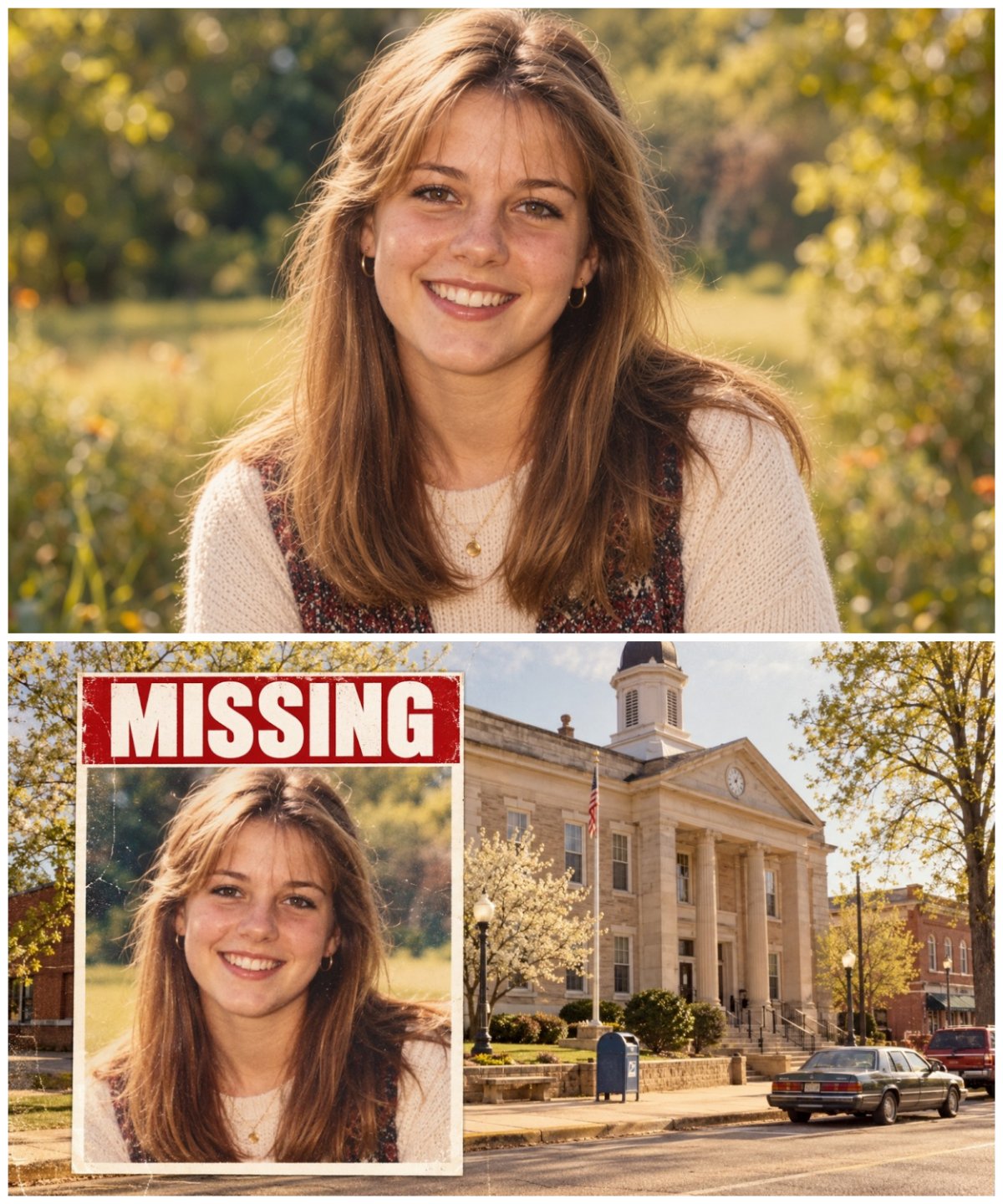
What they found exposed a secret no one was prepared for.
Otter Creek, Ohio was the kind of town where people rarely locked their doors and everyone knew why.
Sheriff Henry Whitlock had kept the county safe for 24 years.
A big patient man with a gray crew cut who knew every farm road by heart and almost never raised his voice.
His office was on the second floor of the old brick courthouse, and his white house stood just across the square, close enough that he could hear the courthouse clock strike from his porch.
His daughter Nell was 18.
She had just graduated near the top of her class, and in the fall, she was headed to Ohio State to study nursing.
She was the kind of girl who could not drive past anyone in trouble.
She had stopped for stranded motorists, for a lost beagle, and for an old farmer whose tractor had stalled in the road.
She also owned her late mother’s guitar, and on summer evenings she played it on the porch until her father fell asleep in his chair.
Her mother had died of cancer when Nell was 10, and since then it had been the two of them.
Henry raised her the best way he knew how, with too many burnt suppers and too many nights on call.
But with all the love one man could hold, Nell left him notes on the refrigerator.
Eat something.
Wear your jacket.
Love you.
He kept everyone in a kitchen drawer.
When Nell was 12, Henry took her to work one Saturday and showed her the dispatch room, a small humming room above the courthouse where every 911 call in the county came in.
A realtoreal tape machine turned slowly on a shelf, recording every word.
Every call that comes into this room is recorded and kept forever, he told her.
Nobody who dials this number is ever lost.
If you ever need me, wherever you are, dial 911 and I will hear it.
I promise you that.
Nell wrote the three numbers on the back of her hand in pen and she did not wash them off for a week.
But in the summer of 1996, the county was short-handed and Henry worked double shifts.
The notes on the refrigerator grew shorter.
Nell ate most of her suppers alone, and when he asked why she seemed quiet, she said she was already missing home.
Then she left one more note.
Friday fish fry at the lake.
You promised.
The county commission called an emergency budget meeting for that same Friday night.
Henry sighed, picked up the phone, and told Nell he would have to take a rain check.
“It’s fine, Dad,” she said a little too quickly.
Looking back, Henry would spend the rest of his life wondering if that decision sealed Nell’s fate.
Friday, July 12th, 1996 was hot and sticky, and the air smelled of cut hay and coming rain.
Nell made scrambled eggs for both of them, and wore the silver bracelet Henry had given her for graduation.
That evening she was going to a bonfire at Cutler Lake with her friends, and he was going to the budget meeting he dreaded.
“Home by midnight?” he asked.
“Midnight?” said now.
She grinned.
And if I need you, I dial 911 and you’ll hear it.
Right.
Every time, said Henry.
At 9:00, his radio crackled in the middle of the meeting.
There was a pileup on Highway 9 in the rain and fog with cars on their sides and people trapped inside.
All units were needed.
Henry could have sent his deputies, but in 24 years, he had never once let his people face a night like that alone.
He grabbed his hat and drove into the storm.
Looking back, Henry would spend the rest of his life wondering if that decision sealed his daughter’s fate.
It was 10 3 in the morning when he finally came home, soaked in gray with exhaustion.
But the house was dark.
The porch light was off.
Nell always left it on for him.
Always.
He called her name through every room.
Her bed had not been slept in, and her guitar leaned in the corner.
He ran to the driveway where her blue Chevrolet should have been parked and found only wet gravel and the smell of rain.
His hands shook as he picked up the phone.
The state police duty officer was patient and unhurried.
She’s 18, Sheriff.
He said, “Adults are allowed to leave.
Kids blow off steam after graduation.
Give it a day.” “She is my daughter,” Henry said.
And he did not wait.
By dawn, he had every deputy in the county out on the roads.
Saturday dragged by and then Sunday.
They were the longest two days of Henry’s life.
He sat beside the phone in the dark kitchen.
He barely slept.
He barely ate.
On Saturday afternoon, a trucker noticed Nell’s blue Chevrolet parked at the edge of the lot at Miller’s Crossing, a truck stop on Route 9, 40 m from home.
The doors were locked and the keys were gone.
Inside, the seats were neat and her guitar pick sat on the dashboard.
There was no blood and no sign of a struggle.
One small detail escaped everyone’s notice.
A hairline crack in the right headlight.
It was as if Nell had simply evaporated into the wet summer air.
Before we continue, if this story has kept you watching, please subscribe.
Your support truly means a lot to us.
But something didn’t feel right.
Radio stations read out Nell’s description every hour.
Volunteers taped her photograph to every telephone pole in Otter Creek, and the church basement became a command post, where women in raincoats poured coffee at all hours.
State troopers brought in tracking dogs, which took Nell’s scent from her pillowcase, and pulled hard across the truck stop lot.
Then they stopped at the edge of the highway, circled and whed, but the scent simply ended as if Nell had climbed into thin air.
A helicopter swept low over the fields for 3 days.
Henry searched every night until his boots split at the seams, knocking on farmhouse doors and questioning truck drivers along Route 9.
Cody Ames, Nell’s boyfriend, searched beside him for two days, pale and silent until he could barely stand.
The state police sent Detective Carl Ostrouski, a tall stooped man of 50 with a soft voice and a habit of chewing an unlit pipe.
He sat at Henry’s kitchen table and listened for 2 hours without interrupting.
“Tell me everything,” he said gently. even the things that seemed too small to matter.
Nell’s best friend, Jenny, remembered something strange at the bonfire just before Nell left.
She had stared into the flames and said she wished she could be somewhere nobody knew whose daughter she was.
Jenny had laughed and called her dramatic.
Now those words hung in the kitchen like smoke.
The state police latched on to that sentence.
By Monday, Arrowsk’s superiors had settled on a simple theory.
A bright girl, a famous father, and a sudden urge to run.
But Henry refused to believe it.
That night, he went through Nell’s room drawer by drawer, and inside her guitar case beneath a spare set of strings, he found two folded papers.
The first was her acceptance letter from Ohio State with the orientation date circled in red pen.
The second was a list in her slanting handwriting with every eye dotted by a tiny circle.
It read fan quilt alarm clock shower shoes call dad every Sunday.
Henry read the last line four times and then he sat down on her bed with her mother’s guitar in his lap and did not move for a long while.
No girl who wrote that list was running away and Ostrouski agreed.
But if Nell had not run, then where had she gone?
Every road led back to the truck stop, and the truck stop led nowhere.
The trail ended there.
The second lead came from the night clerk at Miller’s crossing, a 19-year-old who appeared at the Whitlock door on Thursday, twisting his cap in both hands.
“I was on a smoke break behind the building, and I’m not supposed to leave the register,” he whispered.
But around a/4 to 11, a girl came in.
She was shaking.
She used the pay phone and she was crying.
She looked like she was carrying something too heavy to hold.
About half an hour later, a red pickup pulled in.
A guy got out.
She hugged him hard and they drove off together.
But the clerk had not seen the plate, and he could not pick the young man out of a stack of photographs.
Ostrouski searched for the red pickup all week.
It never turned up.
He also questioned Cody, who said in a hollow voice that he had gone to bed early and had not heard from Nell.
Henry put a hand on the boy’s shoulder and told him none of this was his fault.
Cody looked at the floor.
Then the phone company sent over the records for the pay phone at Miller’s Crossing and Ostrouski went very still.
The timeline was impossible to ignore.
At 10:47 that night, someone had called the apartment of Cody Ames, Nell’s boyfriend of one year, and the call had lasted 6 minutes.
Cody drove a red Ford pickup and Cody had told police and Henry himself that he went to bed early and slept straight through until morning.
If you want more emotional cold case stories like this, please subscribe.
Your support truly means a lot to us.
But the most disturbing piece of information was yet to come.
Cody was 19 years old, a polite, softspoken clerk at Wilkins Hardware, who ate Sunday’s supper at the Whitlock House and called Henry, “Sir.” Henry had taught him to drive a stick shift.
When Ostrouski drove to his apartment above the hardware store, the door was unlocked, the bed was stripped, the closet was bare, and the red pickup was gone.
The landlord said Cody had paid his rent in cash through the end of September on Sunday morning.
They had missed him.
Within days, the whole county whispered that Cody had done something terrible to Nell and run.
Divers dragged Cutler Lake for 2 weeks and found nothing but rusted engine parts.
Ostrouski traced Cody as far as a crabboat bound for Alaska, but the boat was at sea for months, and by the time it docked, he had vanished again.
The investigation hit a massive, immovable brick wall.
The state police moved the file to the bottom of a pile.
Henry retired in 2002, and Ostrouski retired 2 years later.
The official boxes went to the basement archive, but Ostroski kept a copy of every page in a cardboard box at home because he could not make himself let it go.
For 22 years, there was nothing.
Henry grew old in the White House across the square, and his knees achd, and he walked with a cane.
He never sold it, and every evening he switched on the porch light just in case.
Every year on July 12th, he sat beside the kitchen phone until dawn.
In a kitchen drawer, he still kept every note that Nell had ever left on the refrigerator.
Then, in the spring of 2018, the phone rang.
It began with a county technician named Marcus Bell, who was 29 years old and spent his days replacing outdated equipment.
The dispatch center had moved to a new building years earlier. and the old room above the courthouse was full of dusty shelves.
That April, the county hired Marcus to copy its old reel to real tapes onto a computer before the aging tape crumbled.
One reel carried a faded label.
July 12th, 1996, but nobody had ever listened to it.
Marcus put on headphones.
The tape was full of rain, static, and the strained voice of a very young dispatcher juggling a wreck on Highway 9.
At 9:52 p.m., a girl’s voice cut through the noise.
Please, I hit a man on Old Mill Road.
He’s not moving.
I think he’s dead.
The dispatcher asked for her name.
The girl was silent for several seconds.
Just tell my dad I’m sorry, she said.
Tell him I love him.
The line went dead.
A minute later, the dispatcher radioed a deputy to check Old Mill Road for a possible pedestrian, adding almost to himself, that the caller sounded like a prank.
Near the end of the reel, another voice reported that Sheriff Whitlock was still at the scene on Highway 9.
Marcus took off his headphones.
He had grown up looking at the faded flyer in the diner window.
He carried the reel straight to the sheriff.
The next morning, 74year-old Henry Whitlock sat in the old dispatch room with headphones over his gray hair and listened to his daughter’s voice for the first time in 22 years.
He played it three times.
That night, he had spent 5 hours in the rain saving strangers on Highway 9, only 3 miles from the pay phone where his daughter was begging someone to tell him she loved him.
He had missed her by three miles and one radio channel.
The case landed on the desk of Detective Tasha Green, who was 30 years old and had been only eight, still learning Long Division when Nell vanished.
She pulled four dusty boxes labeled Whitlock 1996 from the basement archive and found Detective Ostroski’s handwriting on nearly every page slanted and careful in blue ink.
Beside the phone records, one note stood out.
Ames lied.
Girl left willingly.
Why?
Doesn’t sit right.
In 1996, tracing a single phone number had taken weeks of paperwork.
In 2018, Green could search a national database before her coffee grew cold.
She started with what the tape had left behind.
The deputy who answered the so-called prank call had filed a report that night, and it had sat for 22 years in a binder marked unfounded.
It said he had found broken glass on the shoulder of Oldm Mill Road and a dark smear on the gravel, but no victim, and that heavy rain had begun soon afterward.
He had written one word, animal.
The next morning, Green walked Old Mill Road, a curve of gravel beside the Kesler dairy farm, and knocked on doors.
At the third house, a foreman told her about a farmand who had come to work in July of 1996 with a broken arm, saying he had fallen off a ladder.
His name was Hector Salazar, and he still worked on the farm.
Hector was 61 now, gray and softspoken, with a slight limp.
When Green showed him the flyer, he slowly took off his cap.
“I have seen this girl’s face in the diner window for 22 years,” he said.
She hit me with her car.
I woke up in the ditch with my arm broken and I walked home.
I had no papers and I was afraid of the police.
I never told anyone.
He said he had wanted to come forward a 100 times and every time his fear had won.
Nobody had died on Old Mill Road that night.
For 22 years, the only person who believed otherwise was the girl who had made the call.
Then the old clues clicked into place.
The hairline crack in the right headlight visible in the photographs of Nell’s car.
The car itself locked at a truck stop 40 m away.
The shaking girl at the pay phone and the 6-minute call to Cody Ames.
Cody’s rent paid in cash before he vanished.
And a list in the guitar case that said call dad every Sunday.
Nell had never planned to leave.
She had panicked.
Nell had not been taken.
She had run, believing she had killed a man.
But this realization only created a massive new question.
If nobody had died, then where was Nell and why had she never come home?
Before we continue, if this story has kept you watching, please subscribe.
Your support truly means a lot to us.
Green turned to the last person who had seen Nell that night.
Cody Ames was 41 years old now, and he ran the yard at a lumber company in Toledo.
When Green knocked on his door, he took one look at her badge and sat down on the front step.
“I have been waiting 22 years for someone to ask,” he said.
“I promised her I’d never tell, but I never promised I wouldn’t open the door.
He wrote an address on the back of a receipt, a small house in Bandon, Oregon.
Nell went by Ellen Marsh now, and she worked as a nurse.
Every July 12th, Cody mailed her a card with nothing inside but his signature.
She had never once written back.
Green flew to Portland, rented a car, and drove 4 hours down the coast.
She reached Bandon at dusk.
The house was small and gray shingled with fog drifting in from the harbor.
On the front porch, glowing in the fading light, a single lamp was burning.
Green stood on the steps for a long moment.
Then she knocked.
Silence.
A chair scraped.
Footsteps.
Slowly the door opened.
The woman who stood there was 40 years old with tired, gentle eyes and a hospital badge still clipped to her scrubs.
She looked at the badge in Green’s hand and then at the faded flyer and her face crumpled and steadied all in one breath. 22 years, she whispered.
I have been waiting for someone to come and arrest me for 22 years.
She stepped back and held the door open.
Come in, detective.
I’ll tell you exactly why, and I’ll tell you where I’ve been all these years.
They sat at a small kitchen table and Nell folded her hands tightly as if to keep them from shaking.
“I have to start with the curve on Oldm Mill Road,” she said.
She told it slowly.
She had left the bonfire at 9 with the rain just starting and the wipers thumping on the curve beside the Kesler farm.
A man in dark clothes was walking on the shoulder.
She saw him too late.
She heard a thump that she would hear every night for 22 years and she would wake on the anniversary at exactly 9:52.
She stopped the car and ran back.
He lay in the gravel on his side and he was not moving.
She held her fingers to his neck and felt nothing.
She was an 18-year-old who wanted to be a nurse and she was certain that she had killed a man.
I drove to the feed store and called 911 from the pay phone, she said.
The dispatcher asked my name and I couldn’t say it.
If I said Whitlock, he’d radio my dad and dad would come.
He’d find me in the road and he’d have to choose between his badge and his daughter.
Her voice cracked and I knew he’d choose me.
That was the worst part. he would have thrown away 24 years of being the man everyone trusted for me.
I couldn’t let him.
So I said to tell him I was sorry and I hung up.
But she could not go home and she could not go back to the road.
She drove to Miller’s crossing, locked the car, and dropped the keys down a storm drain.
Then she called the one person she trusted.
Cody arrived in his red pickup and asked no questions.
He gave her the $600 he had saved for a car, drove her to the bus station in Columbus, and stood on the platform until the bus pulled away.
She rode west until the money ran out in a small town on the Oregon coast, and she became Ellen Marsh.
She kept the silver graduation bracelet in a drawer and never once put it on.
She never dared to look at an Ohio newspaper and she never typed her own name into a computer.
She waited tables and studied at night.
Then she went to nursing school and for 18 years she had worked in an emergency room.
Every patient I saved, I saved for that man.
She said it was the only way I knew how to pay.
And I told myself dad had heard my message.
I told myself he knew and he was letting me go.
It was easier than imagining him still looking.
Then she took a sheet of paper and wrote one more page.
Her pen shook so badly that the ink skipped, but every eye was dotted with a tiny circle exactly as on the list in the guitar case.
She folded the page and laid it on the table.
Green waited a moment before she spoke.
Miss Whitlock, I have to tell you something.
The man on Old Mill Road didn’t die.
His name is Hector Salazar.
He woke up in the ditch, broke his arm, and walked home.
“He is alive, and he has worked at the Kesler Dair for 22 years.” Nell stared at her.
“That isn’t possible,” she whispered.
“And your father never heard your message,” Green said gently.
He was 3 mi away at the wreck on Highway 9.
He didn’t know until this spring.
He has kept the porch light on every night.
Nell pressed both hands over her mouth, and 22 years of guilt broke loose all at once.
She wept until she could not breathe, and Green simply sat beside her and held her hand.
Two days later, on a warm Sunday evening, Detective Green led Henry Whitlock up the narrow stairs of the old courthouse and into the dispatch room.
The realtore machine sat on its shelf, dusty and silent.
Beside it stood a small table with a single chair.
Henry sat down.
Then, Green began to place objects on the table one at a time.
First came the real labeled July 12th, 1996.
Next, the deputy’s report stamped unfounded.
Then a photograph of a blue Chevrolet with a hairline crack in the right headlight.
Then a list on notebook paper, fan, quilt, alarm clock, shower shoes, call dad every Sunday, and finally on top of it all, one folded page.
Henry recognized the handwriting before he read a single word.
Then he read, “Dad, it’s Sunday and I’m late calling.
It took me 22 years to find out I had nothing to be afraid of.
I’m alive.
I’m a nurse.
Pick up the phone.” He let out a cry that held 22 years of missed birthdays.
Empty chairs and porch lights burning in the dark.
His shoulders shook and Green put a steady hand on his arm.
Then the telephone on the desk began to ring.
Henry stared at it.
His hand trembled as he reached out and lifted the receiver.
And this time he did not miss it.
“Dad,” said a small voice.
“I’m here,” he whispered.
“I heard you now.
I’m so sorry I missed it.” “You didn’t miss anything,” said his daughter.
“And she was crying, too.
You were saving somebody else’s daughter.” Then came a profound, overwhelming sense of relief.
The porch light had burned for 22 years, and now at last there was someone to light it for.
Nell had not been taken, and she had not been hurt.
She had survived.
She had become a nurse, and the love between a father and a daughter had outlasted every mile.
She had been waiting in the stairwell just outside, the same stairs she had climbed at 12 with three numbers inked on her hand.
She crossed the room in a few steps and when she reached him, he did not let go of her for a very long time.
The case closed quietly with no press conference, only a short statement from the sheriff’s office.
Cody Ames’s name was cleared at last, and he stood at the back of the courthouse with his cap in his hands.
Hector Salazar met Nell at the gate of the Kesler farm, and neither of them could speak at first.
Then he told her he had prayed for the girl in the flyer every night since 1996.
And she told him she had prayed for him.
Old Detective Ostroski, 72, drove 3 hours to shake her hand, and he told her he had never stopped believing she was alive.
That autumn, Henry fastened a small brass plaque to the door of the old dispatch room.
It read, “Every voice is heard.” For 22 years, Otter Creek had imagined monsters.
People pictured a stranger on a dark road, a boyfriend with a hidden temper, a body at the bottom of the lake.
The truth was smaller and far more human.
A girl who always stopped for people in trouble.
A father who spent that night saving strangers.
A frightened young dispatcher who wrote down the wrong word.
A boy who kept a promise.
And a tape that waited on a shelf.
A call may go unanswered for a lifetime.
But love keeps the line open.
And truth, however late, always finds its way home.