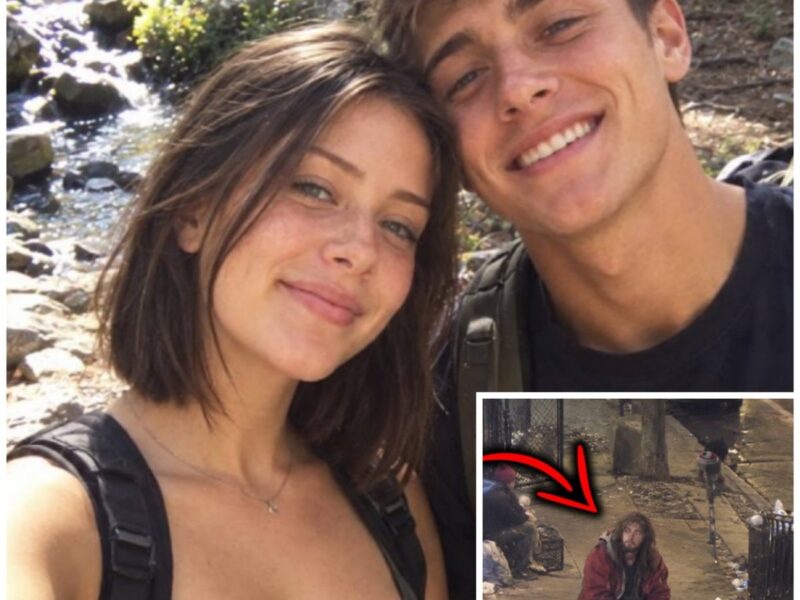
Couple Vanished In California—3 Years Later Camera Caught HIM Living On The Streets
20-year-old Amber dreamed only of a sip of freedom after an exhausting exam period.
A tent, her beloved boyfriend Andrew by her side, and the boundless forests of California.
This was supposed to be their best summer adventure.
However, it suddenly turned into an eerie trap.
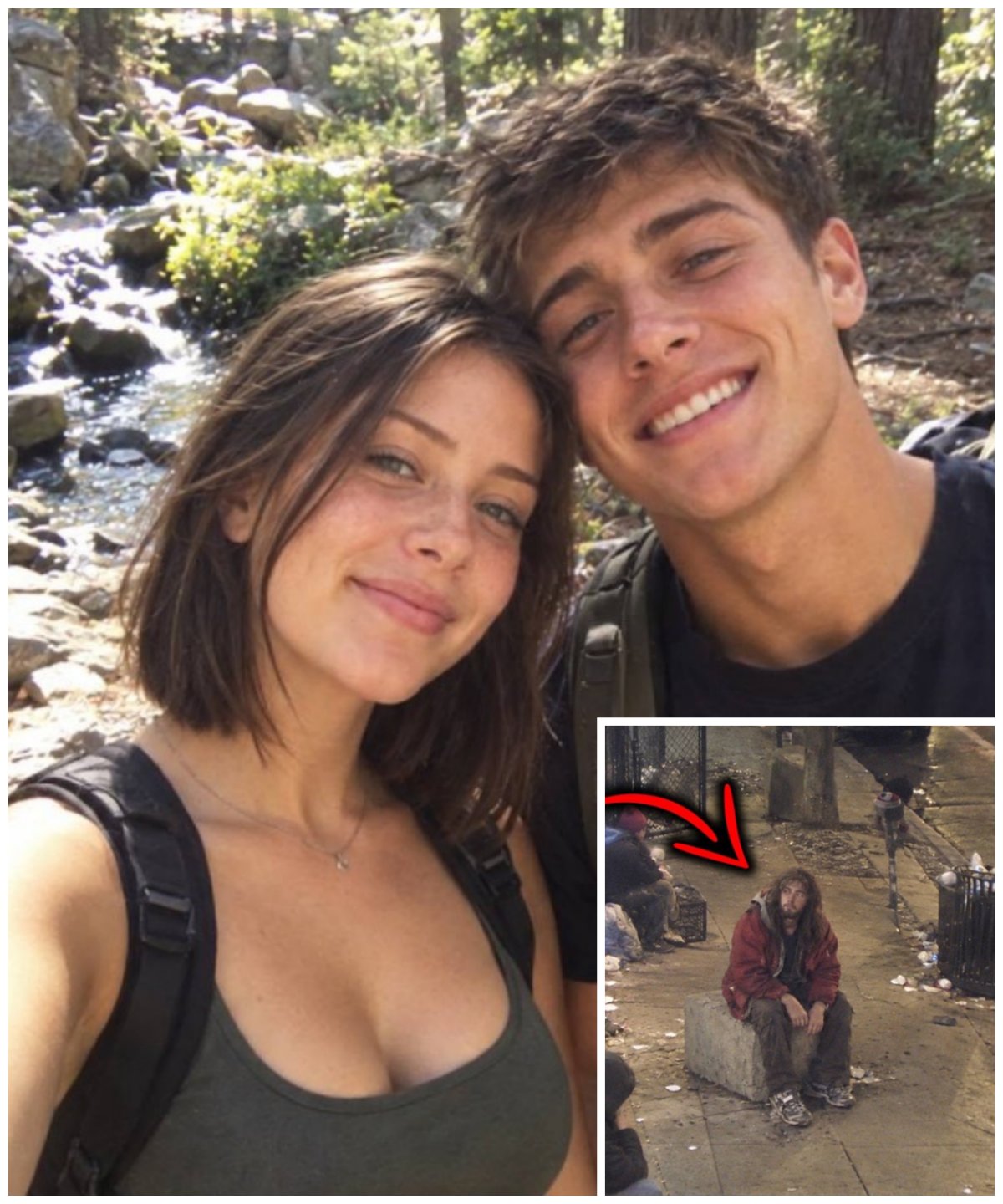
A final short conversation near a spring, an abandoned water bottle in the grass, one shoe, and an empty car in the parking lot.
The lovers seem to dissolve into thin air.
The police and the media immediately put forward convenient versions from a sudden escape to a violent attack by camp neighbors.
However, all suspicions crumble and the case ends up in the archives for three long years.
What if all the investigators conclusions were a fatal mistake?
What if one random street video could break the official version and the real evil had been hiding right nearby all this time?
To protect privacy, some names and details in the story have been changed.
Not all photos were taken at the actual location.
For 20-year-old Amber Green, this trip was supposed to be a long- aaited breath of freedom and the best adventure of the summer.
The girl had just passed an exhausting exam session and finally completed a difficult academic semester at the university.
For months, she had dreamed of escaping the stifling noisy city to feel a true connection with wild nature, breathe fresh, cool air, and enjoy majestic views together with her boyfriend, 22-year-old Andrew Thatcher.
They had been planning this trip for a long time.
The young people set off for a famous camping park in California in his father’s old but carefully repaired car, which they had been preparing for the long road for weeks.
The car was packed to the brim with hiking gear, a tent, sleeping bags, and everything necessary for a long outdoor vacation.
The morning of the disappearance seemed completely ordinary and peaceful with nothing pretending trouble.
The sun was just beginning to rise slowly above the tall crowns of ancient trees, filling the forest clearing with soft golden light.
The young couple was performing their usual morning routine, lighting a small burner, preparing a simple breakfast, and enjoying the silence.
Having finished eating, they decided to replenish their drinking water supply.
Taking empty plastic bottles, Amber and Andrew set off for a shared forest spring located near the equipped campsite area.
Near the spring, they crossed paths with other vacationers.
Later, during questioning, witnesses recalled that the couple engaged in a brief and completely relaxed conversation with them.
According to these campers, Amber and Andrew looked happy, relaxed, and carefree.
They joked, shared impressions of the local nature, and discussed plans for the day.
Saying goodbye to their camp neighbors, the couple noted that they were only going to quickly take the filled bottles back to their tent, after which they plan to take a short walk along a picturesque forest trail.
As was discovered later during the official investigation, these were the last words of the young people that anyone heard that day.
As evening began to fall slowly and dense darkness gradually covered the entire camp, neighboring campers noticed something strange.
Amber and Andrew’s tent remained dark and their car still stood untouched.
Remembering the morning conversation by the spring, people realized that the couple had never returned from their walk.
After waiting a little longer in the hope that the young people were simply delayed on the trail, concerned neighboring vacationers decided to act on their own.
Taking powerful flashlights, several men walked along the nearest marked trails, loudly calling Amber and Andrew by name.
However, the night forest answered only with dull silence and the rustling of leaves.
The first independent searches proved completely feudal.
The next morning, a police task force arrived at the scene along with local rescuers.
The campsite territory and the adjacent forest area were immediately declared a search operation zone.
Investigators and volunteers began a thorough comb of the area, looking under every bush and checking ravines.
During these initial search measures, deep in the forest, far from the main tourist trail, investigators found the first and only evidence of the couple’s presence.
An abandoned plastic water bottle lay on the ground.
Andrew’s sweater was hanging on one of the bushes, caught on the branches as if someone had thrown it in heat or haste, and a little further in the grass.
Forensic experts found one shoe belonging to Amber.
The items found raised many questions among experienced detectives.
During the inspection of the crime scene, forensic experts failed to detect any drops of blood, signs of a struggle, or clear evidence of violence.
The fabric of the sweater and the shoe were relatively clean and had no damage that would indicate an attack by a wild beast.
At the same time, the ground and forest litter around the fines turned out to be heavily trampled by many footprints.
This significantly complicated the work of experts.
Chaotic shoe prints made it impossible to quickly read the sequence of events and did not allow them to clearly establish in which direction the girl and the guy were moving.
The official investigation found itself in a difficult situation from the very first hours.
Any direct evidence of a crime was absent, and the testimony of other vacationers was limited only to a brief morning meeting by the spring.
Detectives questioned the witnesses in detail, but no one present in the camp heard cries for help, suspicious noises, or car sounds on that fateful day.
It seemed as if two people had simply dissolved into thin air amid the dense California forest, leaving behind only a few personal items and a multitude of unsolved mysteries.
Every thoroughly combed section of the forest only added mystery to this case.
Police deployed a large-scale operation involving specially trained search dogs and helicopters with thermal imagers, but they failed to find a single new trace.
All initial hypotheses from an accident or loss of orientation on the terrain to an attack by predators quickly collapsed due to the lack of any physical confirmation.
The parents and loved ones of the young people were in despair, waiting for at least some news from official figures.
The disappearance of Amber Green and Andrew Thatcher quickly attracted the attention of the local press and the public.
Journalists besieged the police station demanding new details.
But law enforcement officers were forced to admit that at that moment they did not have a single lead.
The legendary camping park, which had always been associated with a safe and pleasant vacation, suddenly turned into a sight of sinister mystery.
Andrew’s abandoned car remained parked in the camp lot as a silent witness to the fact that the lives of two young people had stopped in a single moment, leaving investigators with only confused tracks on the damp forest ground and emptiness.
Dear viewers, please like this video and subscribe to our channel by clicking the bell.
In the meantime, let us continue.
The detective task force found itself under pressure from leadership and the public.
The disappearance of two young people caused a huge resonance and law enforcement urgently needed concrete results or at least clear directions for the investigation.
From the first days, investigators put forward several main working versions to cover all possible scenarios of what happened.
Initial assumptions came down to the possibility that a sudden domestic or personal conflict could have arisen between the young people, leading to tragic consequences in the forest.
Another hypothesis considered was the assumption that the couple had consciously decided to stage their own escape and start a new life under assumed names.
However, a detailed check of bank accounts, phone calls, personal notes, and social connections revealed no financial, psychological, or personal reasons for such a radical step.
Having dismissed the version of a voluntary disappearance, detective teams focused on detailed interviews with all visitors to the camp.
During repeated conversations, operatives again paid attention to the married couple who had talked to the girl and guy by the spring immediately before their departure.
The police were drawn to this formal conversation as these particular witnesses were the last to see the young people.
During separate questioning of the man and woman, investigators noticed a significant inconsistency in their testimony, which immediately raised suspicion among law enforcement officers.
The reason for the close attention of detectives was that during repeated questioning, the couple could not identically describe the time when the guy and girl left the spring.
The woman confidently maintained that they set off toward the trail around 10:00 in the morning.
On the other hand, her husband during a separate conversation named a completely different time, stating that it happened almost 40 minutes later.
In itself, such a difference in time could have been a common human error or forgetfulness.
But against the backdrop of the mysterious disappearance of two people, any detail attracted heightened attention from the investigative team.
Investigators began to thoroughly work through the version of this couple’s involvement in the incident.
Assumptions appeared in the case files that the spouses could have provoked a conflict or pursued the young people in the forest and after committing the crime calmly returned to their own tent and pretended as if nothing had happened.
To test this hypothesis, detectives obtained a warrant to conduct a detailed search of the vacer’s personal vehicle.
During the inspection of the vehicle, investigators made a paradoxical discovery.
In the luggage compartment, directly under the spare tire, a pair of sturdy hiking gloves was hidden, on the surface of which fresh traces of forest soil and dirt remained.
By themselves, the gloves did not serve as direct evidence of a crime, as the spouses had spent the entire morning at the campsite in nature.
However, detectives could find no logical explanation as to why ordinary hiking equipment was so thoroughly hidden in a hard-to-reach place in the car under a heavy tire.
The man and woman were subjected to a series of lengthy and exhausting interrogations.
Investigators analyzed every word of the spouses in detail, trying to find contradictions or obtain a confession.
The presence of hidden gloves with soil traces seemed to operatives like an ideal lead for quickly closing the case, but no additional evidence could be found.
Despite harsh interrogations, polygraph tests, and thorough searches of personal belongings, the investigation failed to find a single piece of direct evidence of their guilt, just as there were no crime weapons or items belonging to the missing persons.
The longer the processing of this version lasted, the more riddles arose before the investigative team.
The stranger and most difficult question to explain remained another issue.
Assuming that the young people had indeed fallen victim to a sudden attack or planned violence by this couple or someone else, why were there no blood stains or traces of a struggle at the site where the items were found?
Not a single damaged or torn item was discovered, nor was there a single clear footprint that would allow establishing the specific direction in which they might have been taken or dragged away.
Gradually finding themselves at another dead end, detectives were forced to recognize the lack of legal grounds for detaining the spouses.
The official version regarding the involvement of the camp neighbors began to fall apart.
The investigative team gradually abandoned the double murder version on the campsite territory as no expert evaluation provided physical confirmation of this hypothesis.
The suspected vacationers had to be released.
Although the shadow of suspicion from the public remained on them for a long time, the investigation returned to square one, leaving law enforcement without a single convincing version.
The answer to the main question was never received.
Investigators faced a fact that did not fit into standard forensic schemes.
How exactly could two adults disappear without a trace right in the middle of a crowded campsite where dozens of witnesses were present and where every step was seemingly in plain sight.
The case began to acquire dead-end status and the fines in the forest remained the only silent witnesses to the event.
Three long years had passed since that fateful moment when the young couple vanished without a trace from the territory of the forest camping park.
With the passage of time, the criminal case of their disappearance gradually turned into just another dead end for the local investigative team.
All possible and impossible versions which detectives had painstakingly worked through in the first months after the incident proved to be completely exhausted. operational measures no longer brought any results and new leads or testimonies completely ceased to arrive.
Eventually, in accordance with standard procedural norms, the investigative teams were officially disbanded and the multi-page investigation materials were sent to gather dust in the deep archives of the police station.
Journalists who used to wait outside the doors of law enforcement officers every day lost interest in this story and society gradually forgot about the mysterious event in California.
It seemed that this sinister secret would remain unsolved forever, joining the list of many other hopeless cases.
However, the course of this intricate story changed completely suddenly and unpredictably during the filming of a regular social news report.
A journalistic crew from an independent local television channel was preparing a special piece dedicated to acute social issues and the difficult daily survival conditions of people without a permanent place of residence.
The filming took place on the streets of a neighboring town located hundreds of kilometers from the site of the original events.
At some point, the camera operator directed the lens toward a group of homeless people resting on a bench near a local community shelter.
For a few seconds in the frame, the face of a young, exhausted vagrant with a bewildered gaze was clearly detailed in a close-up shot.
That same evening, the report went live on air.
During a broadcast repeat of the story, one vigilant viewer paid attention to the specific facial features of the homeless man.
The citizen immediately called the police hotline and confidently reported that he recognized the guy shown on the screen as 25-year-old Andrew Thatcher, who had been officially considered missing or even dead under unexplained circumstances for 3 years.
Having received these extraordinary operational data, law enforcement officers reacted instantly and without any delay.
A special arrest team along with detectives on duty immediately left for the territory and streets of the neighboring city indicated by the witness.
Searches on site did not last long.
The man was quickly located near the railway station area.
He offered no resistance, behaved quietly, and was immediately taken to the nearest police station to undergo official identity verification procedures.
A comparison of fingerprints taken from his old personal belongings and a detailed analysis of anthropometric data conclusively confirmed.
The vagrant found on the street was indeed Andrew.
However, the very first attempt to communicate with the guy put investigators at a complete loss.
During initial conversations and official interrogations in the investigator’s office, Andrew behaved extremely confusedly, fearfully, and completely detached from everything happening around him.
He persistently and sincerely maintained that he remembered absolutely nothing about his past life, didn’t know his real first or last name, had never in his life heard of that fateful forest campsite, and did not remember a girl named Amber at all.
Investigators initially treated such statements with great distrust and skepticism.
In the first working materials of the new case, operatives noted the assumption that the guy was simply playing to the crowd, skillfully acting the role of a victim and trying to deliberately conceal from the investigation the truth about the events of 3 years ago or hide his own direct involvement in a possible crime.
To definitively refute or confirm the version of pretense and simulation on the part of the detainee, the lead detective made the decision to send the guy for a comprehensive medical and psychiatric examination.
He was immediately transferred to a specialized clinic under guard where qualified doctors began a series of in-depth analyses, neurological tests, and a computed tomography scan of the brain.
The results of the medical studies conducted completely changed the investigation’s perspective on this case.
On the tomography images, specialists discovered clear and irreversible traces of an old severe injury to the skull bones and deep brain tissues caused by a strong targeted blow with a blunt object.
Based on the documented data obtained, the medical board provided an official conclusion.
The guy exhibited real severe retrograde amnesia and partial memory loss resulting directly from the physical head trauma he had experienced.
This medical discovery forced law enforcement officers to urgently reopen the investigation of the closed case in a completely different direction.
It became final that the guy had not just been located, but that he himself had been the victim of a brutal attack, the consequences of which had deprived him of all past memories.
Detectives gained real hope of finally learning the details of the events by reconstructing fragments of the guy’s memory. with the help of specialists and finding the answer to the main question where exactly the missing girl was right now and who was responsible for this crime.
Leading neurossychologists and experienced criminal specialists were immediately brought in for roundthe-clock work with Andrew.
The main goal of the doctors became the very cautious and gradual reconstruction of the chain of events from that morning.
As every minute detail from his chaotic memories could point in the right direction for further searches.
The guy constantly mixed up times described only broken visual images, flashes of light, and a deep sense of uncomprehended fear.
But the very fact of his appearance alive gave the investigative team a powerful push for large-scale work.
The archived file was officially retrieved from storage and handed over to the most experienced detectives to conduct repeated investigative actions based on the new circumstances.
Immediately after completing the initial series of complex medical and neurological examinations, Andrew was placed in a closed department of a local specialized hospital by decision of the investigators.
Special conditions were created for him there. 24-hour strict supervision by police officers as well as continuous care from an experienced psychotherapist and a whole team of qualified medical specialists.
At that moment, his memories of his own name, the searched forest campsite, and absolutely all events from three years ago remained practically completely erased.
This was the result of severe deep damage to the cerebral cortex sustained from the brutal injury.
The guy felt completely disoriented in space and time, had great difficulty perceiving surrounding reality, and reacted to any direct and persistent questions from detectives, only with anxious, long silence or confused, quiet apologies.
Daily work on collecting at least some useful information progressed extremely slowly and with difficulty.
In order to break through this thick wall of psychological detachment, even a little, and evoke at least some visual associations in the guy’s subconscious, detectives decided to use preserved photographic materials from the old archive case.
During another special memory recovery session, the detective very carefully and slowly laid out on the table before Andrew a preserved color photograph of 20-year-old Amber Green in which the girl smiled genuinely against the backdrop of her university’s academic building.
Seeing the familiar face, Andrew suddenly froze completely.
His breathing instantly became rapid and heavy, and in his clouded consciousness, the first painful but distinct flashes of real memories finally began to manifest.
According to the medical staff present during this questioning, the guy suddenly grabbed his head with both hands and began in a confused, broken, and trembling voice to describe horrifying pictures that emerged in his imagination.
He remembered that he and the girl were held in some dry, completely enclosed room with very thick wooden walls and without a single window or source of daylight.
In his memory, a persistent suffocating smell of dampness, dust, and old rotten wood emerged again.
Despite his difficult psychological state and emotional shock, Andrew confidently indicated that Amber had been beside him for a very long time after those events in the forest.
Gradually, step by step, the psychotherapist managed to carefully draw out additional extremely important details from the guy’s subconscious.
Andrew recalled a clear fragment of their subsequent movement.
A distinct image of a light colored, very massive vehicle with a high body arose in his mind, which in its dimensions resembled an outdated civilian off-road vehicle or an all- metal cargo van.
At the wheel of this vehicle was an elderly man with noticeable graying at his temples and deep wrinkles on his face.
According to the guy, it was this man who by force or through deception removed them from that enclosed wooden room in an entirely unknown direction.
Further, Andrew’s memories became chaotic, broken, and extremely difficult to perceive.
Once again, he could in no way clearly explain to the investigation how exactly he had parted with the girl and for what reason he had ended up on the street all alone.
Only the final moment was etched into his memory when he suddenly woke up on a cold paved street in an unfamiliar city with a burning severe pain in the back of his head.
He had no documents, money, or the slightest understanding of who he was, what his name was, or where exactly he was located.
All subsequent years had turned into a continuous, unbroken fog of daily survival among casual passers by, street cold, and merciful charitable organizations.
These new testimonies obtained during exhausting therapy sessions gave the police and the entire task force firm and justified hope.
Amber might still be alive. the presence of specific descriptive traits in the witness’s testimony, the detailed image of a light massive vehicle, the description of the elderly man, and the mention of an enclosed wooden room allowed the task force to radically change the main vector of all search measures.
Detectives finally realized that they were dealing not with a double murder or an accident in the wild, but with a targeted long-term abduction and confinement of people.
Investigators immediately connected experienced criminal analysts and artists to create the first detailed composite sketch of the elderly man based on Andrew’s subjective descriptions.
Simultaneously, operatives began a large-scale and thorough check of absolutely all light colored SUVs, minibuses, and vans registered in the region that belonged to elderly individuals.
Each new fragment of the guy’s memories was immediately recorded in the official protocol, gradually forming an entirely new chain of evidence in this high-profile case that until very recently had seemed completely hopeless, dead, and permanently closed to investigators.
The detailed composite sketch created by experienced analysts and the significantly clarified vehicle specifications provided the entire task force with clear and understandable parameters for conducting a large-scale filter of a massive data set.
Investigators immediately retrieved the preserved registration lists of absolutely all visitors to the forest camp who were officially or unofficially on the territory at the time of the young people’s disappearance from the archive vaults.
Painstakingly and meticulously checking every individual last name, car make, license plate number, and exact departure date from the recreation area, analysts began methodically excluding from the list those individuals who had an unquestionable confirmed alibi or traveled in compact city sedans or motorcycles.
As a result of this lengthy and painstaking comparison of registries, the operative’s attention was finally drawn to a registration card in the name of 55-year-old Tyler Yardley.
According to the retrieved camp documents, the man had arrived at the forest zone on the eve of the fateful events completely alone, unaccompanied by companions, friends, or family.
During additional questioning of the administration staff and camp attendants on duty, it turned out that this visitor behaved as quietly and secretively as possible, did not interact with any of his tent neighbors, and tried to remain completely unnoticed by those around him.
The man suddenly left the camp territory early in the morning, even before the first police squads arrived at the scene and initial search operations began.
Back then, during the very first investigation 3 years ago, no one among the witnesses or law enforcement officers paid proper attention to Yardley’s figure.
The man seemed completely average, unremarkable, and raised no suspicions among passers by or other campers.
The absence of any loud conflicts, scandals, or obvious oddities in his behavior allowed him to leave the forest area peacefully and unhindered at the exact anxious moment when all the attention of the alarmed campers was fully focused on the search near the spring.
Having obtained a specific last name, detectives immediately sent official urgent requests to central databases and criminal archives.
The results of this check proved truly shocking and instantly changed Yardley’s procedural status from an ordinary witness to the main suspect and subject of the case.
It turned out that the 55-year-old man had a long diagnosed severe mental disorder and a deep morbid distorted rejection of modern morality, traditional values established in society and generally accepted norms of behavior.
According to retrieved materials and records of his past offenses, Yardley already had a history of systematic police encounters in several neighboring counties.
His documented criminal background included repeated instances of aggressive behavior towards strangers, covert stalking of young individuals, and even attempts at unlawful restraint.
Although up to this point he had managed each time in a miraculous way to avoid actual lengthy imprisonment due to a lack of direct evidence or timely arranged mandatory outpatient treatment.
Official psychiatric evaluations attached to old police records described him as an extremely secretive, cold, manipulative individual inclined toward thorough preparation who possessed a morbid fixation and considered it necessary to forcibly isolate young people from what he viewed as a corrupted and depraved society.
The task force brought up all transport registries in detail and within a short time established that an old all- metal light van had indeed been officially registered in Tyler Yardley’s name for many years.
The dimensions, external details, and color of this vehicle completely matched those broken visual images that had been drawn from the witness’s subconscious during therapy sessions at the hospital.
Investigators also discovered that immediately after his urgent departure from the forest camp 3 years ago, the man had suddenly and very hastily sold his city residence, completely changed his personal phone number, and permanently cut off all communication with his few acquaintances and distant relatives.
He effectively transitioned to a reclusive lifestyle, completely refused to use bank cards, and regularly changed his temporary places of residence in remote rural areas.
The Police Analysis Center began roundthe-clock tracking of Yardley’s last possible transactions, lease agreements, and registration actions. involving criminal intelligence.
Detectives began combing real estate databases, land plots, old farms, and abandoned industrial sites in the most remote areas where the man could, without hindrance and unnoticed by neighbors, set up an isolated facility.
Every discovered detail of his past only confirmed the fact that operatives had finally gotten on the right track of a person who for three long years had remained an entirely unnoticed shadow in this complex and intricate case.
Having established strict, fully covert 24-hour surveillance over Tyler Yardley’s private house located in a remote and practically isolated rural area.
The operational investigative team began the active phase of gathering additional data.
Over several days of continuous observation from disguised posts, law enforcement officers recorded significant and highly suspicious anomalies in the man’s daily behavior.
The subject lived in the house completely alone and received no guests.
Yet regularly, several times a week, visited remote supermarkets andarmacies in neighboring towns.
There he made strange purchases clearly atypical for a lonely elderly man.
He bought significant quantities of women’s personal hygiene products, women’s clothing and shoes of various sizes, as well as supplies of food and drinking water in amounts that clearly exceeded the physiological needs of one person.
These facts documented through observation finally convinced the leadership of the search team that a person was being forcibly held inside the house.
Considering the extremely high risk to the life and health of the presumed captive, police leadership immediately developed a detailed step-by-step plan to storm the building with the involvement of tactical quick reaction unit officers.
The task force carefully calculated every second of the upcoming operation to give the suspect no chance or time to offer armed resistance, destroy important evidence, or cause direct harm to the girl.
At around 6:00 in the morning, SWAT officers initiated the forceful phase of the special operation.
Using heavy equipment, they instantly breached the sturdy front door and operatives swiftly and loudly burst inside the house.
Tyler Yardley was in a narrow hallway at that moment and taken by surprise by what was happening did not manage to offer any physical or armed resistance.
Within seconds, he was forced to the floor, completely neutralized, and his hands were secured behind his back in steel handcuffs.
During the subsequent thorough and sequential inspection of the house’s interior, detectives paid special attention to a heavy, dirty rug that completely covered the floor in a far corner utility room.
Moving it aside, investigators discovered a concealed wooden hatch that led down to a deep basement.
Carefully descending the heavy stairs, law enforcement officers found themselves before a massive airtight door equipped with several complex external bolts, latches, and a combination lock.
Opening this door, investigators discovered a small, fully soundproofed room inside without a single window fitted out for prolonged forcible detention.
In a dimly lit corner of this gloomy room, operatives immediately saw amber.
However, the girl’s subsequent behavior and reaction genuinely amazed and shocked even the most experienced police officers and SWAT team members.
Instead of rushing toward her rescuers with joy, relief, and tears, the girl huddled in deep, uncontrollable terror in the farthest corner of the room, covering her face with her hands and screaming loudly and hysterically in fear.
Through long years of harsh psychological terror, complete isolation from the outside world, and systematic targeted manipulation, her consciousness had undergone profound and irreversible deformationations.
Investigators later noted in detail in final reports that the girl genuinely and unquestioningly considered Tyler her sole protector and patron against an alleged horrible, depraved, and fatally dangerous outside world. the reality of which her captor had persistently hammered into her every day.
She put up desperate, frantic resistance against the police officers, cried, broke free, and attempted to shield the detained Tyler with her body from the tactical team, begging law enforcement not to touch her protector.
Due to the extremely high level of her panicked state, deep shock, and complete rejection of surrounding reality, police officers had to lead the girl out of the basement by force. carefully holding her arms and wrapping her in a thick blanket to prevent accidental injury.
In the yard of the house, a specially summoned emergency medical service crew and experienced criminal psychologists were already waiting for the rescued girl.
The girl was immediately placed in an ambulance and under a heavy police escort, sent to a specialized medical center to receive initial necessary physical and psychological assistance.
The detained and neutralized Tyler Yardley was brought under strict guard to a remand prison for mandatory initial interrogations and further procedural actions.
The entire drama and details of this basement rescue scene captured on officer’s body cameras became irrefutable.
Documented proof of a prolonged and severe crime against human freedom.
Investigators meticulously recorded and described the state of the room, seized all personal belongings, complex external locking systems, as well as numerous videotapes and audio recordings that the abductor had systematically used for years to psychologically manipulate and subdue his victim’s mind.
All law enforcement officers present clearly realized that although the girl’s physical captivity had finally ended, an extremely long, difficult, and complex road lay ahead for her and the medical team to gradually restore her mental state.
This physical release from the basement was only the first simplest step in a long struggle to return Amber to a normal perception of reality and bring Tyler Yardley to the strictest accountability for the ruined fates and lives of two young people.
Following the arrest of the suspect and the seizure of important physical evidence, the investigative team together with forensic experts began a meticulous examination of all materials recovered from the private residence.
In parallel, prosecutors, operatives, and involved analysts gradually uncovered horrifying and shocking details of what had actually been happening to the girl throughout all three years of her enforced disappearance.
Numerous materials from the reopened criminal file step by step assembled a striking and eerie picture of the systematic, methodical, and cold destruction of a human personality.
As investigators established in detail during the inspection and documentation of circumstances at the private property, the perpetrator had prepared for the commission of this grave crime well in advance with exceptional thoroughess and calculation.
Secretly from all his few neighbors, acquaintances, and local authorities, the man had equipped a completely isolated room in the basement of his remote house.
During their inspection, the forensic service documented the presence of specialized professional soundproofing material on the walls and ceiling, heavy metal doors with several airtight seals, as well as an autonomous ventilation system hidden from outside eyes.
All these specialized technical solutions completely and indisputably precluded any attempt to send an alarm signal or the slightest contact between the girl and the external world.
From the very first day of her forced confinement, the abductor deliberately refused the use of classic physical violence, torture, or constant crude abuse.
Instead, he made his main gamble on cruel, methodical, systemic, and finally calculated psychological terror.
The man completely deprived the girl of the slightest concept of the actual passage of time.
Windows, clocks, calendars, newspapers, or radio receivers were entirely absent from the basement.
Artificial electric light was turned on and off exclusively at the house owner’s discretion, causing the captive to completely lose her sense of day and night within a short period, constantly confusing the days, weeks, and months of her stay in the dark.
According to criminal psychologists who later analyzed the private journal entries and audio cassettes seized during the search, the perpetrator conducted multi-hour exhausting conversations with the girl daily.
During these monotonous and psychologically heavy talks, he methodically and systematically distorted surrounding reality, poisoning her consciousness with false interpretations of events.
The man patiently and completely calmly persuaded the captive that the entire world outside the walls of that room had fallen into complete decay, full of lies, cruelty, deadly diseases, and moral sin from which he had generously, sincerely, and selflessly saved her.
With particular, refined cruelty, the abductor struck at the girl’s most painful and vulnerable memory.
On the audio recordings preserved and attached to the case, investigators heard him repeating to the captive again and again that her boyfriend had turned out to be an ordinary coward.
Investigators documented numerous fragments of these conversations in which the man persistently tried to convince the girl that the guy had betrayed her in the very first minute of danger, easily abandoned her in the forest, immediately forgotten about her existence, and was now calmly continuing to enjoy his carefree life in the big city.
In this artificially created abnormal reality, the man constantly and purposefully positioned himself not as a dangerous abductor or criminal, but as her sole true protector, caring guardian, and selfless savior.
He systematically instilled in the girl the idea that without his daily care, food, and protection, she simply would not be able to survive in that dangerous and hostile outside world.
Completely cut off from sunlight, natural fresh air, any healthy human communication, and familiar life reference points, the girl gradually broke under this colossal continuous psychological pressure.
With the passage of time, a constant feeling of complete helplessness, deep despair, and an artificially cultivated emotional dependence gained final dominance over her will and mind.
As forensic medical experts noted in their preliminary conclusions, over time the girl completely and unconditionally resigned herself to her tragic fate.
She permanently ceased offering any resistance, stopped looking for ways to gain freedom, and even began to sincerely believe in the distorted, morbid delusions and ideology of her abductor.
This process of psychological deformation proved so profound that the girl completely lost her own individuality, perceiving the basement room as the only safe place in the universe.
Investigators analyzing the records found in the house in detail, established that the man carefully and punctually documented every stage of the change in her behavior, recording on paper and film all steps of the complete subjugation of a human mind.
Furthermore, during additional investigative procedures in the basement level, law enforcement officers discovered numerous specialized guide books and books on practical psychology that the subject used to manipulate the captive’s mind.
The man had developed his own system of rewards and punishments where any attempt to remember her past life was punished by deprivation of light or food for several days. whereas complete submission and repetition of his own thoughts were rewarded with additional privileges or longer conversations.
All physical evidence seized from the basement, audio recordings of monologues, videotapes, and results of initial medical examinations were officially attached to the investigation file.
They became irrefutable documentary confirmation that the criminal acted with extreme cynicism, detached cold-blooded calculation, and systematic intent, turning 3 years of the girl’s life into a continuous psychological nightmare.
The investigative team documented every element of this horrific detention system in detail, preparing to submit the gathered materials to court for the rendering of a just verdict.
The court trial of Tyler Yardley took place within the shortest possible time frame thanks to the overwhelming mass of collected physical evidence, surveillance materials, and detailed protocols compiled by the operational investigative team on the basis of comprehensive forensic psychiatric evaluations.
The man was declared fully sane at the time of committing all crimes charged against him as well as fully aware of the consequences of his actions.
The circuit court sentenced him to the maximum penalty in the form of a lengthy prison term without the right to early release, sending the criminal to a maximum security correctional facility.
The subject was taken into custody directly in the courtroom immediately after the announcement of the verdict, permanently isolating him from society.
Meanwhile, Amber, immediately after her physical liberation, was placed in a specialized rehabilitation center with a strict closed visitation policy.
An experienced multidisciplinary team of leading psychotherapists, neurologists, and specialists in working with severe post-traumatic stress disorders immediately began daily work with the girl.
The main most difficult and most prolonged goal of the doctors became the gradual delicate path toward the complete destruction of the morbid delusions, fears, and false beliefs instilled in her during 3 years of psychological terror.
The process of rehabilitation and recovery progressed with immense difficulty and regular setbacks.
In the first sessions, the girl continued to demonstrate deep unhealthy distrust toward all medical staff, categorically refused proper nutrition, and regularly with tears demanded to be returned to her safe basement room.
However, thanks to the extremely delicate, patient, and systematic work of specialists, as well as the use of modern techniques for gentle social and psychological adaptation, the girls slowly began to realize the terrible and bitter truth about her three-year captivity.
The hardest and most painful stage of the entire therapy was accepting the real facts about her past life and the fate of her loved ones.
Psychotherapists very carefully, step by step, provided her with official extracts from the investigation files, archived photographs, and witness testimonies for review.
With immense psychological pain, the girl learned that Andrew had never abandoned her, had not betrayed her, and had not been continuing some carefree life in the city, as her abductor had persistently maintained in the dark for years.
The whole terrible truth was revealed to her that the guy himself had been the very first victim of the brutal attack, had suffered a severe physical head injury, and for all those 3 years had actually been surviving on the streets, having completely lost his own memories.
This discovery became a true turning point in Amber’s difficult psychological state.
Learning that her loved one was completely innocent, the girl was able for the first time in all three years to cry genuinely and at length, finally throwing off the heavy burden of artificially cultivated resentment, loss of faith, and deep disappointment.
This feeling of helplessness gradually gave way to a sincere desire to see the guy in person and help him restore his own lost memory.
Subsequently, after lengthy and thorough preparation by the doctors of both patients, their first meeting after three years of exhausting and tragic separation took place in a quiet, cozy park at the rehabilitation center.
Medical workers and psychologists watched this event continuously and attentively from a distance to immediately provide emotional support at the slightest need.
According to the medical staff present, this meeting proved to be extraordinarily touching, quiet, and at the same time unbelievably heavy.
Two deeply broken people whose fates had been brutally damaged by a crime found themselves on the Park Avenue.
The guy looked at the girl with partial understanding and severe memory loss, trying amidst broken, painful flashes of memory to recognize the features of the person whose preserved photograph had once brought him back to consciousness.
The girl stood before him, bearing heavy psychological trauma, trembling from the emotion and tears she experienced.
They stood beside each other in silence for a long time under the soft autumn sun, not daring to take the first step.
There were no loud words, hystericss, or exhausting questions about the past as both deeply realized the full weight and depth of the pain they had endured.
Then, slowly taking a step toward each other, they carefully and tightly took each other’s hands.
This simple, sincere, and profound gesture became that very symbolic boundary that permanently separated them from their past nightmare, the basement and the darkness.
Investigators officially closed this large-scale criminal case, transferring all numerous volumes to the archive vault, as all those guilty had been brought to strict account, and the missing people had finally been found.
Ahead for Amber and Andrew lay a very long, complex, and challenging road of long-term medical treatment, prolonged social adaptation, and a daily struggle with the consequences of the horror they had experienced.
However, combining their strength, love, and the support of their families, they took their first but most important and decisive step toward finally overcoming the past and returning to a real full life in the light.
Ladies and gentlemen, right now on your screen there are two links.
On the left is our latest video and on the right is a square link to our channel.
Please like this video, write your thoughts in the comments and then check out our other videos.
Thank you.