ILLINOIS 1960 Cold Case Solved After 65 Years — Her Killer Was a Police Officer
In 1959, a young man applied to join the Chicago Police Department.
Like every applicant, he was fingerprinted.
Those prints went into his application file.
One year later, investigators working the killing of an 8-year-old girl found a fingerprint on the strap of her purse.
A print from a crime, a set of prints from a job application.
Both would end up in the files of the same department.
And still, the case stayed unsolved for 65 years.
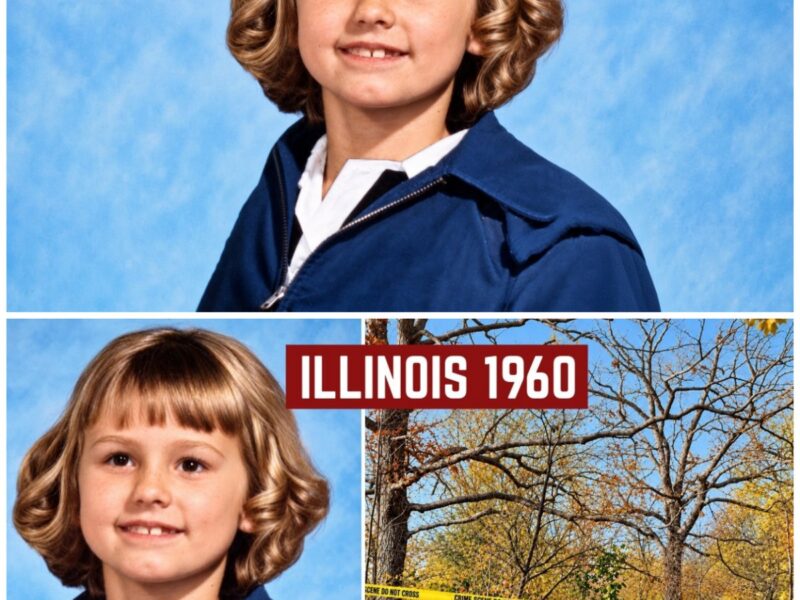
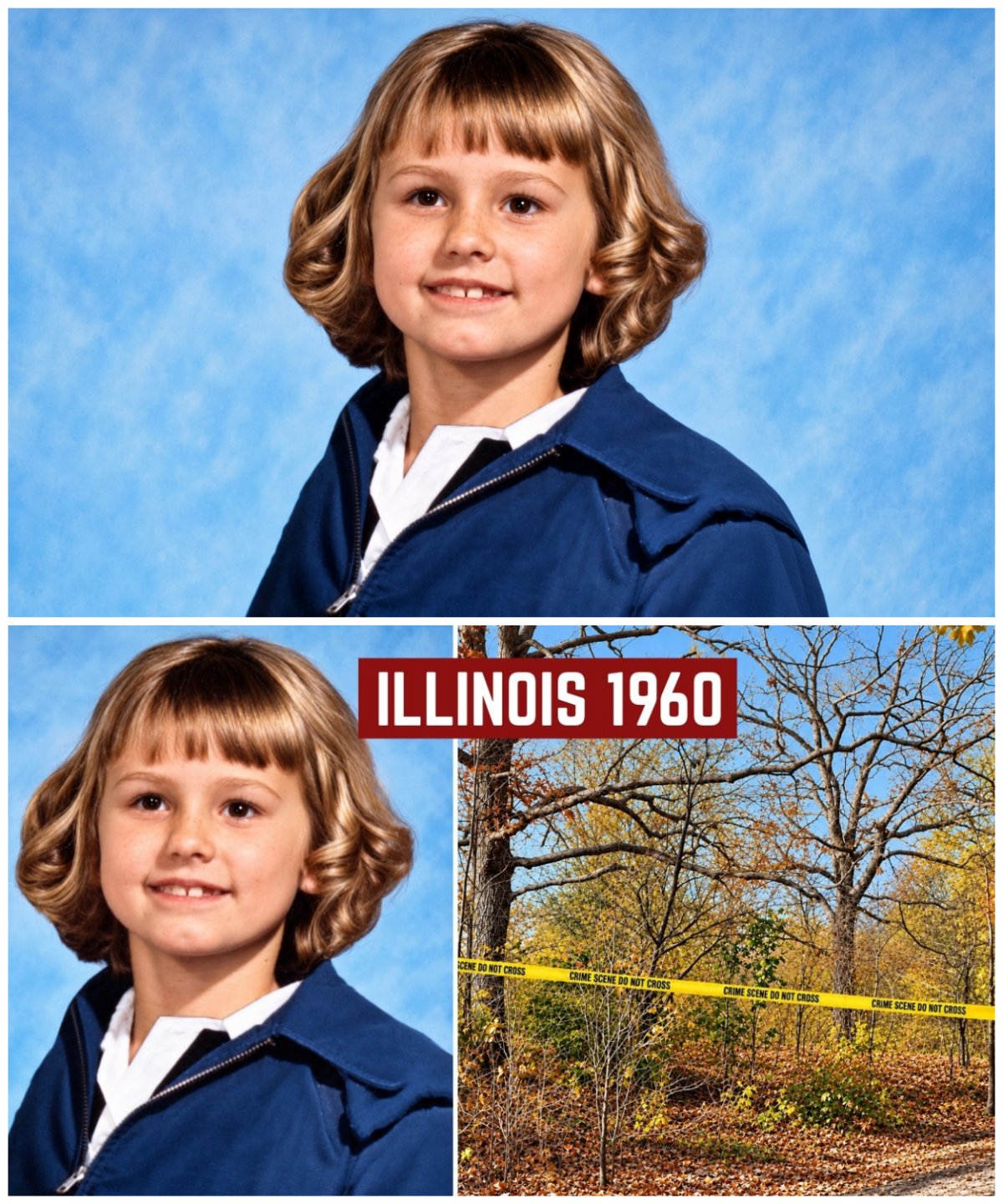
The girl was Gloria Kowalovich.
She was killed in November 1960.
In 2026, Chicago police cold case detectives named the man they believe killed her.
His name was Thomas Francis McCannernney.
In 1960, he was 24 years old and he was a Chicago police officer.
He was never charged.
He never stood trial.
He died in 2006, 20 years before investigators connected his name to Gloria’s.
It would be easy to assume the answer had been sitting in plain sight.
The record does not support that.
Having two sets of prints inside one large department does not mean anyone had a reason or a practical way to place them side by side.
So, what finally brought them together?
And why did it take so long?
The answer begins on the south side of Chicago with a third grader on her way to church.
Before the investigation, before the evidence, there was a child.
Gloria Kowalitz was born in 1951.
By the autumn of 1960, she was in the third grade.
Reports today describe her as 8 years old.
Some newspapers at the time listed her as nine.
The difference is small, but it is a reminder that much of this case reaches us through records written quickly more than six decades ago.
Her family lived in West Anglewood, a neighborhood on the south side of Chicago.
Her father was Edward Cowleitz.
Her brother Adam had been born only a few months before that November.
The family’s parish was St.
Mary of Mount Carmel.
Some newspapers outside Chicago printed the name as Our Lady of Mount Carmel.
Either way, it was a Roman Catholic church in the neighborhood, and it was the church Gloria attended.
Much of what we might want to know about Gloria is not in the public record. what she enjoyed, how she spent her afternoons, who her closest friends were.
Those details belong to her family, and they have not been widely published.
This documentary will not fill those gaps with guesses.
What the record does show is the shape of her world.
Her school and her church were both less than half a mile from her back door.
It was a small world, and it was close to home.
On the morning of Saturday, November 12th, 1960, Gloria Kowalitz left her home to attend mass.
The church was about three blocks away.
She never arrived.
Somewhere along that route, Gloria disappeared.
More than 65 years later, the exact point where she was taken has still not been publicly established.
There is a starting point, a destination, and a gap of three blocks between them.
What happened next unfolded in a matter of hours.
Shortly before noon that same day, a driver for a laundry company based in McKinley Park was traveling through Palos Park in the southwest suburbs of Cook County.
He stopped along 104th Avenue about a mile south of Route 83 beside a wooded area.
There he found Gloria.
She had been shot.
That morning she had set out for mass.
By midday she was found on a wooded roadside more than 15 mi from home.
Investigators concluded from what they found at the scene that Gloria was still alive when she was brought to those woods.
The search for evidence began immediately.
Using a metal detector, police recovered a single spent bullet casing from the ground.
Her shoes and her purse were found a few feet from where she lay.
Her coat was not there.
It was later found several miles away, separated from everything else.
Then came the details that would matter most.
Investigators found fingerprints on the strap of Gloria’s purse.
They also found fingerprints on her Bible.
For investigators in 1960, this was promising.
A casing can sometimes be linked to the weapon that fired it.
A fingerprint belongs to one person alone.
Together, they offered something many investigations never have, physical traces of the person responsible, but evidence only becomes an answer when it can be matched to someone.
In 1960, investigators could compare a print against known records, but there is no public record of any comparison that identified the person who left this one.
Without a successful match, the fingerprint could not give them a name.
To understand why, it helps to know how fingerprint files worked at the time.
Records were kept on paper cards and searched by hand.
Trained examiners compared ridge patterns one card at a time.
Those files were organized around complete sets of 10 fingers taken at a station or an office.
A single print lifted from a purse strap was a fragment by comparison and far harder to search across thousands of cards.
When investigators had a suspect, the task was simple.
Pull his card and compare.
When they did not, the print could sit in the file waiting for a name.
The casing had the same limit.
Without the weapon, it could not point anywhere on its own, and there was more on Gloria’s clothing than anyone at the time could detect.
Traces were left behind that the science of 1960 had no way to read.
For now, the clothing was simply evidence collected and stored.
So, by the afternoon of November 12th, investigators had a crime scene, a timeline measured in hours, a casing, and fingerprints.
What they did not have was a single name to test any of it against.
Later that day, Edward Kowalich identified his daughter near the place where she had been found.
The investigation that followed was extensive.
Over the course of the case, police would interview more than 1,300 people.
Her clothing was displayed on a dress mannequin for press photographs.
The story spread beyond Chicago.
By Monday, November 14th, it was running in the Orlando Sentinel in Florida.
Within days, investigators had another case to consider.
On the evening of Sunday, November 13th, in Pauling, Ohio, 14-year-old Nancy Eaglesen was walking home from the movies with her 5-year-old sister, Cheryl.
Near the corner of Flat Rock Drive and East Jackson Street, a man in a car offered them a ride.
When Nancy declined, he forced her into the car and drove away.
Cheryl ran to a neighbor’s house.
Nancy was found the next day in a wooded area about 8 mi away.
Officers looked into whether the two cases could be connected.
No connection was ever established, and nothing in the public record links NY’s death to the man later named in Gloria’s case.
Nancy Eaglesen’s killing remains unsolved today.
In 2023, Ohio authorities released a composite sketch of a suspect based on what Cheryl remembered more than 60 years later.
On Wednesday, November 16th, 1960, Gloria’s funeral was held at St.
Mary of Mount Carmel, the church she had set out for 4 days earlier.
More than 1,000 people attended.
The Chicago Police Department provided an escort.
Six of Gloria’s third grade classmates served as her pawbearers.
She was buried at Mount Carmel Catholic Cemetery in Hillside, Illinois.
That same day, a newspaper in Hammond, Indiana, reported that police had been unable to find a solid clue to the identity of the person responsible.
The weeks became months.
Tips came in and were checked.
The Tribune later described the search as mired in tips, dead-end investigations and arrests that led nowhere.
By the spring of 1961, about 6 months after Gloria’s death, the search had lost its momentum.
This channel documents investigations like this one.
From the first piece of evidence to the moment it finally makes sense.
If that is what you come here for, consider subscribing.
In 1961, this case had just gone quiet.
The evidence from November 12 was still there. the casing, the clothing, the fingerprints on her purse strap.
All of it was collected, labeled, and stored.
After 1961, Gloria’s case largely disappeared from public view.
The man police now name as the suspect went on with his career.
Thomas Francis McCannernney was a United States Army veteran.
In 1960, he was a patrol officer on Chicago’s west side.
In 1964, he was promoted to detective.
Over the years that followed, his assignments took him across the city, investigating burglary, vice, and gangs on the south side.
At one point, he worked as a homicide detective.
Public reporting does not indicate that he ever worked on Gloria’s case.
He stayed with the Chicago Police Department until 1987.
He died in Las Vegas in 2006.
For 46 years after Gloria’s death, he lived without his name ever being publicly connected to it.
During those same decades, Adam Kowalitz grew up without any memory of his sister and without knowing who had taken her.
Meanwhile, the science changed.
DNA analysis made it possible to tie biological traces to a single person, and testing became sensitive enough to work on older and smaller samples.
Gloria’s clothing was still in storage.
In July 2010, nearly 50 years after her death, the Chicago Police Department used grant funding to send Gloria’s dress to a DNA laboratory.
The fingerprints from her purse strap and her Bible were submitted for testing as well.
It was the first time the evidence from 1960 had been examined with modern forensic tools. 5 months later, the laboratory reported a result.
According to Lieutenant Mark Karns of the department’s area 1 detectives, the testing revealed a male DNA profile from biological evidence on Gloria’s dress.
For the first time, investigators had a genetic profile of the man connected to the evidence.
A DNA profile is a set of markers that taken together is effectively unique to one person.
Unlike the 1960 fingerprint, it could be compared by computer against large collections in seconds.
The profile was entered into Kotus, the FBI’s combined DNA index system.
KODS is a national database of DNA profiles collected by law enforcement agencies across the United States.
Most of the profiles in it come from people who have been convicted of or arrested for crimes along with evidence from unsolved cases.
That shaped what the search could do.
If the man’s profile was already in the system, the search could produce a name.
If he had never been entered, no search of Cotus could find him directly.
Karns said several new suspects were developed.
Not one name.
Several.
Each had to be examined.
Each had to be confirmed or ruled out.
And at the end of that process, the case remained open.
Investigators now had what they had lacked in 1960, a profile of the man they were looking for, but they still did not have his name.
Some investigations break open in a single moment.
Others move forward one test at a time across decades.
If you want to follow cases like this one through every stage, this is the place to do it.
For years after 2010, the profile went unmatched.
Then in 2024, the department used another federal grant to send a second piece of evidence to the FBI, Gloria’s coat.
This time, the method was different.
Investigative genetic genealogy, which came into wide use after a high-profile California case in 2018, does not depend on the suspect being in a criminal database.
Instead, investigators compare an unknown DNA profile with people who have voluntarily submitted their DNA to family tree websites.
Those people are not suspects.
They may be distant relatives.
By building family trees outward from those matches, genealogologists can narrow the search toward a single family and eventually a single person.
This was the method built for exactly the problem Gloria’s case had carried since 2010.
Investigators had a profile but no name, and the man it belonged to did not need to have a criminal record to be found.
There is an important limit to this technique.
A family tree match is a lead, not proof.
Federal Justice Department policy calls for a genealogy lead to be confirmed by a direct DNA comparison before it is treated as an identification.
Earlier in 2026, according to the Tribune, the FBI’s genealogy work gave the case new momentum.
It was pointing toward a name.
In July of 2026, according to Lieutenant Karns, Thomas McCannernney was positively identified as the source of the DNA recovered from Gloria’s dress.
The name belonged to a man who, in November 1960 was a Chicago police officer.
For investigators, this was the moment the case changed.
Consider what that identification meant.
In 1960, police had questioned more than,300 people.
In 2010, a database search had produced several suspects, and none had closed the case.
Now, for the first time in 65 years, the evidence on Gloria’s clothing had been tied by investigators to one specific person, but a DNA identification was not the end of their work.
The next step involved evidence that had nothing to do with DNA.
Detectives turned to McCannernney’s 1959 application to the Chicago Police Department and to the fingerprints he had submitted to join the force.
They compared those prints to the fingerprint taken from the strap of Gloria’s purse in 1960.
According to investigators, they matched.
That fingerprint had been part of the case from the first day.
It had been lifted, recorded, and stored.
In 2010, it had been submitted for testing again.
For 65 years, it had been waiting for a name, and a set of prints that investigators say matches it had existed inside the department’s own records since before Gloria was killed.
The evidence had never been missing.
The connection had The fingerprint also mattered for another reason.
It was entirely separate from the DNA.
It came from a different object, was collected in a different era, and was compared by a different method.
Both, police say, pointed to the same man.
There was also the firearm evidence.
According to the Tribune’s reporting, McCannernney owned three cult revolvers, the same type of gun used to fire the bullet recovered in Gloria’s case. that establishes that he owned guns of the same type.
It is not the same as matching a specific weapon to the bullet, and no such match has been publicly reported.
Taken together, the DNA, the fingerprint comparison, and the firearm evidence were the basis for the department’s conclusion.
The Tribune described that conclusion as the result of a series of ballistics tests, fingerprint comparisons, and DNA tests carried out over several years.
Each line of evidence came from a different moment in the case.
The casing and the fingerprint were collected on the first day in 1960.
The DNA profile came from testing in 2010.
The name came from genealogy work begun in 2024.
Only in 2026 were all of them placed together, but the evidence answered only part of what investigators needed to know.
Cold case investigators say McCannernney and Gloria had no known prior contact before her death.
Census records cited by the Tribune show that in 1950, 10 years before the killing, McCannernney’s parents lived on South Laughlin Street about 3/4 of a mile east of where the Kowalich family lived.
His father was a corrections officer at the Cook County Jail.
Those records place his family in the same part of the city.
They do not establish any connection to Gloria.
Why an 8-year-old girl walking to mass became the target remains unknown.
The case had a name. it still did not have a reason.
And because McCannernney had died 20 years earlier, a criminal prosecution was no longer possible.
When a suspect is identified, an investigation usually moves into a new phase, an arrest, formal charges.
A prosecutor reviews the evidence.
A court tests it.
A judge or jury reaches a verdict.
None of those steps could take place.
McCannernney was never charged with Gloria’s death.
He never stood trial.
No court ever ruled on the evidence against him.
What the Chicago Police Department has reached is an investigative conclusion.
Its cold case detectives have determined who they believe killed Gloria based on DNA, fingerprint, and firearm evidence.
That is not a conviction, and it was never tested in court.
Police also say McCannernney is not suspected in any other crimes.
That distinction is not a technicality.
A trial is where evidence is challenged.
A defense can question how samples were stored for six decades, how comparisons were made, and what the results can and cannot show.
In this case, that process never happened, and it never can.
What the department could do was close the file.
According to police data cited by the Chicago Tribune, Gloria’s killing is one of the oldest cases closed by Chicago police detectives in nearly a decade.
The findings became public on October 11th, 2026.
For Adam Kalevich, the news had come months earlier.
He was a baby when his sister was killed.
Earlier in 2026, cold case detectives called him with what they had found.
He told the Tribune the call was a weight off his shoulders.
Learning that the man identified was a Chicago police officer came as a shock.
He praised the cold case detectives and investigators who closed the case.
But he also said he was troubled that McEnney never faced any accountability for his sister’s death.
And the family is still left to wonder why Gloria was the one who was targeted.
The file was closed.
One question inside it was not.
At the start of this documentary, there was a contradiction.
A fingerprint was taken from Gloria’s purse in 1960.
A matching set of prints, according to investigators, had been on file with the Chicago Police Department since 1959.
The documented answer to why it took so long is this.
The fingerprint never produced a name on its own.
The DNA did.
The 2010 profile gave investigators the man’s genetic signature.
The genealogy work that followed in 2024 led them to his identity.
Only then did detectives have a reason to pull a 67-year-old job application and place the two sets of prints side by side.
The public record does not explain whether that comparison could have been made earlier or why it was not.
It does not say whether the purse strap print was ever run through an automated fingerprint system after those systems came into use.
Without that information, any answer would be a guess.
What the record does show is the order in which the pieces fell into place.
Evidence collected in 1960, a profile developed in 2010, a name produced in 2026, a fingerprint comparison that confirmed it.
Some questions remain open.
Which agency processed the scene in Palos Park in 1960 and the one her family still carries?
Why Gloria?
With the technology available at the time, could this case have been solved before 2026, or did it need DNA to find the name?
Tell us what you think in the comments.
The evidence collected on November 12th, 1960, outlasted the decades.
It waited until science could read it.
At Mount Carmel Catholic Cemetery in Hillside, Illinois, a grave marks her life.
Gloria Kowalich 1951 to 1960.