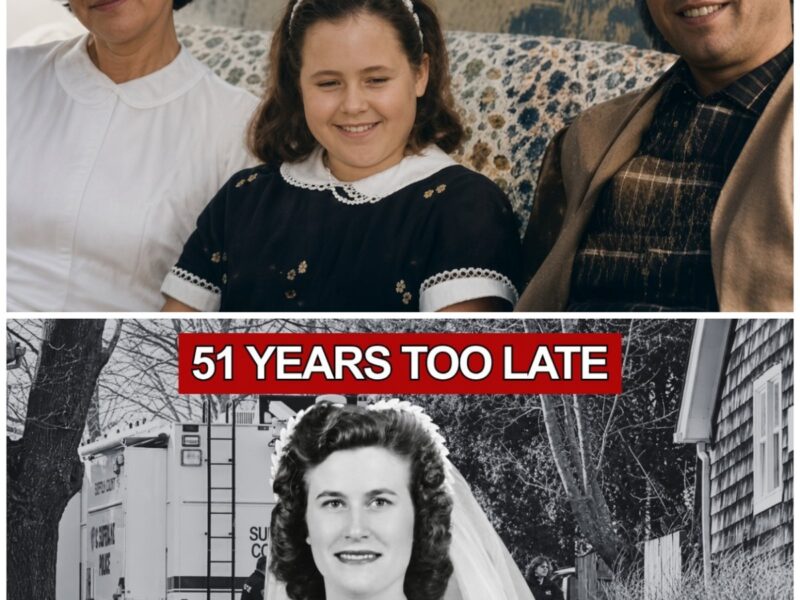
New York 1966 Cold Case Solved — She Tried to Leave a Troubled Marriage
October 6th, 1966. 11-year-old Sandy Petroitz was getting ready for school at her grandparents’ farm in Saga Ponac, New York.
Her mother, Louise, was there with her.
There was no reason for Sandy to believe this morning would be different from any other.
She said goodbye to her mother, climbed onto the school bus, and went about her day.
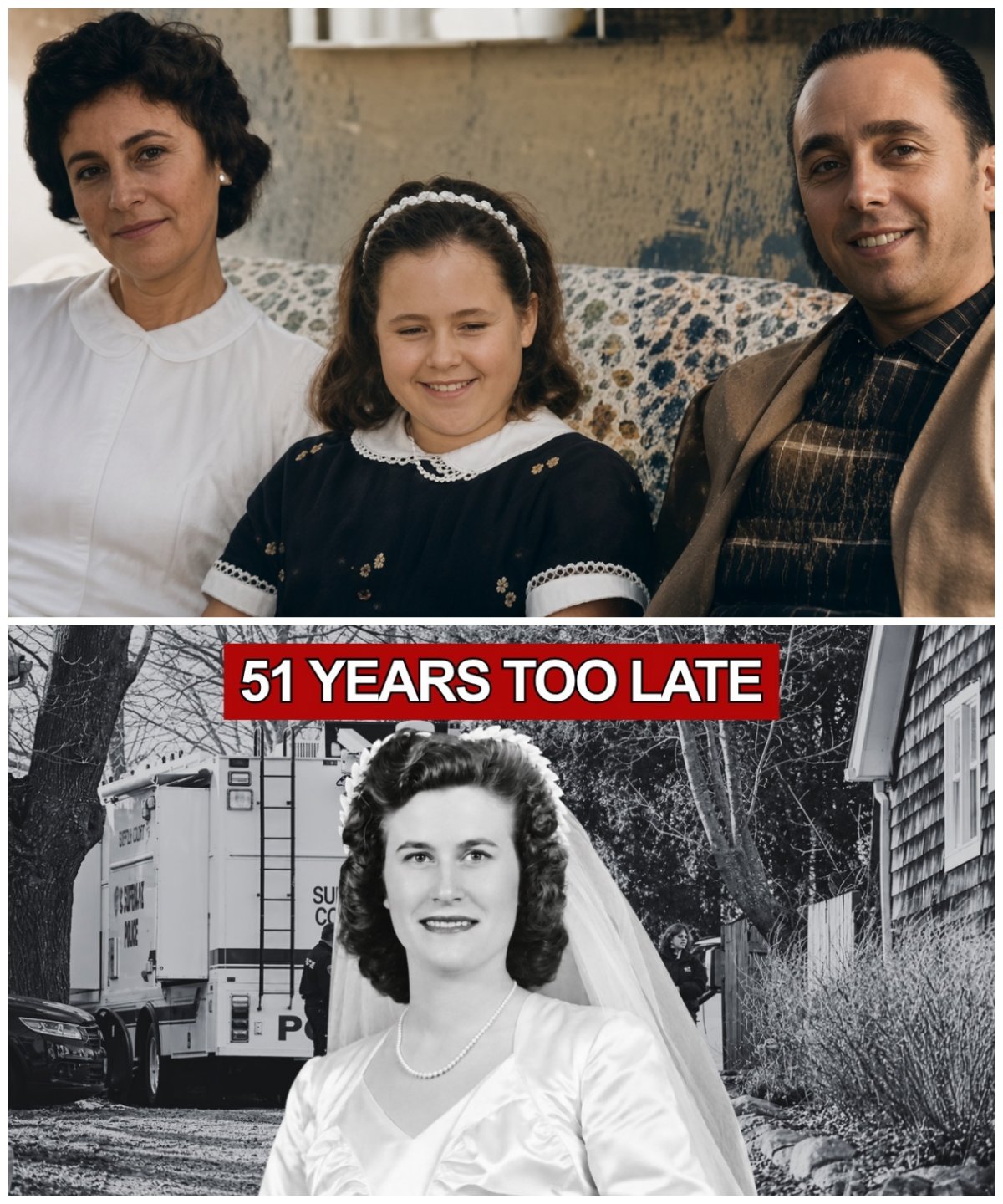
When she came home that afternoon, Louise was gone.
At first, there was no reason for an 11-year-old girl to understand what that meant.
Her mother could have gone somewhere.
She could have been running an errand.
She could have been visiting someone.
But Louise did not come home that evening.
She was not there the following morning.
And as the days passed, something became increasingly clear.
Louise Petraitch had disappeared.
For the next 51 years, Sandy would live without knowing exactly what had happened to her mother, but the answer was much closer than anyone imagined.
This case is about gaps.
And by the end of this video, you’ll know how Louise was finally found, who may have been told where she was long before that, and how this case slipped through the gaps for 51 years.
If those are the stories you are here for, like and subscribe so you get to see more of it.
Louise Jasinski was born in August 1928 in Sagaponic, a farming community on the eastern end of Long Island.
She grew up in a world built around family and hard work.
Long Island’s East End in those years was very different from the vacation destination many people picture today.
Farming dominated much of the landscape.
Potatoes, cauliflower, and strawberries were part of everyday life, and families often lived close enough that everybody knew everybody else.
Louise fed naturally into that world.
People who remembered her described her as quiet and good-natured.
Her friends called her Lou.
She was not someone who demanded attention.
She worked.
She helped on the farm.
She picked strawberries and sold them to local restaurants.
And she kept a stand out front selling tomatoes and onions to people passing by.
She could handle the physical work that came with agricultural life.
During harvest season, she hauled potato bags that weighed 60 and 70 lb, the same work a man on the farm would do.
And people who knew her said she did it without complaint.
But there was also a lighter side to her.
Friends remembered Louise enjoying music and dancing to records played on an old windup phongraph.
She had a sense of humor.
She went to the carnival with friends and to the movies.
She belonged to the Kutchog ladies auxiliary.
She had friends and she had siblings who lived nearby.
And in 1949, while serving as maid of honor at a friend’s wedding at Our Lady of Poland Church in Southampton, Louise met a young Kutchog farmer named Alvin Petroich.
Al, as people called him, was an usher. 6 months later, Louise married him.
They held their reception in Riverheads Polish Town, and the marriage began the way so many others in that community did.
Friends remembered the rhythm of those years.
Women didn’t work outside the home.
They did the wash.
They vacuumed and then they got together for coffee while their kids played or got into trouble.
They took the children to the bay for swimming lessons.
Louise was part of all of it.
By the standards of the community, Al would become a successful man.
He farmed in Kutchog, mostly potatoes, along with cauliflower and strawberries.
He became involved in several local organizations.
He served with the fire department, eventually as chief, and then as a commissioner.
He led the local cauliflower association and sat on the board of a farm co-op.
He was well known within the agricultural community.
From the outside, the Patre’s family looked established.
But according to Louisa’s daughter and other relatives, life inside the home was very different.
Sandy later described her father as physically and verbally abusive.
Relatives described him as a bully, and people who knew him said they were afraid of him.
Sandy remembered seeing violence directed at her mother.
And according to Sandy, Louise rarely fought back.
She was gentle, she was quiet, and she was not a fighter.
Instead, she endured it.
For years, Louise remained in the marriage.
But eventually something changed.
She began trying to leave.
The first time Louise took Sandy and returned to her family in Sagapanak.
Eventually, she went back to Al.
Then, during the summer of 1966, she left again.
This time seemed different.
Louise took Sandy to the Jasinsky family farm in Sagaponac.
Sandy remembered the note her mother left behind.
It said they had gone to Pops and that Louise had taken Sandy, the dog, and the two kittens.
Al came to the farm and begged her to come back.
She refused.
According to the best estimates, Louise also opened a bank account in Bridge Hampton.
Around this time, money went in.
Then by early October, money came out and the account was closed on October 3rd.
She was leaving a 16-year marriage, and by all appearances, she intended for the separation to be permanent.
She even told Sandy that they were going somewhere together, Florida.
Louise showed her daughter two airline tickets.
For an 11-year-old girl who had spent most of her life on eastern Long Island, the idea was exciting.
A plane, Florida, a new beginning.
Sandy believed the tickets were for the two of them.
But there was another person in Louis’s life.
His name was William Boken.
Most people called him Bill.
And Bill Boken was not just another man from the area.
He was a South Oldtown police officer.
He grew up in East Marian, not far from where Louise lived, and joined the department in 1957.
He was a patrolman, and according to press clippings the Suffach Times later found, he appeared to work a lot of overnight hours.
He made the paper a few times, once for being first on the scene of a fire, another time for his role in the arrest of Joan Crawford’s son.
He was also married.
Exactly when Louise and Boken’s relationship began is difficult to establish, but Sandy knew they were seeing each other.
She had seen them together.
She remembered one meeting on Harbor Lane.
She was in the backseat of the car, and she remembered thinking, “My mother is seeing another man.” By 1966, Louise was separated from her husband and involved with Boken.
Whatever Louise imagined for her future, she seemed to be moving away from the life she had lived with Al.
Later, a reporter would offer a theory about those two plane tickets.
He suspected they were not meant for Louise and her daughter.
He suspected the names on them were Louisees and Bokeans.
That is a theory which has never been confirmed.
Then came October 6th.
That morning, Sandy kissed her mother goodbye and got on the bus.
When she returned, her mother was gone.
She asked her uncle where her mother was.
He didn’t know.
The next day, she wasn’t there either, and she never would be.
Louise was 38 years old, and she would never be seen alive by her family again.
The timing of what happened next would become one of the strangest parts of the case.
On October 7th, 1966, one day after Louise disappeared, William Boken resigned from the South Oldtown Police Department.
Years later, someone going through the town’s records found the minutes of a town board meeting from that very day.
The board accepted his resignation unanimously.
According to the minutes, they accepted it with regret.
They also agreed to pay him the leave he had earned.
After 9 years, Boken was done.
Investigators reviewing surviving records would learn something else.
Boken had called in sick for the three shifts immediately preceding Louise’s disappearance.
Then Louise vanished and the next day he left the police department.
At the time, however, Sandy knew none of this.
She only knew her mother had failed to return.
Her relatives tried to get help.
Louise’s sisters went to the South Oldtown Police Department and reported her missing.
That should have started an urgent search.
Instead, according to the family’s later account and surviving reporting, very little happened.
There was an uncomfortable complication.
The missing woman had been involved with a member of that same police department, and that officer had resigned almost immediately after she disappeared.
Today, the South Hole Police Department is very different.
But in 1966, officers weren’t civil service hires, and the reporter who investigated this case later described a department where jobs often went to people with the right connections.
After getting nowhere locally, Louise’s family went to the New York State Police.
About 2 weeks after Louise vanished, on October 24th, 1966, one of her sisters walked into the state police barracks in Riverside and filed a missing person’s report.
The next day, investigators Tom Kobe and Dick Fairchild drove to Psychoponic and interviewed the family.
Then they spoke with Louise’s aranged husband, Al.
According to Fairchild’s later recollection, Al made it clear he didn’t care whether his wife was alive or dead.
He reportedly told them she had been cheating on him with a South Old police officer, that she had ruined his name in the town, and that he wanted nothing more to do with her.
After talking with him, the investigators came away convinced Al had nothing to do with it.
They turned their attention toward Boken.
The more they learned, the more troubling the situation became.
Boken’s marriage had problems of its own.
His wife, Judith, who would later become a longtime South Oldtown clerk, described serious domestic violence.
According to Fairchild, she told investigators Bokeen had beaten her repeatedly.
On one occasion, she said he threatened to kill her and bury her in the basement.
Fairchild based his belief in Boken’s guilt largely on that account.
And investigators would hear more allegations over the years that seem to connect Bokeen directly to Louisa’s disappearance.
Sometime between October 6th and October 24th, something else turned up.
Louisa’s purse.
It was found on the side of the road along the eastbound lanes in the Pine Barons.
No one has been able to find a record of who found it or who turned it in, but it ended up at the state police barracks in Riverside where Louise’s sister picked it up.
Inside were a World War II savings bond, a social security card, and a scrap of paper.
On the paper, someone, presumably Louise, had written the name and phone number of a doctor in Glen Cove.
According to Fairchild, when he and Kobe called that doctor, the doctor knew Louise was pregnant.
To investigators that suggested a possible motive, but no one has ever been able to confirm it.
Fairchild also believed Louise was alive until around October 13th.
He recalled that he and Kobe contacted the airlines and verified that Louise and Boken had both flown to Florida and returned.
In his view, the two went on a kind of trip together.
And sometime after they returned, Louise was murdered and her body hidden.
That is Fairchild’s account relayed decades later.
Judith would later tell South old police something else about that fall.
At some point in 1966, she said Boken left home for a short time.
Before he came back, he called her.
He was in New York City at a hotel near Time Square.
She went and met him there, spent a day with him, and he convinced her it was time for him to come home.
And uh there was one more detail.
In later court filings, Louise’s sister, Josephine, wrote that the closest the family ever came to finding Louise was about a week after she vanished.
According to her, when they spoke to Louise’s boyfriend, he said he had left Louise on the streets of Brooklyn.
But in 1966, Louise was simply gone.
There was no body.
There was no murder scene.
There was no confession.
And there was a young girl waiting for someone to tell her where her mother was.
No one could.
Sandy grew up in the shadow of that absence.
Imagine what that means for a child.
One morning, your mother kisses you goodbye.
That afternoon, she is gone.
There is no funeral.
There is no grave.
There is no final conversation.
There isn’t even an explanation.
You simply continue growing older while the person who raised you remains frozen in time.
Sandy later remembered asking questions and receiving few answers.
The adults around her seemed reluctant to discuss Louise.
Everything was a secret.
And the message, she said, was always the same.
Let it go.
Don’t talk about it.
It will go away.
It never did.
The only person who ever spoke to her about it in any real way was her uncle Walter.
When she asked what he thought, he told her Louise was probably gone.
That was the whole conversation.
Sandy ended up living with her grandfather’s family in Saga Panak in a house that had no heat except a coal stove and a wood stove.
It had no hot water.
The phone didn’t even have a dial.
You picked it up and an operator asked who you wanted.
The windows still had blackout shades from the Second World War.
Sandy was 12 years old and she learned quickly how to feed a coal stove.
When winter came, she was moved again. this time to the home of relatives who already had five children.
The kids resented her.
You can’t blame them.
Sandy slammed doors and fought back the way a child does.
Her plan was simple.
Make it through high school and get out.
Years later, Sandy found an old photo album with a family communion picture.
Her mother was cut out of it.
She didn’t remember doing it, but she thought she probably had.
She was 11.
She was angry that her mother was gone.
Eventually, Sandy returned to Kutchog and tried to get through school.
Every day, life continued.
The farms continued operating.
People went to work.
Families raised children.
Seasons changed.
And Louise became one of those names.
People in a small community whispered about without ever resolving what had happened.
There were rumors.
Some people suspected Al.
One relative remembered a family friend, Al’s own friend, since childhood, saying near the end of his life that he was absolutely certain Al had killed her.
Others had a different view.
They said Al had a mean streak, but not the nerve to murder his wife.
Another man recalled Al telling him he had an insurance policy on Louise through the Polish National Alliance.
He said he couldn’t collect because she had never been legally declared dead.
Al standing in the community never suffered.
He was a leader in the farming world, a go-to voice for reporters.
The New York Times profiled him.
Columnist Jimmy Brereslin mentioned him in a column.
About 8 years after he last saw his wife in 1974, Al went to court and got a divorce.
Then he remarried.
Other people suspected Bokeen, and there was another rumor, one that spread all over Kutchog.
People said Louise was buried beneath an old barn on Cox’s Lane with a cellar left over from Prohibition.
When that barn was finally torn down, sometime in the 70s or 80s, a crowd gathered.
Everyone held their breath thinking they would finally know she wasn’t there.
But suspicion was not enough.
The state police, however, became convinced that Boken was responsible.
By December 1967, more than a year after Louise disappeared, Fairchild was preparing to arrest him for her murder.
And then something remarkable happened.
On December 17th, Boken’s wife said he had beaten and threatened her. 2 days later, on December 19th, the South Police Department told officer Barney Harris, who was coming on duty at 4:00, that he had a job to do.
He was to arrest Bill Boen for assaulting his wife.
Harris and a detective went to the Bokean home, brought him out, and put him in a car.
Procedure called for handcuffs, but instead of the ordinary process following an arrest, Boken was taken to the home of a local town justice, Ralph Tuttle, in Matuck.
Harris remembered it being around 8:00.
The police report says closer to 10:00.
It was late and the proceeding was unusual.
No assistant district attorney was present.
Boken had no attorney.
And according to later reporting by the Suffach Times, the paperwork to commit him to Central Icelip State Hospital had been filled out before they even arrived.
The justice committed him.
According to later accounts, Fairchild had informed Southold authorities that he planned to come for Boken.
When he arrived to make the murder arrest, Boken was already gone.
He had been committed to the psychiatric hospital.
Two criminal defense lawyers and the state court administration office later told the reporter that being committed there would have kept Fairchild from simply walking in and arresting him.
And if charges had ever been filed, it would have raised serious legal questions about whether Boken was competent to defend himself.
Normally, a man arrested on an assault charge is arraigned and either held in the county jail or released.
If he had been held in the county jail, the state police would have been right on top of him.
Fairchild told the reporter more than once that it just wasn’t right.
He wondered aloud how someone had tipped them off.
Fairchild never arrested him for Louis’s murder.
Whether someone deliberately acted to protect Boken has never been conclusively established, but Fairchild never forgot what happened.
And Boken would never face a courtroom over Louise’s disappearance.
Stay with me here because this is the gap that changed everything.
A murder arrest was hours away and one piece of paperwork closed the door.
If you want the cases where the system had the answer and still let it slip, subscribe to Crime of Opportunity.
Louise is still waiting and we’re not done.
The Suffach Times later reported that the district attorney’s office was aware of the commitment.
It was a 90-day commitment and when it ended, two Suffach police officers picked Boken up.
His wife also sought an order of protection.
There is another detail that makes what happened during those early years even more disturbing.
Investigators did at one point search Boken’s basement.
They found nothing.
For decades, that failure would seem to support the idea that whatever happened to Louise had happened somewhere else.
But the truth was beneath them.
They simply had not gone deep enough.
In March 1968, Boken was released from the psychiatric hospital.
He and Judith were ordered to stay away from each other.
According to their divorce papers, the last time they saw each other was the day he was arrested in December.
His marriage to Judith ended.
He left Long Island and effectively disappeared from the lives of his family.
The man suspected of making Louise vanish became remarkably difficult to find himself.
Court records later showed that lawyers had trouble locating him even when money was waiting for him.
When his father died, there was money left for him.
When Judith sold the South Old House, he was owed $15,000.
But when lawyers tried to get that money to him, he refused to give them an address.
One attorney wrote to the court that he was clearly a man on the move.
He was seen in Manhattan.
He was seen in Queens.
Eventually, Boken settled in New York City.
By the early 1980s, he was living in Ozone Park and working as a taxi driver.
In August 1982, William Bokean died.
He was alone.
He never had guests over, so authorities had little to go on to find his family.
The owner of the cab company remembered Boken saying he was in a dispute over alimony and had to go to Albany.
So New York City police didn’t contact his family on Long Island.
They reached out to Albany.
Albany said there were no Bokeans.
About a month later, with no one claiming his remains, Bokean was buried on Hart Island, New York City’s public cemetery for unclaimed remains.
Inmates from Riker’s Island perform the burials there.
Close to a million people are buried on that island.
For decades, some of the people closest to him did not even know he was dead.
Louis’s case remained unresolved.
Then in 2012, something began to change.
In May of that year, a retired New York State trooper named Bud Griffith attended a friend’s birthday party where he met members of Louis’s extended family.
When they learned he had been a state trooper, they asked if he knew the investigators who had once worked Louise’s case.
Griffith knew both names.
Tom Kobe had died.
Dick Fairchild was living upstate.
Griffith first ran a name check to make sure Louise wasn’t living somewhere else.
She wasn’t.
So, he called Fairchild.
Fairchild remembered Louise.
He remembered the case well.
More than four decades had passed.
But he had not forgotten how horrible it was or that nothing had come of it.
His belief had not changed.
He believed William Boken had killed her.
Louise’s family, partly spurred by the discovery of remains at Gilgo Beach, went back to the South Old Police and asked what had become of her case.
At one point, police called asking for the name of Louis’s dentist in case remains were found.
The dentist had died.
His records were gone.
The renewed interest eventually reached Detective Sergeant Joseph Conway Jr.
He spoke with Fairchild.
He spoke with members of the family and he spoke with Bokean’s former wife, Judith, who had remarried and was now Judith Terry.
According to Conway’s account, Judith told him that during one of the beatings, Boken said he had buried another woman in the basement.
That raised an extraordinary possibility.
Maybe Louise had never been taken very far at all.
Maybe she had been buried beneath the Boken home.
In 2013, Conway arranged for Suffach County homicide detectives to bring ground penetrating radar to the old Boken house.
When Boken lived there, the basement floor was dirt.
By 2013, it was concrete.
They searched.
They found nothing.
Once again, the house gave up no secret.
Soon afterward, Conway retired and moved south, and the case went quiet.
But not everyone forgot.
A reporter named Steve Wick lived in Kutchog and had written extensively about the North Fork, including a book about its farmers.
While researching that book, a member of a family on Oregon Road asked if he knew Al.
He knew the name, but not who Al was.
Then he learned someone had literally disappeared from this town.
The question stayed with him.
How could a woman disappear from a small Long Island farming community and remain essentially invisible to the wider public for half a century?
How could a mother vanish without her story becoming major news?
And how could an investigation involving a police officer as a suspect simply fade away?
When Wick joined the Suffach Times, it was the first story he mentioned.
At his very first meeting with the papers editors before he had even started, he told them he wanted to tell Louise’s story. 50 years he said nobody had ever done anything about it.
He worked with Grant Paran and Kristen Massa on an extensive project about Louise.
They interviewed Sandy.
They interviewed surviving relatives.
They searched old records.
Wick tried to reach Judith Terry, too.
She told him she couldn’t go there.
It had been a terrible time in her life.
He told her they would respect that and they did.
They reconstructed the original state police investigation.
They asked the state police for the 1966 and67 case file.
They were told it had been purged under department policy.
Wick even wrote a check for $15 to get it.
The check came back.
Everything had been purged.
They said he asked how that could be for a case that was supposed to still be open.
And as they worked, something unexpected happened.
A woman whose mother had been close to Louise contacted them.
Her mother’s attic held old film.
On it was footage from the 1965 World’s Fair in Queens.
You can watch a woman walking the fairgrounds.
Her daughter and Al, a family two hours from their farm, looking happy.
It was surreal, Wick said, to spend a year with this family and see Louise’s picture so many times, but never see her alive.
They examined Boken’s life after South Old.
And in October 2017, the Suffach Times published its special investigation, Gone, along with a documentary.
For the first time in decades, Louise’s story was placed in front of the public.
She was no longer simply a local rumor.
She was Louise Petroich, a mother, a sister, a daughter, a woman who had tried to leave a troubled marriage and had disappeared at 38 years old.
The newspaper investigation also uncovered something police had apparently not known.
William Bokean was dead.
He had been dead since 1982.
That fact would matter enormously because Judith Terry had lived for years with fear connected to her former husband.
After the documentary aired, two detectives, South Hole detective John Sinning and the now retired Joseph Conway went back to her.
They brought the death certificate.
It showed that William Boken had died in August 1982.
They showed it to her and it opened the floodgates.
In February and March of 2018, Southold investigators interviewed her again.
And this time, according to the detectives later reports, Judith described something she said she had personally witnessed in 1966.
She remembered Bokeen bringing a body into their home.
The body was wrapped in burlap.
Judah said he brought it from the barn behind the house and carried it into the basement.
She believed the woman was Louise.
According to a separate statement she had given police at one point, Boken had once brought Louise to the house.
Louise asked to use the restroom.
Judith said she seemed scared.
According to the account she gave detectives, Bokean began digging a hole, but then he realized the location he had chosen could be seen through the basement windows.
So, he moved.
He began digging somewhere else.
Judith remembered the layout.
She remembered where he had been standing. and she remembered that the hole was deep.
She drew investigators a diagram.
When she was shown a photograph of a detective standing in the 4-ft hole from the earlier search, Terry said the hole had been deeper.
She remembered Bokeen being in a deeper hole.
Detectives realized they had dug in the wrong spot.
There was another revelation.
Judith told police that at some point years earlier, she had told Joseph Sawiki, Senior, who had been acting chief of the South Hole Town Police Department around the time Louise vanished, that a body had been buried in the basement.
What happened after that remains controversial.
Members of Siki’s family later said he participated with state investigators in a search of the basement and returned home, saying nothing had been found.
Fairchild’s recollection, relayed years later, was that the digging had been limited.
Whatever happened during that early search, it failed.
Louise remained beneath the house.
Now, investigators were going back.
On March 15th, 2018, police began another search of the former Broken property on Lower Road in South Hold.
The people living there had nothing to do with what had happened decades earlier and cooperated with investigators.
Police dug into the basement.
Again, they initially found nothing.
It would have been easy to stop.
After all, this basement had been searched before, more than once, but Judith had been specific.
The hole was deeper, and uh investigators had new information about exactly where Bokeen had dug. 4 days later, on March 19th, they returned.
This time they kept going down through the basement, through the soil, several feet beneath the floor, and at a depth of nearly 7 ft, investigators saw something, a jawbone, then more remains, a burlap covering, pieces of clothing.
That morning, Wick happened to be in front of the house.
He saw Detective Sinning coming down the driveway looking stricken.
He asked what was going on.
Sinning said only three words.
We found her.
Then he turned and walked back to the house.
After 51 years, the basement had finally given up its secret.
Human remains were buried beneath the house where William Boken had lived with his wife and children.
For Sandy, there was only one question that mattered.
Was it her mother?
Investigators collected DNA from Sandy and from Louisa’s surviving brother, Leo Jasinski.
A detective called and said he was sending someone to take her DNA.
Sandy figured it was another dead end.
She asked if they had found her.
He said yes.
Usually, she said, officers knock on a door to tell a family someone has died.
This time, they knocked to say they had found her.
After 51 years, on April 4th, the answer became official.
The remains belonged to Louise Petroitz.
At a press conference, South Old’s police chief described the scene.
He said investigators had dug to a depth of about 7 ft and found a jawbone.
The woman who had walked out of her daughter’s life in October 1966 had never truly left Southold.
She had been there all along, buried beneath the home of the police officer she had been seeing.
The discovery finally answered where Louise had been, but it also revealed how she had died.
The Suffach County Medical Examiner’s Office determined that Louise had been the victim of homicidal violence.
She had been shot three times in the torso.
Investigators recovered.3 to 8 caliber bullets with her remains.
Police records from the period showed that South Old officers were required to carry 3 to 8 caliber revolvers.
That fact added another disturbing layer to the case.
Although no firearm was publicly tied to the bullets, Boken could not be questioned.
He had been dead for 35 years.
He could not be arrested.
He could not be put on trial.
But the police investigating Louisa’s case said they believed William Boken had killed her.
And Judith account placed him directly at the burial.
The burial she said she had witnessed the location she helped police find.
There were still questions.
One concerned Louise’s possible pregnancy.
That possibility had circulated during the original investigation, and it appeared again in the doctor’s number found in her purse.
It resurfaced after her remains were recovered.
Sandy was told that a guarder belt found with her mother’s clothing had been worn backwards, something a vintage clothing specialist reportedly suggested could have been done for comfort during pregnancy.
But no definitive evidence established that Louise was pregnant when she died, so it remains only a possibility.
What no longer remained uncertain was how Louise died.
She had been murdered and she had been hidden beneath Boken’s home.
For Sandy, the discovery was something far more personal than the solution of a cold case.
For more than half a century, she had been the little girl whose mother never came home.
Now, at last, Louise could come home.
The home’s current owners reached out and said that if Sandy wanted to see where her mother had been buried, she was welcome.
She went.
The place was small, almost square.
It didn’t look like it should have taken long to dig.
All that time, she said her mother had been right there.
And Sandy realized something that still stuns her.
Her school bus drove past that house every day when she was in high school.
Every single Sandy went to see her mother’s remains.
She was able to touch the woman she had last seen when she was 11 years old.
She told her mother she was sorry for what had happened to her.
She said she was sorry nobody had been there to protect her and that they had finally found her.
She was also given some of the clothing recovered with her mother’s remains, a slip, a blouse.
Sandy said she was glad to have them.
They were something tangible she could hold on to.
There had been no goodbye in 1966.
Now she finally had one.
Louisa’s remains were cremated.
On May 5th, 2018, family members and members of the community gathered for a memorial service in Kutchog.
More than 200 people attended.
The priest told the mourers that in Christian belief, life is changed but not ended.
He said they were not saying goodbye.
They were saying, “See you later.” People lit candles around the urn, and many said it looked peaceful.
After 51 years of uncertainty, Sandy could finally mourn her mother, knowing where she had been and what had happened to her.
But solving the mystery also made the failure surrounding Louise’s disappearance harder to ignore.
She disappeared while involved with a local police officer.
Her family said they received little help when they initially went to his department.
Bokean resigned one day after she vanished.
State investigators came to believe he was responsible.
More than a year later, when one of those investigators planned to arrest him, Boken was suddenly committed to a psychiatric hospital before that arrest could happen.
At least one early search of his basement failed.
A later search failed, too.
Records from the South Old Police Department from 1966, including the police blott, were later found to be missing from the archives, and the original state police case file was no longer available.
None of those facts by itself proves that there was a coordinated effort to protect William Boken.
But together, they explain why Sandy and others have continued asking how a woman could be murdered, buried beneath a police officer’s home, and remain there for more than half a century.
Perhaps the most haunting revelation came after Louise was finally found.
Judith told investigators that she had informed a senior South Old police officer that a body was buried in her basement.
If her recollection was accurate, then the secret was not completely secret.
Someone had been told, a search was conducted, and somehow Louise remained beneath the floor.
Years passed.
Bokeen left.
The house changed hands.
Concrete covered what had once been a dirt basement.
People lived their lives only a few feet above her.
And Sandy grew from an 11-year-old girl into a woman in her 60s.
For most of that time, she did not need anyone to tell her that something terrible had happened to her mother.
What she needed was proof.
She needed Louise.
In the end, it took an extraordinary chain of people to bring her home.
A retired trooper who made a phone call. an investigator who had never forgotten the case.
A reporter who decided someone should finally tell her story.
Journalist who refused to accept that a woman could disappear from history simply because enough time had passed.
Two detectives who went back to a witness who had spent decades carrying terrible memories.
And finally, investigators willing to return to a basement that had already been searched and dig deeper.
Much deeper, nearly 7 ft beneath the floor.
That is where Louise had waited for 51 years.
Not hundreds of miles away, not hidden in an anonymous grave in another state, but beneath a house in the same small community where her daughter grew up wondering what had happened to her.
Her mother had not abandoned her.
She had not chosen another life.
She had not simply walked away.
She had been taken from her.
Sandy has said that after her mother vanished, everyone around her wanted to protect the people left behind.
But she was left behind, too.
Nobody protected her.
They swept it under the rug.
And after 51 years beneath a basement floor, Louise Petroich was finally found, finally identified, and finally brought home.
Tell me in the comments, when you first heard that Louise had vanished, what did you think had happened to her?
And as the story unfolded with the failed searches and the missing files, what was going through your mind?
I want to know if you saw the basement coming.
And if you want more cases where the truth was sitting right there while everyone looked away, subscribe to Crime of Opportunity.
Because sometimes the most disturbing part of a case isn’t how well the truth was hidden.
It’s how close people came to finding it and still walked