Little Girl Vanished From the School Bus in 1992 – 26 Yrs Later, Her Mother Found Her in a Yearbook
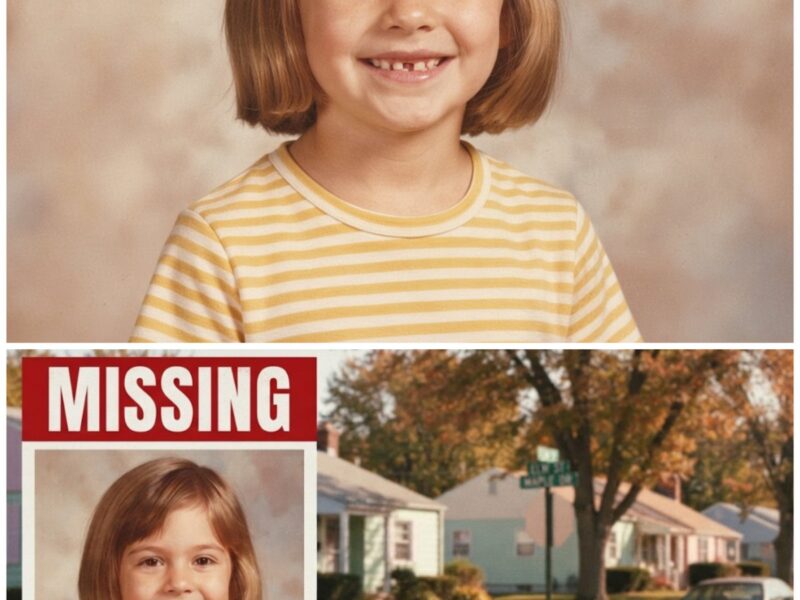
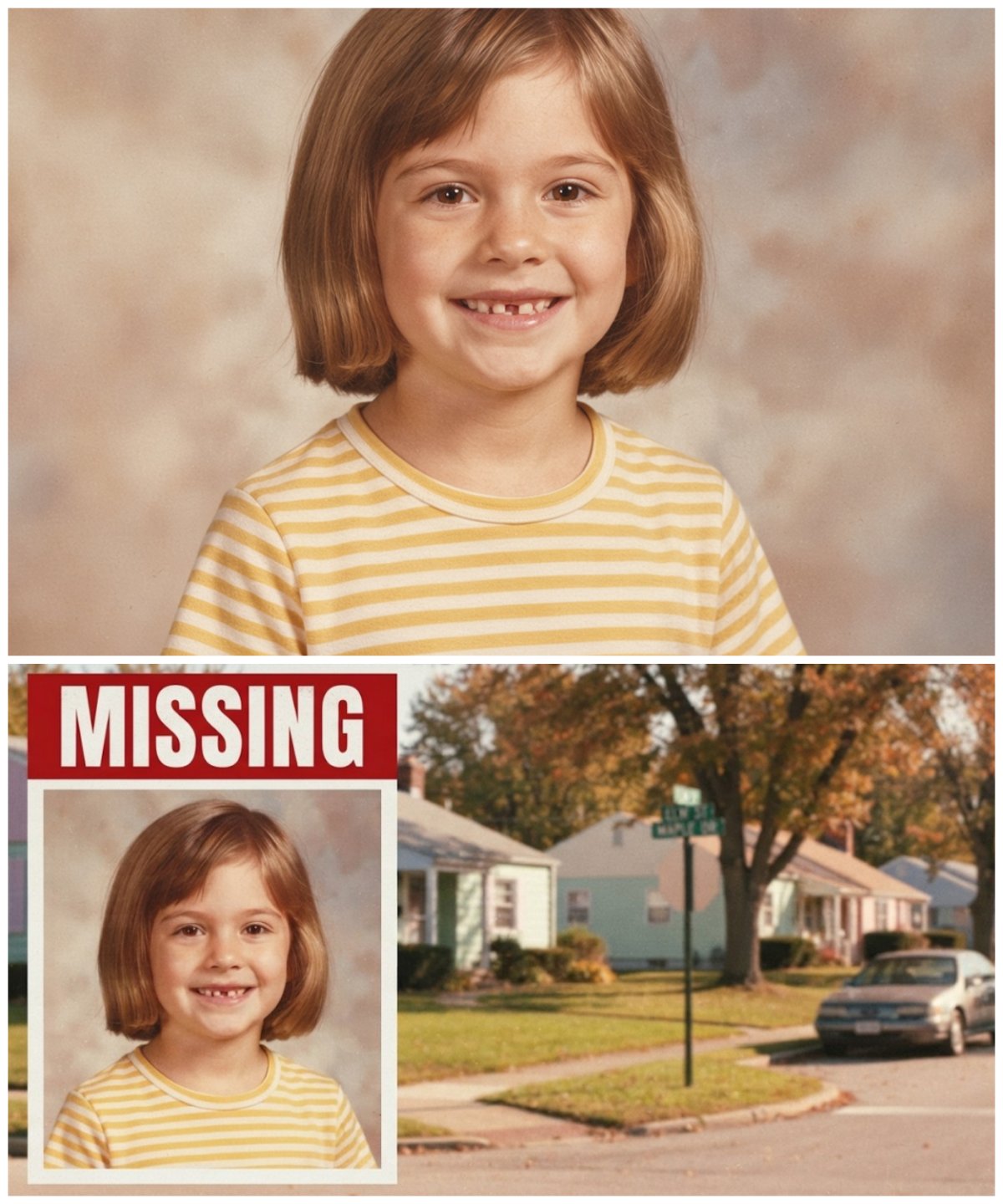
In the autumn of 1992, in a quiet farming town in Indiana, a little girl vanished from a school bus without a trace.
Her mother searched everywhere, but police found no evidence of a struggle, and the case quickly went cold. 26 years later, a single discovery changed everything.
A yearbook portrait found online in the middle of the night showed a face her mother knew at once.
What they found exposed a secret no one was prepared for.
Maple Ridge, Indiana, was the kind of town where people rarely locked their doors.
It sat in the middle of a sea of cornfields with a whitewater tower on the edge of town and a church bell that rang every day at noon.
Neighbors waved from their tractors, and every child in town rode the same yellow bus to the same brick elementary school.
Margaret Doyle was 32 years old, the school secretary at Maple Ridge Elementary, and the teacher who ran the yearbook every spring.
She was a widow.
Her husband, Tom, had died in a grain elevator accident when their daughter was only three.
Since then, it had been the two of them in a small white house on Cutler Road.
Abby was seven, a gaptothed girl with a stubborn cowick who talked to everything. cows, crows, and the bus driver.
She wore a silver bracelet engraved with her name, and she collected smooth gray stones from Cutler Creek and lined them up on her bedroom window sill in order of size.
She never went anywhere without a stuffed rabbit named Mr.
Buttons, and she slept every night with a rabbitshaped nightlight glowing beside her bed.
Their closest friend was Gus Palmer, a retired mail carrier of 68 who lived above the hardware store.
He sat on the Doyle porch most evenings, and he had taught Abby to whistle through her teeth.
He was the only grandfather she had ever known.
The newest face in their lives was Ray Voss, a widowed contractor and a deacon at First Methodist, who had begun courting Margaret the year before.
He fixed her porch steps.
He brought lemon bars to the school office.
Everyone in Maple Ridge agreed that Rey was a good man.
One evening in September, Margaret was pasting photographs onto yearbook proofs at the kitchen table.
She held up a picture of Abby, gaptothed and grinning, on page 14 with the other second graders.
“Look,” she said.
“You’re in the book.” Abby traced her own face with one finger.
Margaret pulled her onto her lap.
Someday you’ll be in the big yearbook at the high school.
She said, “Back row, front row, I don’t care.
Wherever you are, I’ll find you on the page.
I’d know you anywhere.
I promise.” Abby looked up at her.
Even if I look different.
Even then, said Margaret.
But over the next 3 weeks, Abby changed.
She stopped humming.
She stopped lining up her stones.
She pushed her supper around the plate without a word.
And she began asking to sleep with her closet door open.
Whenever Margaret asked what was wrong, the answer was always the same.
Nothing, Mama.
Margaret was buried in yearbook deadlines, and she was happier than she had been in years.
So, she let it go.
Looking back, Margaret would spend the rest of her life wondering if that decision sealed Aby’s fate.
Tuesday, October 13th, 1992, dawned cool and bright, and the air smelled of wood smoke and ripe apples.
Margaret made oatmeal with raisins, and Abby ate three bites in her red corduroy jacket.
She left Mr.
Button sitting on her pillow.
It was the first time in her life she had done that.
At the bus stop, Abby held on to her mother’s coat.
“Mama, can you drive me today?” Margaret knelt and smoothed her cowick.
She said she couldn’t, sweetheart, because the printer was coming about the yearbook.
She promised to see her at 3:30.
Abby hugged her twice hard and climbed the steps.
Looking back, Margaret would spend the rest of her life wondering if that decision sealed her daughter’s fate.
At 7:52, the bus rolled up to the railroad crossing on Route 9.
By law, every school bus in Indiana must stop there, open its door, and listen for trains.
The driver did exactly that.
The door stood open for 20 seconds while 31 children chattered and laughed.
He checked his big mirror and counted 31 heads.
When he unloaded the children at school, he counted 30.
Aby’s seat, second row on the left, was empty.
Her red backpack sat on the cushion where she had been.
Margaret was on the phone with the printer when the school called.
She ran the whole way home and threw open the door.
Abby, she called.
Abby.
Nothing Mr.
Buttons lay on the pillow.
The house was silent.
That night, after hours of searching, she stood in her daughter’s doorway.
The rabbit night light was dark because nobody was there to plug it in.
She plugged it in herself, and she left it burning.
The deputy who answered her call was polite and unhurried.
“Kids wander off all the time, Mrs.
Doyle.” He said, “She’s probably in a cornfield. give it an hour.
But by noon, it was clear that no one in the county believed that.
Sheriff’s deputies, farmers, and teachers combed every field along Route 9.
The bus driver sat on the curb with his head in his hands.
Wednesday dragged by and then Thursday.
They were the longest two days of Margaret’s life.
She sat beside the phone.
She barely slept.
She barely ate.
The facts were simple and impossible.
Abby had boarded the bus with 30 other children.
The door had opened for 20 seconds, and when it was over, she was gone with no scream, no struggle, and no witness.
It was as if Abby had simply evaporated into the cool autumn air.
Before we continue, if this story has kept you watching, please subscribe.
Your support truly means a lot to us.
But something didn’t feel right.
By Wednesday, radio stations were reading out Aby’s description every hour, and volunteers had taped her photograph to every telephone pole in the county.
State troopers brought in tracking dogs, which took Aby’s scent from her backpack, and pulled hard off the bus, across the tracks, and along the gravel shoulder.
Then they stopped, circled, and whined.
But the scent simply ended as if Abby had climbed into thin air.
A helicopter swept low over the cornfields, and divers searched Cutler Creek for 3 days.
The church basement became a command post where women in heavy sweaters poured coffee at all hours.
Ray Voss drove Margaret up and down every county road, one hand on her shoulder, telling her not to lose hope.
Gus Palmer walked the ditches with a flashlight, calling Aby’s name until his voice gave out.
The county sent Detective Lou Bell, a softspoken man of 50, with kind eyes and a rolledup newspaper he carried everywhere.
He sat at Margaret’s kitchen table and listened for two hours without interrupting.
“Tell me everything, Mrs.
Doyle,” he said gently.
Even the things that seemed too small to matter.
Aby’s second grade teacher remembered something strange.
On the Monday before, Abby had waited until the classroom was empty, then whispered a question.
“Is it still a bad lie if you tell it to keep somebody safe?
The teacher had assumed she was repeating something from a cartoon.
Now those words hung in the kitchen like smoke.
Margaret asked Belle what a seven-year-old could possibly need to lie about.
Belle only turned his rolled up newspaper over in his hands and said he did not know yet.
Margaret would not stop searching.
That week she went through Aby’s room drawer by drawer.
At the bottom of the box where Abby kept her stones beneath a layer of felt, she found a folded sheet of paper.
It was a crayon drawing.
A yellow school bus stood at a railroad crossing and a tiny girl with a red jacket waved from its open door.
Beside the tracks stood a man in a blue cap next to a blue car. across the top in wobbly letters with the M’s as tall and pointed as mountains.
Abby had written one word, Tuesday.
Ray Voss was the first to volunteer for every search party and the first to bring Margaret coffee.
Belle wrote that in his notebook, and he underlined nothing.
Gus brought coffee, too, every single morning, but he could not look her in the eye.
Margaret slept on Aby’s bedroom floor for a week with Mr.
Buttons in her arms, and she woke every hour to check that the nightlight was still burning.
“Detective Belle studied it for a long time.” “Children draw what they overhear,” he said quietly.
“But who was the man in the blue cap?” Half the men in Maple Ridge wore blue caps.
Belle showed the drawing to every farmer, mechanic, and deacon in the county, and he even held it up after church on Sunday.
Nobody knew what it meant.
The trail ended there.
The second lead came from the bus driver himself, who appeared at the Doyle door on Friday evening, twisting his cap in both hands.
“I didn’t tell the sheriff because I was afraid you’d all blame me,” he whispered.
But at the crossing, I looked in my mirror and there was a car parked on the shoulder with its engine running.
A pale blue station wagon with a wooden strip down the side.
An old man at the wheel.
I only saw it for a second, but he had not seen a plate, and nobody else had seen the car at all.
Belle searched for the blue station wagon for weeks.
It never turned up.
The bus driver could not stop apologizing and Margaret finally told him that if he said sorry one more time, she would not be able to stand it.
Then on Saturday, the male arrived and Detective Bell went very still.
The timeline was impossible to ignore. 4 days after Abby vanished, while volunteers were still combing the cornfields, a plain postcard came to the Doyle House, postmarked in Louisville, Kentucky, it was blank except for three words printed in block capitals.
She is safe and taped to the card was one smooth gray creek stone.
If you want more emotional cold case stories like this, please subscribe.
Your support truly means a lot to us.
But the most disturbing piece of information was yet to come.
The stone matched the ones on Aby’s window sill.
But the very first person Margaret had called on the day Abby vanished had been Gus Palmer.
He had searched beside her all Tuesday, gray-faced and silent.
Then on Thursday, he stopped answering his door.
When Belle drove to the hardware store, the apartment upstairs was unlocked.
The bed was stripped.
The closet was bare.
And the landlord said Gus had paid his rent in cash through the end of December on Wednesday morning.
They had missed him.
But Margaret could not believe it of Gus.
He had been at her husband’s funeral.
He had held Abby on his knee.
She lay awake at night trying to make the man she knew fit the man the town was describing, and she could not do it.
Within days, the whole town whispered that the kindly old mailman had taken Abby.
Some said he had hurt her.
Divers dragged the creek again and found only tires and rusted cans.
Gus had no living family, the landlord said, and no one knew where he might have gone.
The investigation hit a massive, immovable brick wall.
Ray Voss stood by Margaret for a year.
In 1993, he asked her to marry him and she heard herself say no without knowing why.
In 1994, he left Maple Ridge and she was alone again.
Detective Bell retired in 2001.
The official boxes went to the basement of the sheriff’s office.
But Belle kept a copy of every page in a cardboard box at home because he could not make himself let it go.
For 26 years, there was nothing.
Margaret never moved.
She never changed Aby’s room.
Every night, the rabbit night light glowed in the window.
And every October, she baked a small cake and set it on the kitchen table just in case.
But she did one thing that no detective had ever thought to do.
Every October 13th, she went to the county library and read yearbooks.
She wrote to schools across three states.
She studied thousands of faces, counting years, imagining how a 7-year-old with a cowick might look at 12, at 16, at 18.
Then, in the spring of 2018, a photograph appeared on her screen.
Her friends had long since stopped asking her to give it up.
The children she had once sold yearbooks to were grown with children of their own, and she was 58.
By then, Margaret was 58, retired, and up half the night at her computer.
Old yearbooks had begun to appear online, one school at a time.
At 2:00 in the morning on April 3rd, she reached school number 3,412, a small high school in Oregon called Harland Valley, class of 2003.
On page 61 in the row of senior portraits was a young woman with dark hair and a shy crooked smile.
She was holding a smooth gray creek stone in both hands.
Margaret stopped breathing.
She saw the stone first and then the face.
There was the cowlic.
There was the crinkle in the nose.
And under the sleeve of the girl’s sweater catching the light was a thin silver bracelet.
The caption read, “Ellie Whitaker.” “I’d know you anywhere, Margaret whispered.” The librarians in the county had long since stopped asking what she was looking for.
Some of them had watched her grow gray over those tables, turning pages, murmuring a name.
They simply brought her tea, and they pulled the next box of yearbooks from the shelf.
She called the sheriff’s office at 20 2.
Her hands were shaking so badly that she dialed the number wrong twice.
The night dispatcher, a rookie who had never heard of Abby Doyle, almost told her to call back in the morning.
But something in her voice made him sit up and sent a deputy to her door.
The case landed on the desk of Detective Priya Sha, who was 27 years old and had been only three when Abby vanished.
She pulled four dusty boxes labeled Doyle 1992 from the basement archive and found Detective Bell’s handwriting on nearly every page, slanted and careful in blue ink.
Beside the postcard, one line stood out.
G Palmer, no living family.
County closed a complaint in Sept doesn’t sit right.
In 1992, comparing two photographs had taken a specialist in weeks.
In 2018, Shock had run a face through a state database before her coffee grew cold.
She scanned the yearbook portrait.
The database returned a name, Ellie Whitaker, aged 33.
Ellie taught second grade at Harland Valley Elementary in the same small Oregon town, and she lived in a green house on Alder Street.
Her students called her the stone lady because she kept a jar of smooth gray creek stones on her desk and let each child hold one on hard days.
Her records began in the spring of 1993 with a birth certificate that did not quite add up.
The school district’s website named her teacher of the year for 2016.
A photograph on the page showed her surrounded by sevenyear-olds.
One hand on a boy’s shoulder laughing.
Then the old clues clicked into place.
The drawing of the bus with the man in the blue cap.
The blue station wagon idling at the crossing.
The postcard postmarked in Louisville with its one creek stone.
Gus Palmer’s rent paid in cash before he vanished.
The rabbit left behind on the pillow, and the strange question a seven-year-old had whispered to her teacher about telling a lie to keep somebody safe.
Gus Palmer’s name kept returning.
He had carried the mail to every house in Maple Ridge for 30 years, and he knew every family’s secrets.
Abby had not been snatched by a stranger.
She had left with someone she trusted.
But this realization only created a massive new question.
Why would a man who loved a little girl take her from her mother?
And why had nobody ever brought her home?
Before we continue, if this story has kept you watching, please subscribe.
Your support truly means a lot to us.
Shaw drove to a small house in the next county where a retired detective sat in a worn armchair.
Lou Bell was 76 now, and when she showed him the yearbook page, his hands began to shake.
Gus called the county three times that September, he said softly.
He told them a man was frightening that child.
A caseworker went out to the house and the man charmed her and she wrote unfounded.
I was told to leave it.
So I did.
I have regretted it every single day.
Which man?
Sha asked.
Ray Voss said Belle.
Shaw flew to Portland, rented a car, and drove three hours through the mountains with the yearbook page on the passenger seat.
She reached Harland Valley at dusk.
The greenhouse on Alder Street had a garden edged with smooth gray stones, and on the front porch, glowing in the fading light, a single lamp was burning.
Shaw stood on the steps for a long moment.
Then she knocked.
Silence.
A chair scraped.
Footsteps.
Slowly the door opened.
The woman who stood there had dark hair and a shy crooked smile that had gone very still.
She looked at the badge and then at the yearbook page in Shaw’s hand, and her face crumpled and steadied all in one breath.
“I have been practicing for this moment for 2 years,” she whispered.
I never thought it would be a knock.
She stepped back and held the door open.
Come in, detective.
I’ll tell you exactly why, and I’ll tell you where I’ve been all these years.
They sat at a small kitchen table with a jar of gray stones in the center, and Ellie folded her hands tightly as if to keep them from shaking.
“I remember the crossing,” she said.
“I remember the door opening and a blue car and Gus’s face in the window.” She told it slowly.
She had been 7 years old.
Gus had leaned over the steps and said, “Come on, sunshine.
We’re going on an adventure to keep you safe.” She had left Mr.
Buttons on her pillow so that her mother would have something to hold.
She had thought it was a game that would last a day.
Gus drove her to Oregon to a halfsister he had not spoken to in 30 years, a retired nurse named Dot.
They became Grandpa Gus and Aunt Dot, and she became Ellie Whitaker.
They told her that her mother had died in a car accident and that it was best not to ask.
Dot taught her to garden and to read.
Gus taught her to whistle through her teeth.
She grew up loved and safe and never quite sure why she still slept with a lamp on or why she felt every October as if she had lost something she could not name.
Gus died in 2010.
Dot died in 2016.
And in Dot’s closet, Ellie found a shoe box tied with string.
Inside were 18 letters, one for every October 13th and Gus’s blocky printing.
He had never mailed one.
She took out the last written in a hand so shaky that the ink skipped.
The letters were all addressed to Margaret.
Dear Maggie, it began.
I called the county three times and each time they told me to mind my own business.
I tried to tell you.
And you said Rey was the best thing to happen to that child.
I did the only thing I could.
I meant to bring her home the day you woke up.
I was a coward twice.
Once for taking her and once for never bringing her back.
Gus wrote that he had called the sheriff’s office, too, and that a deputy had told him to mind his own business.
He wrote that he had watched Abby go quiet and stop humming and hide her stones under her bed.
He wrote that he had gone to Margaret’s porch and tried to say the words and that she had asked him never to speak of Ry that way again.
Ellie set the page down.
Her voice cracked.
I found that box two years ago.
I’ve been trying to write to you ever since.
Then she took a sheet of paper and wrote one more page.
Her pen shook so badly that the ink skipped, but the M’s were tall and pointed like mountains, exactly as they had been in the crayon drawing.
She folded the page and laid it on top of the letters.
Sha waited a moment.
Miss Whitaker, there is something you should know.
Ray Voss was convicted in 2004 in Ohio for what he did to another child.
He died in prison in 2015.
Gus was right about everything.
Ellie stared at her.
She said she had wanted to be brave for 2 years.
Every time she sat down to write, she saw a woman at a bus stop holding her coat.
And she wondered whether that woman would want a stranger of 33 walking back into her life.
“It wasn’t just in my head,” she whispered.
She put both hands over her mouth. and 26 years of doubt broke loose all at once. 2 days later, on a cool October evening, Detective Shaw climbed the porch steps of the small white house on Cutler Road carrying a cardboard box.
Margaret, 58 years old, with gray in her hair, opened the door.
In the window upstairs, the rabbit knight light was glowing.
She asked her to sit down at the kitchen table.
Then Shaw began to place objects in front of her one at a time.
First came the 2003 yearbook opened to page 61.
Next, a crayon drawing of a school bus.
Then a postcard with one smooth gray stone taped to it.
Then a shoe box tied with string holding 18 letters in blocky printing.
And finally, on top of it all, one folded page.
Margaret recognized the handwriting before she read a single word.
The M’s were as tall as mountains.
Then she read, “Mama, I kept Mr.
Buttons in my heart for 26 years.
I’m coming home.
Look out the window.” “Love, Abby.” She let out a cry that held 26 years of missed birthdays, empty chairs, and a nightlight burning in the dark.
Her knees gave way, and Shaw caught her before she reached the floor.
Through the window, a car door opened at the curb.
A young woman with dark hair stepped out, holding a smooth gray creek stone in both hands.
She stood at the gate for a long moment.
Then she walked up the path and Margaret met her on the porch.
“I said I’d know you anywhere,” Margaret whispered.
“You did,” said her daughter.
And then she was in her arms.
They talked until dawn about the crossing and Gus and Rey.
Margaret whispered that she should have listened.
Her daughter told her that she had been a widow who wanted someone to love her and that was not a crime.
Shaw slipped out quietly and left them at the kitchen table.
Outside the corn stood pale and still under the porch light.
And for the first time in 26 years, no one in that house was waiting.
Then came a profound, overwhelming sense of relief.
Abby had not been harmed, and she had never stopped being loved.
She had survived.
She had become a teacher, and the love between a mother and a daughter had outlasted every mile.
That night, Margaret placed Mr.
Buttons in Ellie’s arms, and neither of them said a word for a very long time.
The next morning, Ellie stood at the railroad crossing, where the school bus was just then rolling up to a stop.
The door opened.
A dozen children climbed down, laughing, and none of them looked back.
Then Ellie asked in a small voice whether the nightlight still worked.
Margaret took her upstairs and showed her.
It had never once gone dark.
The case closed quietly with no press conference, only a short statement from the sheriff’s office.
The county child services department wrote a letter of apology to the family.
And old detective Bell stood at the back of the church that Sunday and wept without a sound.
That autumn, Margaret set a bench beside the railroad crossing on Route 9, where the school bus stops every morning.
On it, she fastened a small brass plaque.
It read, “Page 61.
Found for 26 years, Maple Ridge had imagined monsters.
People pictured a kindly old mailman with a dark secret, a stranger in a passing car, a little girl at the bottom of the creek.” The truth was smaller and far more human.
A widow who wanted to believe in a good man.
A child who understood more than any grown-up.
An old mailman who did the wrong thing for the right reason.
And a mother who read yearbooks every October 13th until she found her.
A mother’s love can wait a lifetime on a single page.
And truth, however late, always finds its way home.