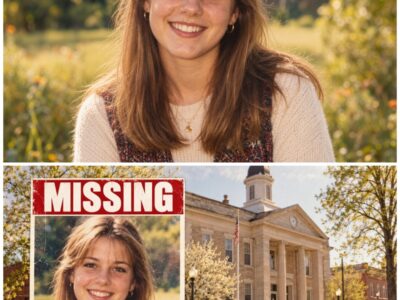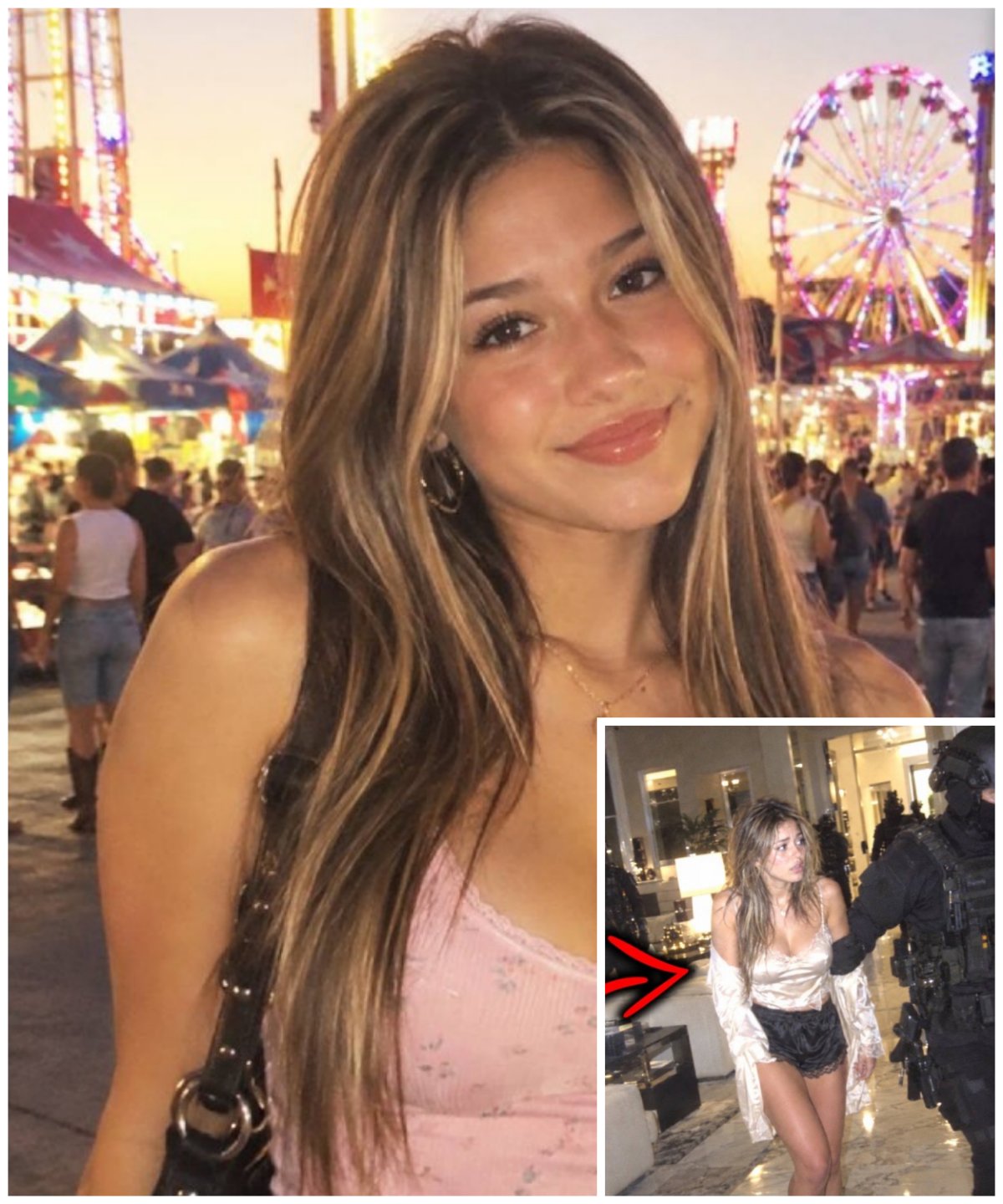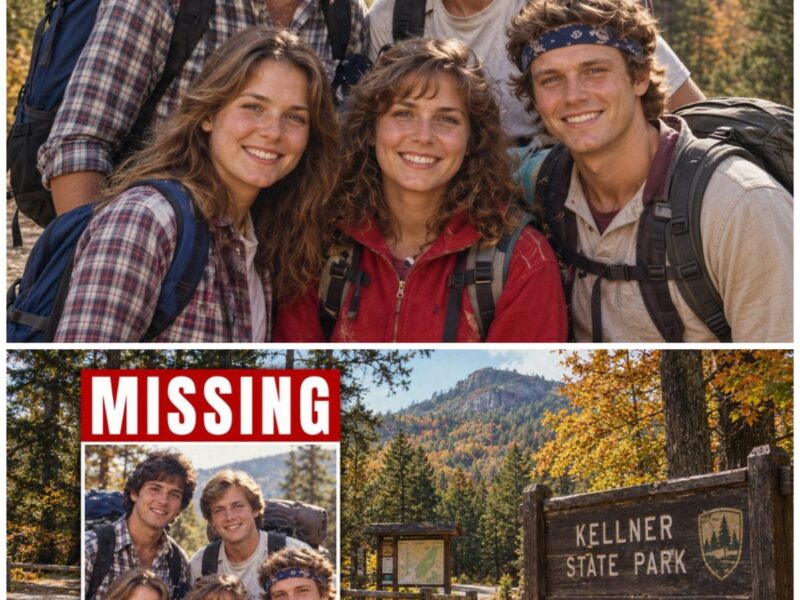
Mayor’s Daughter Vanished in 1996 – 22 Years Later, Her Mother Found Her Face in a Wedding Video
In the autumn of 1996, in a quiet river town in Indiana, the mayor’s daughter vanished without a trace.
Police found no evidence, and the case quickly went cold. 22 years later, a face glimpsed in the background of a stranger’s wedding video changed everything.
What they found exposed a secret no one was prepared for.
Tamarak Falls, Indiana, sat in a shallow bend of the CPPley River, a town of 9,000 people built on a mill and kept alive by the loyalty of everyone the mill had raised.
The maples were old and the streets were wide, and in October the whole town turned the color of rust and burnt sugar.
It was the kind of place where people left their back doors unlocked and their mail on the porch without worry, where the hardware store had been in the same family for three generations, and everyone in line at the bank knew everyone ahead of them.
Beverly Galloway had lived in the house on Meridian Street for 26 years.
She was 50 that autumn, trim and unhurried, with the quiet calm of a woman who had spent half her life working at a county library.
She sorted books by instinct and remembered every patron by name.
She was not a woman given to alarm.
Her daughter Rosalind was 22.
She had her mother’s hands and her father’s dark eyes, and she wore her hair pulled back with a silver clip she had owned since high school. 4 days a week, she worked as a records clerk at the Tamarak Falls City Hall, keeping the property transfer files in order with the precision her supervisor described.
Quietly and admiringly as unnerving, she took night classes in political science at the community college on Tuesdays.
She pressed wild flowers between the pages of a journal she had started when she was 15, a journal that was nearly full.
Rosalyn had a small habit Beverly had come to think of as one of her signatures.
At the bottom right corner of any document she completed, a college assignment, a grocery list, a city hall filing form, she would write the date and a single word that described what the work had cost her or what it meant.
On a finished term paper, September ready.
On a signed transfer form, Thursday done.
Beverly had once found it at the bottom of a birthday card Rosalind had written at the kitchen table.
October 3s.
Beverly had kept that card in the drawer beneath the silverware.
On the kitchen window sill, in a small blue vase Beverly had bought at a church sale when Rosalind was 10.
There was always something in bloom.
In summer, Rosalind cut whatever was growing along the back fence.
Blackeyed Susanss, cone flowers, a sprit of mint.
In the cold months, they kept a bundle of dried lavender in the pantry, and Rosalind would set a piece in the vase whenever the last stem wilted.
The vase had never been empty.
That was simply the way of it between them.
The summer before, on an evening in July, when the two of them had been sitting on the back steps, Rosalind had pressed her mother’s hand and said, “As long as there’s something living in that window, you know I’m thinking of you.” Beverly had laughed and told her she was being dramatic.
Rosalyn had smiled and not said anything more, but she had meant it.
In the weeks before the middle of October, Beverly noticed a change she could not quite name.
Rosalind was quieter than usual.
She came home later from city hall.
She ate dinner standing at the kitchen counter instead of at the table.
Once Beverly came downstairs at 11 at night and found her standing at the kitchen window with a cup of coffee going cold in her hand, staring out at the dark street below.
When Beverly asked what was wrong, Rosalyn said only, “Nothing, Mom.
Just tired.” But when she turned and hugged her mother good night, she held on a moment longer than usual and harder in the way of someone holding on to something they are not sure they will have again.
There were vague answers when Beverly asked about her week.
There was a restless watching quality to the way Rosalind moved through the house in the evenings.
There was the coffee always going cold.
And one morning, Beverly noticed that the small framed graduation photograph she kept on the kitchen counter, a print of the two of them from Rosalyn’s high school ceremony, was no longer in its spot.
She assumed Rosalind had moved it to her room.
She did not think to ask.
Looking back, Beverly would spend the rest of her life wondering if she had simply asked harder questions that night.
Friday, October 11, 1996, arrived gray and cool with the smell of wood smoke drifting from somewhere down the block.
Roselyn put on her navy wool cardigan that morning, her favorite, with a loose second button Beverly had been meaning to fix.
Beverly said she would take care of it that afternoon.
Rosalyn said, “Tomorrow, mom, I promise.” She poured two mugs of coffee, set one in front of Beverly, picked up her bag, and said, “I’ll be home before dark. keep something warm on the stove.
The back door closed.
Beverly watched her cross the yard from the kitchen window.
Around 2:00 in the afternoon, Rosalind received a phone call at city hall from a number that was later traced to a pay phone in Columbus.
She told her coworker Annette Brandt that she had a personal errand to run.
She left 20 minutes early.
She did not come home before dark.
Beverly returned from the library at 5.
The kitchen was dark.
The stove was cold.
The blue vase on the kitchen window sill held a single dried sprig of lavender that Rosalyn had been meaning to replace for 3 days.
The vase had never been empty, not once.
Beverly called city hall.
No answer.
She called Rosalyn’s friend, Lois Ostrander.
Lois had not heard from her.
Beverly stood in the kitchen with the phone against her ear and looked at the vase and understood before she had words for it that the ritual had been broken in a way that had nothing to do with forgetting.
She called her husband Gerald at the mayor’s office.
He was in a meeting.
She left a message.
Then she sat down at the kitchen table and did not move for a long time.
The Tamarak Falls Police Department told Beverly to wait 48 hours.
Adults were allowed to leave.
They said there was probably a simple explanation.
People went on trips without telling everyone.
The 48 hours were the longest of Beverly’s life.
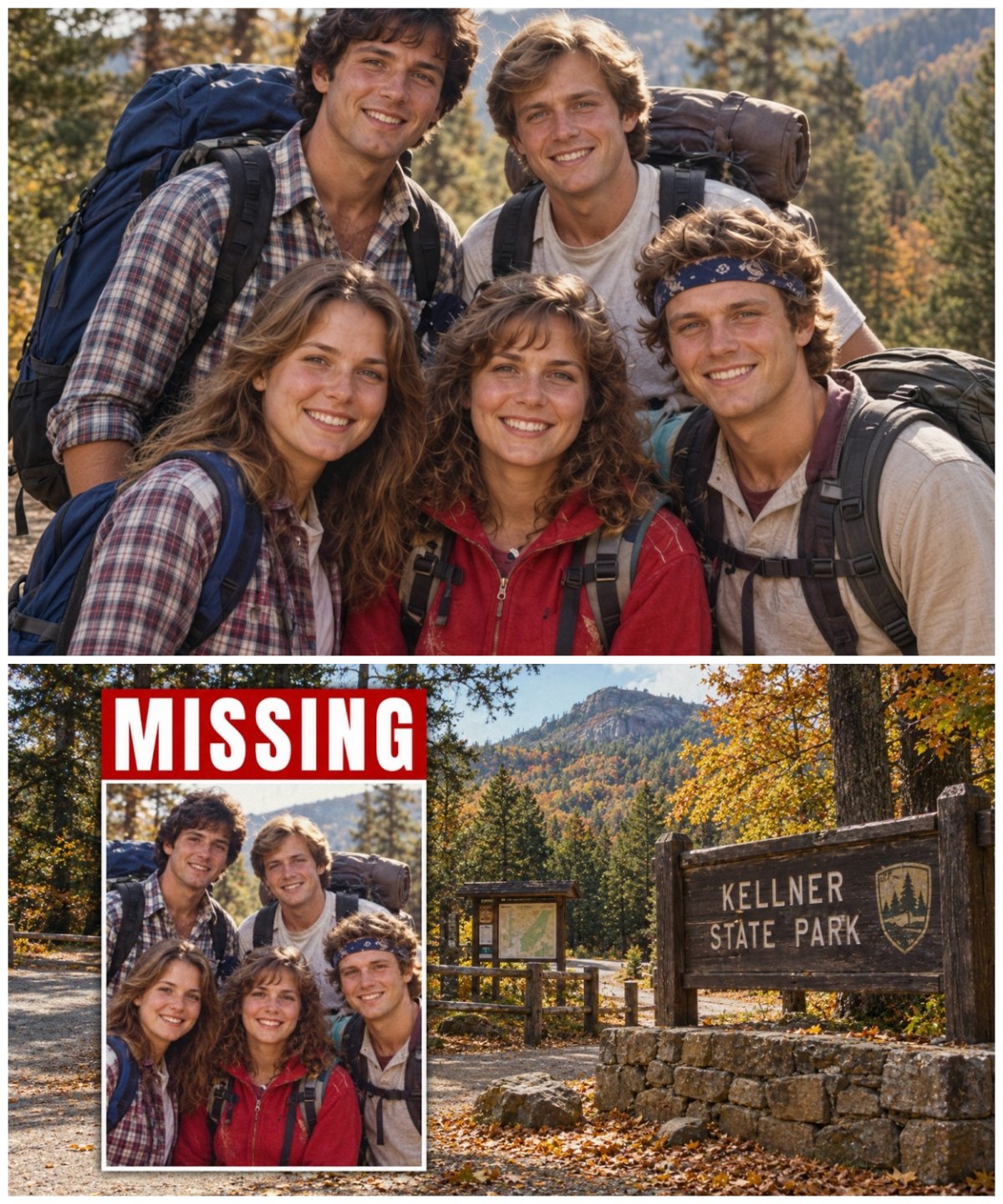
On the second day, a state trooper found Rosalyn’s car, a blue 1993 Honda Civic, in the gravel lot at Kelner State Park, 12 mi outside Tamarak Falls.
The car was locked.
Her keys sat on the driver’s seat.
Her library card and a halfeaten roll of peppermints were in the center console.
There was no sign of a struggle.
There was no note.
The car sat in that lot as if Rosalyn had simply stepped out of it and the ground had swallowed her hole.
Search teams swept the park for 4 days.
Tracking dogs picked up a trail that led through the pine brakes to a gravel access road used by logging trucks.
The scent ended at the road.
The dogs circled and sat down and looked at their handlers.
State police were assigned.
Volunteers came out from three counties with flashlights and hiking boots.
Helicopters flew the tree lines.
Bulletins were posted as far away as Louisville.
But Beverly watched her husband in those days and noticed something she kept to herself.
Gerald Galloway was not only grieving, there was something behind his eyes that looked older than grief and more helpless, as though the thing he had feared had finally arrived.
Before we continue, if this story has kept you watching, please subscribe.
Your support truly means a lot to us.
Detective Dale Puit was 52 that autumn, a quiet man with gray hair and a small spiral notebook he kept in his breast pocket.
He had worked missing persons for 20 years.
He sat across from Beverly at the kitchen table and asked questions with the careful patience of a man who knew that every detail mattered and that people only had so much room inside them for talking.
Among the co-workers he spoke to at city hall was Annette Brandt, the deputy records clerk who asked to speak to him privately.
She told him that approximately one week before Rosalyn disappeared, Rosalyn had said something had not fully understood at the time.
She had said, “I found something in the transfer drawers that could make certain people very uncomfortable.
I’m still deciding what to do about it.” Annette had assumed she meant a misfiled form.
She had not asked for details.
Puit wrote it down in his notebook.
He circled it twice.
By the third week, the official search scaled back.
The state police reassigned their personnel.
The bulletins on the telephone polls were rained on and bleached by a cold November sun, and to Rosalyn’s face was barely visible.
The investigation began its slow retreat.
Beverly did not retreat.
She had not yet begun.
She drove to Kelling State Park every morning for 3 months.
She walked the pine brakes alone in boots in November cold, calling her daughter’s name into the trees.
She put up new posters when the old ones faded.
She compiled her own notebook, and what she put inside it began to take a shape she had not expected.
In the second week of November, Beverly went through Rosalyn’s desk drawer.
She had been putting it off and found folded inside a library receipt a carbon copy page from a city hall property transfer ledger.
Three properties were circled in red ink.
The first belonged to EMTT Pharaoh, 81, who lived on the north edge of town.
The second to a widowed woman named Gail Kudson and her adult son.
The third to a woman listed as Irene Deetsz.
Beverly visited all three.
EMTT Pharaoh answered his door in his pajamas and told her without much apparent surprise that he had received notice some months before informing him that his property had been transferred to a company called Meridian Land Partners as part of a municipal development initiative.
He had tried to find a lawyer.
He had been told the paperwork was airtight.
Gail Kudson had received the same notice.
She had cried when she told Beverly about it.
She said she had never signed anything.
The bigger question arrived immediately who owned Meridian Land Partners.
Beverly went to the county recorder’s office and asked to see the incorporation records.
The clerk, a woman named Doretta, who had worked there for 11 years, pulled the file, looked at it, and told Beverly in a careful, flat voice that those records were sealed pending a state audit.
Beverly pushed.
Doretta looked at the door.
She said quietly, “I’m sorry, Beverly.
I truly am.” She did not say anything more. 3 days later, Doretta resigned from the county recorder’s office without notice and moved out of her apartment overnight.
Beverly took what she had to Detective Puit.
He matched the corporate filings to a name that had come up peripherilally in his earlier interviews, Warren Sutter, 48, a building contractor who had been a prominent donor to Mayor Gerald Galloway’s last campaign.
But the most disturbing piece of information was yet to come.
One evening in late November, Beverly was driving home from the recorder’s office in the dark when she noticed a dark green pickup truck in her rear view mirror.
She turned left on Crane Street.
The pickup turned left.
She slowed.
It slowed.
At the red light at the corner of Crane and River Street, they sat together in the cold, one behind the other.
A hand came out of the pickup’s passenger window.
It placed a folded piece of paper under Beverly’s windshield wiper.
The light turned green.
The pickup drove away in the opposite direction.
Beverly pulled over.
She sat for a full minute before she opened the door and took the note from the wiper.
It was written in block letters on plain white paper.
You’ve already lost enough.
Let it be.
She did not move for a long time.
The street was empty.
The November wind rocked the car on its hinges.
She thought about her daughter and she thought about the empty vase and she started the engine and drove home.
She brought the note to Puit the next morning.
He read it twice and said with the steady certainty of a man who had spent 20 years watching this kind of thing, “Somebody is watching you.” Puit followed the trail to Warren Sutter.
He pulled Sutter’s access key logs from city hall records and found that Sutter’s key card had been used to enter the property transfer archive after hours 4 days after Rosalyn’s car was found at Kelner State Park.
Whatever Roslin found in that archive, Sutter had known she had found it, and he had gone back for whatever she had taken.
It wasn’t a disappearance that Rosalyn had staged.
It was an escape of herself and of the family she had left behind.
Puit brought Sutter in for questioning.
Sutter arrived in a press shirt with a lawyer beside him.
He was polite and cooperative.
He had an alibi for the night of October 11, a dinner party at a state representative’s home.
Six witnesses, all of them impeccable.
He denied any knowledge of Rosalin Galloway beyond her name.
One week later, Puit drove to Sutter’s office to follow up with a second round of questions.
The office was empty.
The desk was clean.
The filing cabinet stood open, drawers bare, the plant in the corner was gone.
A note slipped under the landlord’s door said the rent had been paid in cash for 3 months ahead, and asked to have the space cleaned out.
Warren Sutter had left Tamarack Falls.
He had been right there, and they had missed him.
If you want more emotional cold case stories like this, please subscribe.
Your support truly means a lot to us.
But the most disturbing piece of information was yet to come.
Puit submitted the access logs, the anonymous note, and the carbon copy ledger page to the state attorney general’s office in Indianapolis.
He was told the matter was under active review.
Nothing happened.
Beverly called twice a month for 2 years.
She was told the case remained open.
Nothing moved.
The investigation hit a massive, immovable brick wall.
The case officially went cold in the spring of 1997.
Detective Puit retired from the force in the autumn of 2004.
And on his last day, he drove to the evidence storage room and carried out a brown accordion folder containing his complete notes on the Galloway case.
He set it on a shelf in his garage beside his fishing rods and left it there.
Mayor Gerald Galloway lost his re-election bid in 1998 and withdrew from public life.
He never spoke publicly about his daughter or about Meridian Land partners.
He died of a stroke in October 2011.
Beverly was at his bedside and even then at the very end there were things she understood he had been unable to say to her.
She stayed in the house on Meridian Street.
She had never missed the particular cruelty of that street name.
She kept the blue vase in the kitchen window, filled first with dried lavender, then with silk flowers she replaced every few months, then with a single pressed stem she had saved from Rosalyn’s journal.
A stem of Queen Anne’s lace, flat and pale, that had been pressed sometime in the summer of 1996.
The house smelled like something that had been waiting a long time. 22 years passed.
For 22 years, nothing.
Then on a rainy Thursday in September of 2018, a wedding videographer named Dale Quinnland posted the edited highlight reel from the Branigan Rasmuson wedding to an online video platform and everything began again.
The wedding had taken place in Hollis Crossing, Oregon, a coastal mill town of about 2,500 people tucked between two ridge lines near the Pacific.
The highlight reel was 11 minutes long.
In the third minute during the reception, the camera swept across the room and paused for 8 seconds on a group of guests near the punch table.
One woman stood slightly apart from the others.
She was in her early 40s with dark hair threaded through with silver and a way of standing with one hand resting lightly on the table as if steadying herself.
She was laughing at something the man beside her had said.
She did not look at the camera.
In Portland, Oregon, a woman named Lois Ostrander was watching the video at her kitchen table because an old acquaintance of hers was in the wedding party.
Lois was 54.
She had grown up in Tamarak Falls, Indiana.
She had known Rosalyn Galloway for 15 years.
She watched the 8-second segment four times.
Then she picked up the phone.
Detective Mora Fenwick was 26 years old and three months into her first assignment with the Indiana State Police Cold Case Unit.
She had not been born when Rosalyn Galloway vanished, she pulled 12 accordion folders from a storage room, spread them across a folding table, and spent three days reading through everything Detective Puit had left behind.
His handwriting was careful and slanted, and he had written as much in the margins as on the lines themselves.
Check Meridian,” one margin read.
“Check the key log.
Someone came back.” Another said simply, “She knew something.
She took it with her when she left.” Where Puit had spent 3 months physically tracing a single pay phone record through paper ledgers and county clerk files.
Fenwick ran the same inquiry through a national communications database and had her result in 4 hours.
Old patients and new tools, the same stubborn question underneath them both.
She ran the 8-second video clip through the state’s facial recognition software.
It returned a 91% confidence match against Rosalyn Galloway’s Indiana driver’s license photograph from 1994.
Not certainty, but the margin of doubt was small.
She pulled the wedding guest list from the videographers’s records.
The woman near the punch table had attended as a plus one.
Her name on the guest list was Janet Whitlock.
Hollis Crossing, Oregon.
Who was Janet Whitlock?
Why did she carry Rosalyn Galloway’s dark eyes, and the same slight tilt of the head when she laughed, and the same way of resting one hand on a surface as though bracing against something unseen?
And why, after 22 years of absolute silence, had she appeared in the background of a stranger’s happiest day, in 8 seconds of a life not quite hidden enough?
Fenwick search to the Oregon 5005 database.
Janet Whitlock, date of birth, December 1, 1975.
Rosalyn Galloway’s actual birthday was December 1, 1974.
One year’s difference.
A driver’s license issued in 2003.
Before 2003 in any database Fenwick could access across Oregon or the surrounding states, nothing.
No school enrollment, no employment filings, no tax records before 20.
Janet Whitlock had arrived in Oregon in her late 20s, fully documented and with no childhood behind her.
Fenwick traced the social security number on the license.
It had been issued to a Janet Whitlock born in 1975 who had died at 3 days old in a hospital in Bend, Oregon.
A borrowed name taken from an infant’s headstone.
She went back to Puit’s notes.
At the bottom of the first interview summary, in a notation marked for positive identification, he had written distinctive feature small gap between upper front teeth visible when subject smiles. confirmed by family dentist.
Subject declined orthodontic correction. 1992.
Look for this.
Fenwick returned to the wedding video and enlarged the clip at the 3-second mark where the woman near the punch table had smiled broadly at something on her right.
The gap was there, narrow and unmistakable.
The story the town of Tannarak Falls had told itself for 22 years that the mayor’s daughter had run from a complicated family, from a father whose political fortunes were failing, from a life that had grown too difficult to manage, was wrong.
It had always been wrong.
But this realization only created a massive new question.
Before we continue, if this story has kept you watching, please subscribe.
Your support truly means a lot to us.
Fenwick flew to Portland and drove a rented car south along the coast road on a Tuesday afternoon in November.
The Pacific was high and gray and restless against the cliffs.
Holla’s crossing sat in a crease between two ridge lines, its main street blocks long.
Its post office and its coffee shop facing each other cross a road lined with wet Douglas furs.
She found 14 birchwood lane without difficulty.
It was a small white house with a vegetable garden along the south fence.
The beds turned over for winter.
A blue car sat in the driveway.
The front porch light was on against the afternoon dark.
Fenwick knocked.
No answer.
She knocked again.
From somewhere inside came the sound of a chair moving.
The curtain at the front window shifted slightly.
The door did not open.
She knocked a third time and said through the wood, “My name is Detective Fenwick.
I’m with the Indiana State Police.
No one is in trouble.
I only want to talk.
Silence stretched for a long time.
Then from the other side of the door, a voice, low and careful and very still.
How did you find me?
A wedding?
Fenwick said.
You were in the background.
The silence stretched again.
Then a chain worked free of its bracket.
A deadbolt turned.
The door opened and a woman stood in the gray afternoon light with her dark hair silver stre and her hand resting on the doorframe looking at the detective with the expression of someone standing at the edge of something they have been approaching for a very long time.
I’ve waited a long time to say this, the woman said quietly.
Sit down and I’ll start at the beginning.
She had been Janet Whitlock for 15 years and Rosalyn Galloway for 22 years before that. and she held both names the way you hold two halves of the same long sentence.
She made tea while she talked.
She told it slowly without hurrying, the way a person tells the story they have told only to themselves for two decades, testing each word before they speak it.
On the afternoon of Friday, October 11, 1996, she had been clearing a backlog of misfiled records in the city hall archive room when she found at the back of a property transfer drawer that should have held nothing but routine filings a carbon copy deed bearing the signatures of three property owners.
She recognized the names EMTT Pharaoh, Gail Canup Sumber, Irene Deetsz.
She had processed routine renewal filings for all three of them the previous spring, but the signatures were wrong.
She knew this because she had personally watched Gail Canut Sers sign a renewal form 6 months earlier and had noticed the peculiar way Gail held her pen nearly horizontal, producing letters that leaned sharply to the left.
The signature on the transfer deed leaned right, Roslin new paper.
She had been sorting it for 2 years.
She recognized a forgery the way a librarian recognizes a misfiled book.
She photographed the document with the small camera she had brought to document archive discrepancies, a common practice among the record staff.
Then she put the carbon copy inside her coat and went back to her desk and worked for another hour because she was afraid that leaving immediately would look like something.
The phone call came at 2:00.
The voice was one she did not recognize.
It said her name.
Then it said, “I think you may have picked up something this morning that doesn’t belong to you.
I think you should know that you have a mother in Tamarak Falls who matters to you.
I think you should consider carefully what matters to you before you make any decisions.” The call ended.
She sat at her desk for 10 minutes.
She thought about her mother at the kitchen window.
She thought about her father’s position, already fragile.
She thought about what it meant that Sutter knew she had been in the archive room, which meant someone in the building was watching, which meant there was no safe path through the official channels of a town this small.
She took the carbon copy and her camera roll and put them in her bag.
She told Annette she had an errand.
She drove to Kelner State Park and sat at a picnic table in the late afternoon with the engine off and thought about what she knew and what it would cost and what it would cost her mother if she stayed.
She decided, sitting there in the cooling car, that the only way to remove herself as leverage was to remove herself entirely.
She left her keys on the driver’s seat because she thought, and she was right, that a car found abandoned would bring the police to the park before they started looking elsewhere, and that what she needed most was a head start.
She walked to the county road.
She flagged down a logging truck heading west.
She called an old college friend in Portland from a pay phone in Linton County and said she needed a place to sleep for a few weeks.
She did not say why.
She planned to be gone 3 months.
She planned to wait until the state audit uncovered the fraud on its own.
She sent an anonymous letter to the state attorney general’s office in March of 1997 with a full account of what she had found and a copy of the photograph she had taken. and she included Detective Puit’s name as a contact who could corroborate the timeline.
At the bottom right corner of the letter, out of a habit she could not seem to break, she wrote the date and a single word, March 4, 1997.
Waiting.
The letter was routed to a junior investigator managing 43 active cases.
It was filed under pending review.
Puit never saw it.
By the time it became clear that the audit had stalled, Sutter was gone, and the official investigation had wound down to nothing.
Rosalyn had been Janet Whitlock for 2 years.
She had a bookkeeping job with a logging supply company in Hollis Crossing.
She had a small house, she grew tomatoes and kale, and along the south fence, a row of wild flowers she pressed and kept in a journal that was now in its third volume.
She kept a small blue vase on her kitchen window sill there, too, always with something in it.
She could not help herself.
She had thought about calling every month.
She thought about it in October 2011 when she found in a digitized Indiana newspaper archive a brief obituary announcing that Gerald Galloway had died of a stroke.
She had driven to the coast that evening and stood at the water for an hour in the dark, and she had wept, and she had thought about her mother alone in the house on Meridian Street, and she had picked up the phone and set it back down.
Fear had become the architecture of her life by then.
She could no longer tell where the necessary caution ended, and the long habit of silence began.
She opened the kitchen drawer.
She took out a folded piece of paper, yellowed at the creases, soft from having been folded and unfolded many times over many years.
She set it on the table in front of Detective Fenwick.
It was a letter dated October 12th, 1996, the day after she left, written in blue ink, in a looped and meticulous hand in the bottom right corner of the page.
In the same hand that had documented the transfer records at city hall and had written the anonymous letter to the attorney general, she had written October 12.
Waiting.
I wrote it the night I arrived in Portland, Rosalyn said.
Her hands were folded on the table.
I meant to send it the next morning.
And then the morning came and I was afraid.
And then a week passed and then it was a year.
She was quiet for a moment.
And then it was 22 years.
Detective Fenwick called Beverly Galloway on a Tuesday evening in November 2018.
Beverly was 72 and still in the house on Meridian Street and she was reading in the kitchen under the light above the table when the phone rang.
Fenwick told her she had something important to share and asked if Beverly could come to the station the following morning.
Beverly said, “No, tell me now.” Fenwick told her.
Beverly was silent for so long that Fenwick said gently, “Mrs.
Galloway, are you still there?” Beverly said, “Is she alive?” She was.
Three days later, a rental car from Portland pulled to the curb on Meridian Street on a Friday afternoon in November under a pale gray sky.
Beverly had been standing on the front porch for an hour, holding the small framed graduation photograph that had been back on the kitchen counter since the first week after Rosalyn vanished.
The photograph that Rosalyn had taken the morning she left and carried with her for 22 years.
The woman who got out of the car was 44 years old, silver-haired and steady, thinner than the girl in the photograph.
She stopped at the foot of the porch steps and looked up.
Beverly looked at the photograph.
She looked at her daughter’s face.
She said, “I told you I would always know you.” They sat at the kitchen table until after midnight.
Rosalyn laid three things on the table, one at a time. the framed photograph, which she sat down gently face up, a copy of the letter to the attorney general, which Fenwick had recovered from the state archives, and then the folded letter written on October 12th, 1996, which he set on top of all of it.
Beverly made a sound that carried 22 years of waiting in it.
She pressed her daughter’s face between her palms, the way she had when Rosalyn was very small, and she held on, and they stayed like that in the kitchen doorway until neither of them could stand any longer.
And then they sat down and talked.
Roselyn described the vegetable garden and the logging supply company and the sound of the Pacific at night.
Beverly described the library and the dried lavender and the window sill and the years that had passed and the years that remained.
They were both still there to count them.
The resolution arrived slowly and without drama, the way truth most often does.
The Indiana State Police, working with the state attorney general’s office and Rosalyn’s original photographs and testimony, assembled a civil fraud case against the estate of Warren Sutter, who had died in Tucson, Arizona in 2009.
The three families whose land had been taken through forged deeds received settlements.
EMTT Pharaoh had died in 2003, but his granddaughter accepted the restitution on behalf of the family and donated a portion of it toward a new bench in Tamarak Falls main park.
The brass plaque read in memory of those who waited and those who came home.
Annette Brandt, now in her early 50s and still in Tamarak Falls, wept when she heard.
She said she had always known Rosalyn had not simply left.
She had always known.
A week after Rosalyn’s first visit, Beverly drove to Portland and came back with a car full of boxes.
Rosalyn said she would need some time to settle.
Beverly said she understood time was the one thing they now had more of than they knew what to do with.
On the last evening of that first visit, after Rosalyn had finally fallen asleep in her old room for the first time in 22 years, Beverly went to the kitchen alone.
She stood at the window for a moment.
The blue vase sat on the sill, the singlepressed Queen Anne’s lace stem pale and dry and sighted.
She went to the back door and opened it and stepped into the November yard against the fence.
The last of the autumn aers were still holding on.
Thin, cold, white in the dark.
She cut three stems with the kitchen scissors and brought them inside.
She lifted the dried stem from the vase and set it carefully on the counter.
She put the aers in.
Then she turned off the kitchen light.
Then she turned it back on.
The town of Tamarak Falls had spent 22 years building stories about the mayor’s daughter.
It had imagined a troubled girl, a reckless decision, a monster on a county road.
It had imagined almost every version of the truth except the one that was real.
A young woman who had heded her family so much that she had walked out of their lives and into a stranger’s name so that the danger would follow her and not them.
So that what she could not stay to protect, she could at least step away from and shield.
Sometimes the longest distance between two people is not the miles between them, but the silence kept to keep them safe.
And love, much like the truth, finds its way home in the end.