COLORADO 1978 Cold Case Solved After 22 Years — Justice for the Spangler Family
On the morning of December 30, 1978, Arapjo County police arrived at a house in Littleton, Colorado, and found three bodies.
Nancy Spangler, 45, lay in the basement with a bullet in her head.
Her son, David, 17, and her daughter, Susan, 15, were dead in beds upstairs.
The 38 was in NY’s hand.
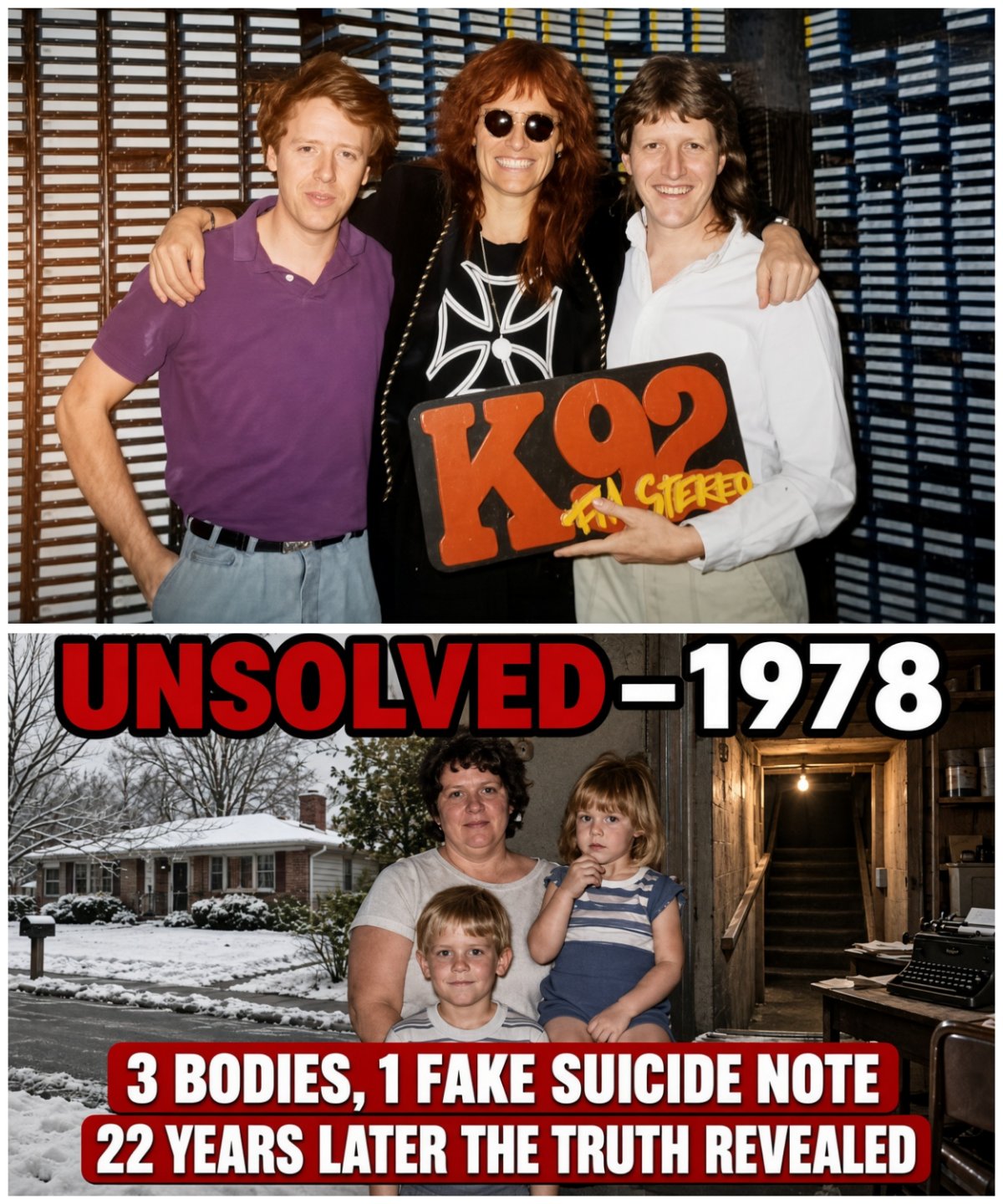
The typed suicide note was on the table signed with the letter N.
The husband, Robert Spangler, cried, shook, and said he had come home from work and found his family dead.
The police believed him.
The coroner believed him, too.
Within 4 days, the case was ruled a murder suicide by the wife.
The file was closed.
The evidence was returned to the husband himself or destroyed.
But there were things that did not fit, and no one was willing to look.
Gunpowder residue was on Robert’s gloves, not on NY’s hands.
There were no fingerprints on the typewriter, only wipe marks.
Nancy was afraid of guns.
Nancy weighed less than 100 lb.
The bullet entered her forehead, a place women almost never shoot themselves.
And 7 months later, Robert married a new wife and moved into the very house where his family had been killed.
NY’s family knew she would never harm herself or her children.
But no one listened.
For 22 years, Nancy carried the label of a mother who killed her children and then herself.
While the man who actually committed the crimes lived free, married three more wives, and left behind more deaths no one investigated.
It took 22 years, a federal investigative team, the FBI’s behavioral analysis unit, and a terminal cancer diagnosis for the truth to come out of the killer’s own mouth.
This is the story of how a cold case that lasted more than two decades was finally solved and it began long before that morning in Littleton.
If you are the kind of person who stays to the end of a story who wants to know not only what happened but why a man could kill four members of his family and walk free for more than two decades, then you are in the right place.
Subscribe to Cold Case Reopened.
We go deep into the cases everyone else has forgotten.
To understand what really happened in that house, you have to understand the two people who built it.
Robert Spangler and Nancy Stallman started dating in high school in Ames, Iowa.
Robert was the school’s football star.
Tall, confident, the kind of person a small town knew by name.
Nancy was the all-American girl involved in every extracurricular activity. smart, warm, and completely convinced that Robert Spangler was the man she would spend her life with.
They married in 1955 when both were just past 20.
Robert served in the military for a time.
Then the couple moved to Littleton, Colorado, a quiet suburb south of Denver, where middle-class families bought houses, mowed lawns, and believed a good life was waiting for them.
Nancy discovered a passion for cooking and became a talented cook in her own kitchen.
Two children arrived in turn.
David, the son, was born in 1961.
Susan, the daughter, was born in 1963.
From the outside, the Spangler family was the model of the postwar American suburban dream.
The athletic father, the devoted homemaker mother, two healthy children, a tidy house on a quiet street.
Nothing suggested that behind that door, a man was gradually coming to hate the life he had built with his own hands.
Around 1974, when David was 13 and Susan was 11, Robert Spangler began to feel suffocated.
He was 41.
His children, he would later say, were out of control.
Nancy had a life of her own, friends, interests, a domestic world he did not belong to.
And he was only an office worker who left every morning and came home every night, over and over, nothing special.
Then he met Sharon Cooper at work.
Sharon was lively, bright, completely different from the monotonous life he was living.
Robert was not only attracted, he was obsessed.
The affair began and they kept it an absolute secret.
Robert moved out of the house and told Nancy he needed time to think.
For 9 months, he barely saw his children.
He was busy with a new life, a new love, and a question he could not avoid.
How to get out of this marriage.
Divorce was the obvious answer.
But Robert and Nancy had been married for 23 years.
In Colorado in the 1970s, a divorce after nearly a quarter century together would mean losing half or more of the property, the house, the savings, everything they had built.
Robert Spangler would not accept losing half.
He needed another solution.
And that solution began to form in his mind slowly, methodically, coldly enough to be hard to believe.
He moved back home and told Nancy and the children he wanted to reconcile.
Nancy believed him.
She was optimistic.
She thought the family was about to return to normal.
She did not know Robert had spent weeks preparing every detail of his plan.
He typed a suicide note on the typewriter in the basement.
The contents of the letter were meant to make the reader believe Nancy had written it, that she could not bear it anymore, that she had decided to end everything.
He told Nancy it was a Christmas letter and set it in front of her.
Nancy, without reading the contents, signed her initial, the letter N, at the bottom of the page.
She had just signed her own death warrant without knowing it.
On the night of December 29, 1978, Robert staged a loud fight with Nancy, making sure neighbors could hear.
He needed witnesses to NY’s instability.
He needed everyone to believe she was on the verge of collapse.
Then the next morning, December 30, he took the 38 revolver from the closet and called Nancy down to the basement.
He said he had a surprise for her.
Nancy went down the stairs.
Robert Spangler shot his wife in the head.
She died on the spot.
He went upstairs.
Susan, 15, was asleep in bed.
He shot her.
He later told police he shot her in the heart.
Susan died in her sleep.
Then came David.
David, 17, was taller, stronger, and the first bullet did not kill him.
The boy woke up, struggled with his father, tried to fight back.
But Robert could not fire a second shot because he knew that if Nancy had really been the shooter, she would not have fired twice at one child.
He used a pillow to smother his son until the boy stopped breathing.
David died in his father’s hands.
Stop for a second and think about that.
A father holding a pillow over his 17-year-old son’s face until the boy stopped struggling.
Not in a frenzy, not in a moment of loss control, but according to a plan calculated weeks in advance so he could be free to live with his mistress without dividing the property.
After all three were dead, Robert Spangler began staging the scene.
He placed the gun in NY’s hand.
He placed the fake suicide note on the table.
He arranged everything so the scene looked like a desperate widow who had killed her children and then herself.
Then he called the police and played the role of the most grieving husband and father on earth.
The police arrived at the scene and saw exactly what Robert Spangler wanted them to see.
A woman dead in the basement with a gun in her hand.
Two children dead in their beds.
A suicide note on the typewriter and a collapsed husband fully cooperative ready to answer every question.
Robert said he had gone to work that morning and come home to find his family dead.
He admitted that he and his wife had marital problems.
He admitted he was having an affair with a coworker.
He even admitted he had planned to leave Nancy.
But he said all of that in the voice of a man in pain, not a suspect.
He knew exactly what to say and what to hide.
A forensic technician examined his hands and found gunpowder residue on Robert’s gloves.
That was the first warning sign.
A husband who said he had been at work all day but had gunpowder on his hands.
But no one pursued that lead to the end.
Instead, after the technician finished examining Robert, he took him home, fed him spaghetti, and let him sleep overnight with the family.
Read that sentence again.
The forensic technician responsible for examining evidence on the body of a potential suspect invited that suspect home for dinner.
That was 1978 in a quiet suburb where people believed terrible things did not happen to families like the Spanglers.
There were other irregularities any experienced investigator would have noticed.
There were no fingerprints on the typewriter.
If Nancy had typed the suicide note, her fingerprints should have been on the keys.
Instead, the technician found only wipe marks, clear, deliberate, as if someone had wiped the keys clean after typing.
Why would a woman about to kill herself wipe her typewriter clean?
That question was never asked.
Most self-inflicted gunshot wounds are contact wounds. the muzzle pressed against the skin.
Women almost never shoot themselves in the face, but the bullet wound in NY’s head was in the forehead, high and unusual place for a suicide.
Moreover, Nancy was afraid of guns.
Her family knew that.
Her friends knew that she had never held Robert’s 38, never gone to a range, never shown any familiarity with weapons, and Nancy weighed less than 100 lb.
A 38 has significant recoil.
The idea that a woman afraid of guns, weighing 100 pounds, had shot her two teenage children and then shot herself in the forehead was a story only people who wanted to believe would believe.
But that was exactly the story the Arapjo County Coroner accepted.
On January 3, 1979, only 4 days after the killings, the coroner officially ruled the deaths a murder suicide committed by Nancy.
The case was closed.
And this is the part that made everything irreversible.
Most of the physical evidence was returned to Robert Spangler or destroyed.
The gun, the letter, the forensic samples, everything a future investigation would need was either in the killer’s hands or no longer existed.
The system did not only fail to find the truth.
The system handed the killer control of the evidence of his own crime.
NY’s family, the Stallman’s, did not believe that conclusion for a second.
They knew Nancy.
They knew she loved David and Susan more than anything in the world.
Her children were her life.
They knew she was optimistic about reconciling with Robert right before she died.
The day before, she was still cheerful, talking about plans for the new year.
And they knew she was afraid of guns.
The woman, the coroner said, had shot her two children and then herself was a woman who had never touched the gun in the house.
But the Stallman family had no power.
They were not lawyers.
They were not police.
They were ordinary people grieving the loss of a daughter, a grandson, and a granddaughter, and forced to bear the additional humiliation of their daughter being blamed for a crime she had not committed.
For more than two decades after that, Nancy Spangler would carry the label of a mother who killed her children and then herself in the official records of Arapjo County.
A family member later said, “It took me 22 years before I could enjoy Christmas again.” While the Stallman family lived with pain and helplessness, Robert Spangler began a new life at a speed that would startle anyone watching closely.
On July 14th, 1979, only 7 months after burying his wife and two children, Robert Spangler married Sharon Cooper, the woman he had been having an affair with for several years.
And he did not only marry her, he brought her to live in the very house where his family had been murdered.
The same living room, the same basement where Nancy was shot, the same bedrooms where David and Susan died.
The neighbors, all of them friends of Nancy, were stunned.
They could not believe Robert had replaced his wife and children so quickly.
But he did not care about their reaction.
He was done with that chapter.
Family, children, suburban life, all of it was an old chapter that had been closed.
Robert Spangler now had exactly what he wanted. the new woman, the house intact, all of the property, not a scent lost to a divorce lawyer, and complete freedom, no wife, no children, no one demanding anything from him anymore.
The new life with Sharon revolved around the Grand Canyon.
Sharon was an avid hiker and a writer with a deep passion for the wilderness.
She wrote a book about Grand Canyon hikes and dedicated it to Robert, calling him her soulmate.
Sharon did not know that her soulmate had killed his wife and children to be with her.
She did not know she was sleeping every night in the house where three people had died so he could marry her.
And she did not know she had just stepped into the orbit of a killer whose pattern of behavior would repeat and repeat and repeat.
Sharon loved dogs more than anything.
She had three dogs, Sunshine, Shadow, and Molly.
Trained them perfectly and treated them like children.
Robert liked that better than real children.
No one made demands.
No one resisted.
No one got out of control.
The couple spent time hiking in the Grand Canyon.
And Robert discovered that wilderness suited him not because of its natural beauty, but because of its isolation.
Steep trails, cliffs hundreds of meters deep, and the complete absence of witnesses.
He would remember that later.
But Sharon began to change.
Or maybe she began to see more clearly.
The marriage ran into trouble.
And by 1986, two important things happened in the Spangler household.
First, the relationship between Robert and Sharon began to crack seriously.
Second, Robert went to Ames, Iowa to visit his adoptive father, Merlin Spangler.
The old man was 92, but still healthy.
A few days after Robert arrived, Merlin Spangler had a bad fall.
No one investigated, no one asked questions, just an old man who fell.
But if you set that event beside everything that happened before and after, it becomes part of a picture no one could see in full at the time.
In 1988, Robert and Sharon divorced.
The divorce was expensive, drawn out, painful, exactly the kind of divorce Robert had killed his whole family to avoid 10 years earlier.
He hated losing money.
He hated dividing property.
He hated the feeling of being stripped of what he considered his. and he would not let that happen again.
In August 1990, Robert Spangler, now 57, married for the third time, to Donna Sunundling, a 58-year-old aerobics instructor.
They moved to Durango, Colorado, a small town in the southwest of the state.
Robert got a job as a morning DJ at a local country music station and quickly became wellknown in the small community.
He was witty, energetic, likable, coworkers liked him, listeners liked him.
No one knew anything about his past.
His boss at the radio station, John Mackley, did not even know Robert had had a wife between Nancy and Donna.
He never mentioned Sharon Cooper.
The marriage to Donna started well, but quickly showed problems.
Donna was afraid of heights.
That sounds harmless until you understand that Robert Spangler’s life revolved around hiking in the Grand Canyon, where there are sheer cliffs hundreds of meters high.
Donna tried.
She went with him a few times, but the fear did not go away, and she began to refuse.
Robert was irritated.
He had been through an expensive divorce and had no intention of going through a second one.
When Donna took part less and less in the activity he loved, his dissatisfaction did not lead to marriage counseling, did not lead to compromise, did not lead to any adult conversation.
It led to a hike.
Hoping to save the relationship, Donna agreed to one last hike in the Grand Canyon.
Easter Sunday, April 11th, 1993.
That was the last day of Donna Sunundling’s life.
That afternoon, Robert Spangler calmly walked into the Grand Canyon Ranger Station and told a ranger that his wife had fallen to her death.
He told the story he had told before in another version.
Calm, cooperative, grieving just enough.
He said the two of them were taking pictures near the edge of the cliff.
He turned away to adjust the camera.
When he turned back, Donna was gone.
He had not heard a scream.
He had not heard rocks fall.
She simply was not there anymore.
The search team found Donna’s body at the base of the cliff about 140 ft from the edge.
The death was ruled an accident.
Robert Spangler got away again, but this time not everyone believed him.
Donna’s family was deeply suspicious.
They knew Donna was afraid of heights.
They knew she was agile, not the kind of person who slipped and fell.
They knew the marriage was in trouble.
And they knew this was Robert Spangler’s second wife to die unusually.
But there were no witnesses, no physical evidence, only the statement of a husband who knew exactly what to say and a system ready to believe him.
As the grieving widowerower, Spangler talked about his wife’s accidental death and the dangers of hiking in the Grand Canyon.
He was the victim of tragedy.
He was the husband who had lost someone.
He said all the right things and he kept hiking in the Grand Canyon many times a year with different companions on the very trails where he had pushed Donna to her death.
After Donna’s death, Robert sold the house in Durango and reconnected with Sharon Cooper, his second ex-wife.
Sharon, whose personal life was collapsing, went back to Robert and moved into his living room.
In July 1994, Sharon came to live with Robert.
Her favorite dog, Shadow, died, and Sharon could not bear it.
She cried day and night.
John Mackley, Robert’s boss at the radio station, had no idea Robert had an ex-wife living with him.
Robert never mentioned Sharon to any co-orker.
Then on October 2, 1994, only 5 months after moving in with Robert Sharon Cooper, 52, died.
Robert said she left a suicide note and took an overdose of Tylenol.
He said he came home, saw the note, tried to wake Sharon, but she did not respond, then carried her to the emergency room.
Another version of the story says doctors thought Sharon would be fine, but she was left alone in the room with Robert for a while right before she died.
No one investigated Sharon’s death.
There was no significant autopsy.
Robert Spangler received $20,000 from Sharon’s life insurance, and he no longer had to pay alimony to his ex-wife.
Sharon had told people before she died that she believed Robert was trying to harm her.
No one listened to her while she was alive.
And when she died, no one asked questions.
Look at the whole picture.
In 1978, the first wife and two children died.
Conclusion, murder, suicide.
In 1993, the third wife died.
Conclusion, accident.
In 1994, the second wife died.
Conclusion, suicide, three marriages.
Three wives dead under unusual circumstances.
Two children dead and Robert Spangler standing in the middle of all of it.
Each time the only survivor each time with a perfect story.
Each time walking away without a scratch on his criminal record.
If this story is making you feel differently, hit the like button.
We tell stories like this every week on Cold Case Reopened.
Cases that stay cold for years, sometimes decades, until someone refuses to let them be buried.
Subscribe so you do not miss the next case.
For more than two decades, the Stallman family lived with two pains stacked on each other.
The first pain was losing Nancy, David, and Susan.
The second pain, in many ways even more cruel, was knowing Nancy had been blamed for a crime she had not committed.
In the official records of Arapjo County, Nancy Spangler was the mother who had shot her two children and then killed herself.
That was the story the system told.
That was the story the world believed.
And the Stallman family knew it was completely wrong, but they had no power, no evidence, no one willing to listen and change it.
A family member later said, “It took me 22 years before I could enjoy Christmas again.” Think about that.
Every year when December came, when other families decorated trees and wrapped gifts, the Stallman family remembered December 30, 1978.
They remembered Nancy.
They remembered David and Susan.
And they remembered that the man who killed their daughter, grandson, and granddaughter was still living free somewhere in Colorado.
Maybe laughing, maybe marrying a new wife, maybe hiking in the Grand Canyon as if nothing had happened.
For 22 years, Christmas was not a holiday in the Stallman family.
It was a day of mourning.
But in 1994, for the first time since that morning in Littleton, the pieces began to fit into place.
Not because someone finally listened to the Stallman family, but because the deaths began to pile up to the point the system could no longer ignore them.
After Donna Sunling’s death in the Grand Canyon in 1993 and Sharon Cooper’s death in 1994, two federal law enforcement agencies, the US Department of the Interior and the National Park Service, along with authorities in Cookanino County in Arizona and Arapjo County in Colorado, linked the cold cases in their respective jurisdictions for the first time.
A federal prosecutor and a USA brought the cases together under federal jurisdiction, building a legal frame based on insurance fraud and murder.
This was the turning point.
For the first time, someone looked at Robert Spangler not as an unlucky widowerower mocked by fate, but as a suspect in multiple connected murders.
An FBI agent in Flagstaff, Arizona, was assigned to the case and contacted NCAVC, the National Center for the Analysis of Violent Crime, a specialized FBI unit that assists on complex cases, including serial murder, cold cases, and violent crimes with distinctive behavioral patterns.
NCAVC is not an ordinary investigative unit.
They do not knock on doors or collect fingerprints.
They analyze behavior.
They study how killers think, how they make decisions, how they conceal, and most important, how to make them talk.
And Robert Spangler was exactly the kind of subject NCAVC was designed to deal with.
The initial investigation showed Spangler was an educated, intelligent, successful man.
He was not the typical violent criminal.
He had no arrest history.
He had no psychiatric record.
He was a former serviceman, an office worker, a popular radio DJ, the kind of person neighbors described as likable and interesting.
But NCAVC looked through that shell.
They saw a pattern of behavior so clear it was almost textbook.
Whenever a marriage became unbearable, Robert Spangler did not leave.
He eliminated.
He did not resolve conflict.
He erased it.
And he did it with cold calculation, staging each death to look like something else. suicide, accident, overdose, anything but murder.
NCAVC designed an interview strategy specifically for Robert Spangler.
They understood this was not the kind of person who would collapse under old style interrogation pressure.
He was too smart for that.
He was too controlled.
The ironfist method, pounding the table, yelling in his face, threatening, would only make him shut down and ask for a lawyer.
Instead, NCAVC proposed an approach based on behavior, using Spangler’s own personality against him.
They knew he was vain.
He liked to be seen as intelligent.
He liked to tell stories, and they knew he was dying.
That was the decisive factor.
Alongside the behavioral analysis, NCAVC proposed using a behavioral assessment questionnaire when interviewing people who knew Spangler.
The purpose was not to ask directly whether Spangler had killed anyone.
The purpose was to draw the most detailed psychological portrait possible to understand how he spoke, how he reacted, what made him open up, what made him defensive.
An FBI agent interviewed many of Spangler’s acquaintances across Colorado.
One of those interviews turned out to be more important than anyone predicted.
The agent interviewed a woman living in a small community in Colorado.
A few weeks after the interview, this woman contacted authorities on her own with new information.
The exact content of that information was never widely released, but it was important enough to push the investigation forward.
Between 1998 and 2000, Robert Spangler was watched while hiking in the Grand Canyon.
He still went back there many times a year on the trails where Donna had died.
Investigators watched him from a distance, logged his roots, observed his behavior.
He was relaxed.
He was confident.
He did not know that every step he took on the edge of a Grand Canyon cliff was being watched.
But time was running backward.
Not the time of the law.
Colorado has no statute of limitations on murder, but biological time.
Around 1999 to 2000, Robert Spangler was diagnosed with terminal brain cancer.
Doctors said he had only a few months.
For the investigative team, this news was both an opportunity and a disaster.
If Spangler died before he was charged, the truth would die with him.
Nancy would forever carry the label of killing her children.
Donna would forever be the victim of an accident.
Sharon would forever be a suicide.
And four people would never receive justice.
But the terminal cancer diagnosis also opened a door.
A man who knows he is about to die sometimes wants to talk.
Sometimes when death comes close, the need to control the story becomes stronger than the need to keep the secret.
And NCAAVC knew that.
They had studied this behavior in dozens of other cases.
A dying killer often wants the world to know how smart they were, how perfect the plan was, how long they beat the system.
That is not remorse.
That is a final display.
In September 2000, the investigative team with NCAVC’s agreement decided this was the moment to approach.
They could not wait any longer.
Every day that passed was a day Spangler might fall into a coma or lose the ability to think because of the brain tumor.
If that happened, any confession would be legally challenged on mental capacity.
The investigative team flew to Colorado.
The A USA went with them to provide legal advice on the spot.
In Colorado, local law enforcement and the local FBI office supported the investigators.
And because the entire prosecution might depend on the validity of any confession, the team agreed to videotape the entire interview from beginning to end.
Every word, every expression, every moment of silence, all of it would be recorded on tape.
Nothing could be allowed to be ambiguous.
Nothing could be allowed to be challenged later for lack of evidence about how the confession was obtained.
Everything was ready. 22 years after that morning in Littleton, the truth was about to be spoken.
In September 2000, Robert Spangler was living in Grand Junction, Colorado with his fourth wife, Judy Hilty, whom he had married only a few weeks earlier.
He was 67.
The tumor in his brain was growing.
Doctors said he had a few months, maybe less.
He had sold the house in Durango, left Pennsylvania after a short time pursuing another woman, and returned to Colorado to die.
And throughout that time, he did not know he was being watched.
On September 14 or 15, 2000, the investigative team arrived at Robert Spangler’s house in Grand Junction.
An FBI agent and an Arapjo County detective knocked on the door.
The A USA watched from another room, ready to step in if immediate legal advice was needed.
The camera rolled.
Everything was recorded.
They told Spangler they were investigating the death of Donna Sunundling in the Grand Canyon in 1993 at the request of Donna’s family.
They asked whether he was willing to talk.
Spangler agreed.
He did not ask for a lawyer.
He did not refuse.
He sat down and began to talk calm, cooperative, controlled, exactly as NCAVC had predicted.
The interview was designed not to force, but to invite.
The investigators did not pound the table.
They did not yell.
They did not threaten.
They asked, they listened, they let Spangler talk, and Spangler talked a great deal.
He was the kind of person who liked to be heard, liked to explain, liked to show he was smarter than everyone else in the room.
NCAVC had guessed right.
The terminal cancer diagnosis had changed the calculation in Spangler’s head.
He knew he was about to die.
He knew no sentence mattered anymore.
Life in prison or 6 months of cancer, the result was the same.
And in the mind of a vain killer about to die, there was a need logic cannot explain.
The need to be recognized, not remorse, not atonement, the need to tell the world what he had done and how long he had gotten away with it.
Then Spangler surprised everyone in the room.
He confessed to pushing Donna sundling off the cliff in the Grand Canyon.
No coercion, no new evidence presented.
He simply decided to talk.
He described that moment with a calm that made seasoned investigators go cold.
He said the two of them were standing near the edge of the cliff.
He said he had thought about it, not planned in detail like 1978, but the idea had been in his head.
And when the moment came, he decided now or never.
He pushed Donna.
She fell about 140 ft.
He did not look down.
He walked to the ranger station and reported an accident, but Spangler did not stop at Donna.
After confessing to the Grand Canyon case, he continued, “He told about the morning of December 30, 1978.” He told about Nancy, Susan David.
He told every detail in a voice so calm it was chilling, as if he were describing a completed project, not three murders.
He said he had lured Nancy down to the basement with the promise of a surprise.
He shot her in the head, then he went upstairs.
He shot Susan first, shot her in the heart while she was sleeping.
Then David, the first bullet, did not kill David.
The boy woke up and struggled with his father.
Spangler said he could not fire a second shot because he knew that if Nancy had really been the shooter, she would not have fired twice at one child.
So, he used a pillow to smother his son.
He said all of that, not with tears, not with regret, but with the precise detail of a person recounting a job that had been done carefully.
When the investigators asked why, Spangler explained as if the answer were obvious.
He was not happy in the marriage.
He wanted to be with Sharon Cooper and divorce was too expensive.
He said, “Once the decision was made, I simply carried it out as if killing his wife and two children were an administrative decision, a logical step in a personal financial plan.” He also said a sentence the investigators would never forget.
He described killing as something that required special concentration when actually committing the crime.
Completely cold-blooded, not a defense, not an apology.
A technical description from a person who treated murder as a skill that required professionalism.
And then Spangler said the sentence the investigators had waited 22 years to hear.
You’ve got your serial killer.
He said it like an introduction as if he were handing over a business card, not a painful confession, a declaration of identity.
This is who I am.
This is what I did.
And I got away with it for more than two decades.
He denied involvement in Sharon Cooper’s death.
He said she overdosed on her own.
The investigators had no evidence to contradict him, and Sharon remained the only death in the chain that Spangler never admitted.
But the pattern said everything.
A woman who had told people Robert was trying to harm her died while living with Robert.
And Robert collected insurance money from her death.
Then the most unexpected thing happened.
After an interview lasting hours, the investigators left, planning to return the next day to ask more.
They were not sure Spangler would still want to talk after a night of thinking.
They prepared for the possibility he would change his mind, ask for a lawyer, take everything back.
But contrary to the entire team’s prediction, Robert Spangler called the FBI agent the next morning.
He did not call to retract the confession.
He did not call to ask for a lawyer.
He called to schedule continuing the interview after breakfast.
He wanted to tell more.
He was not finished.
That is the moment anyone who studies criminal psychology recognizes.
A vain killer about to die does not confess out of remorse.
He confesses because he cannot stand the idea that his story will disappear with him.
He had kept this secret for 22 years.
He had lived among people, shaken their hands, smiled at them, made small talk with them.
While inside, he carried the secret that he had killed four people and never been suspected.
And now, with death close, that secret became a burden.
Not because of guilt, but because no one knew how good he had been.
Robert Spangler wanted the world to know.
On October 3, 2000, Robert Spangler was arrested. 22 years after that morning in Littleton, 7 years after that afternoon in the Grand Canyon, handcuffs finally closed around his wrists.
He was 67 with terminal brain cancer, and for the first time in more than two decades, he was no longer the free man who had beaten the system.
He was a defendant.
But Robert Spangler was not the kind of person who accepted things easily, even while he was dying.
On November 5th, 2000, he flipped.
He pleaded not guilty, said the brain cancer had affected his judgment when he confessed that the tumor had made him say things that were not true.
That the videotaped confession was the product of a brain being destroyed by disease, not the statement of a killer.
That was the last defense tactic of a man who had spent his life manipulating everyone around him.
But this time, he had a problem no tactic could solve, the videotape.
Every word he said was recorded.
His voice was calm, coherent, detailed, not the voice of a person losing awareness because of a brain tumor.
He described each murder with a precision only the person who did it would have.
He remembered Nancy signing the suicide note without reading it.
He remembered the first bullet did not kill David.
He remembered he used the pillow.
He remembered when and where he pushed Donna.
No brain tumor creates that level of detail out of nothing. and the investigative team knew that.
That was exactly why they had videotaped from beginning to end.
NCAVC had predicted Spangler might retract the confession and had made sure the evidence of his lucidity during the interview was undeniable.
Faced with the tape, Spangler finally agreed to a plea.
A federal grand jury in Phoenix, Arizona, indicted him for firstdegree murder in the death of Donna Sunundling Spangler in the Grand Canyon in 1993.
The case was handled in federal court because the Grand Canyon is under federal jurisdiction belonging to the National Park Service.
Robert Spangler was sentenced to life in prison without parole.
He would never leave prison in Colorado.
The videotaped confession directly supported the murder charges in Arapjo County for the three 1978 killings, Nancy, David, and Susan.
For the first time in 22 years, the official record reflected the truth.
Nancy Spangler did not kill her children and then herself.
Nancy Spangler was shot in the head by her husband in the basement of her own house.
David Spangler was not shot by his mother.
David was shot by his father and then smothered with a pillow.
Susan Spangler was not killed by her mother in her sleep.
Susan was shot in the heart by her father.
The suicide note was fake.
The scene was fake.
The entire story the Arapjo County justice system had believed for more than two decades was fake.
And the Stallman family, the people who had told the truth from the first day, were finally heard.
On August 5th, 2001, Robert Spangler died in prison of brain cancer.
He was 68.
He had lived free for 22 years after killing his wife and two children 7 years after pushing his third wife off a cliff.
He was in prison for less than one year.
Justice arrived, but it arrived so late the killer almost suffered no consequence.
He did not die in prison because of the sentence.
He died in prison because the cancer killed him before the system could punish him long enough to call it justice.
But for the Stallman family, the sentence was not the most important thing.
The most important thing was the truth.
For 22 years, Nancy was seen by the world as a child killer.
For 22 years, whenever someone looked up the case, they read that a mother in Littleton, Colorado, had shot her two teenage children and then killed herself.
That was the legacy Robert Spangler created for his wife, not only killing her, but turning her into a murderer in the eyes of history.
The 2000 confession erased that.
Nancy was cleared, not by a trial, not by DNA evidence or modern technology, by the mouth of the man who killed her.
The Robert Spangler case became an important case study in the history of the FBI and NCAVC.
It is used to train new generations of investigators in how to approach cold cases of serial murder within families.
An article by FBI agents Leonard Johns and Gerard Cooper in an FBI professional journal analyzed the case as an illustration of applying NCAVC resources, including behavioral analysis and interview technique to solve a cold case that lasted more than two decades.
The case proved that even when physical evidence is destroyed, even when the original investigative file is gone, even when dozens of years have passed, a cold case can still be solved if investigators understand the killer’s psychology and know how to use it.
The method of linking separate family murders through the subject’s history and interviews with acquaintances.
The method developed and tested in the Spangler case has been applied to many cold cases since.
The case also left a painful lesson about the failure of the system.
A coroner reached a conclusion in 4 days.
Evidence was returned to the suspect.
There was no real investigation and the result was a killer living free for 22 years, marrying three more wives and killing at least one more person.
If the initial investigation in 1978 had been done properly, if someone had asked why the gunpowder was on Robert’s hands and not NY’s.
If someone had asked why the typewriter had been wiped clean.
If someone had asked why a woman afraid of guns would shoot herself in the forehead.
Donna Sunundling might still be alive.
Sharon Cooper might still be alive.
But no one asked, and two more women died.
On the morning of December 30, 1978, Robert Spangler called Nancy down to the basement and said he had a surprise for her.
Three people died.
One man called the police.
And for 22 years, the world believed his story.
He married three more wives.
He was a popular DJ.
He hiked in the Grand Canyon on the trails where he had pushed a woman to her death.
He smiled.
He shook people’s hands.
He lived the life he had killed to have.
Then the cancer came and with it the need for the world to know how good he had been.
He sat in front of a camera and told everything, not out of remorse, but because he could not stand the idea that his secret would die with him.
In the end, his own vanity destroyed him.
He had killed four people and gotten away with it for 22 years.
But he could not stand that no one knew.
And the moment he opened his mouth, Nancy, David, Susan, and Donna finally received what their families had waited more than two decades for, the truth.
This is Cold Case Reopened.
We tell the stories of forgotten victims and the people who refuse to let them be buried.
If this story stays with you, subscribe and share it.
The next case is waiting.